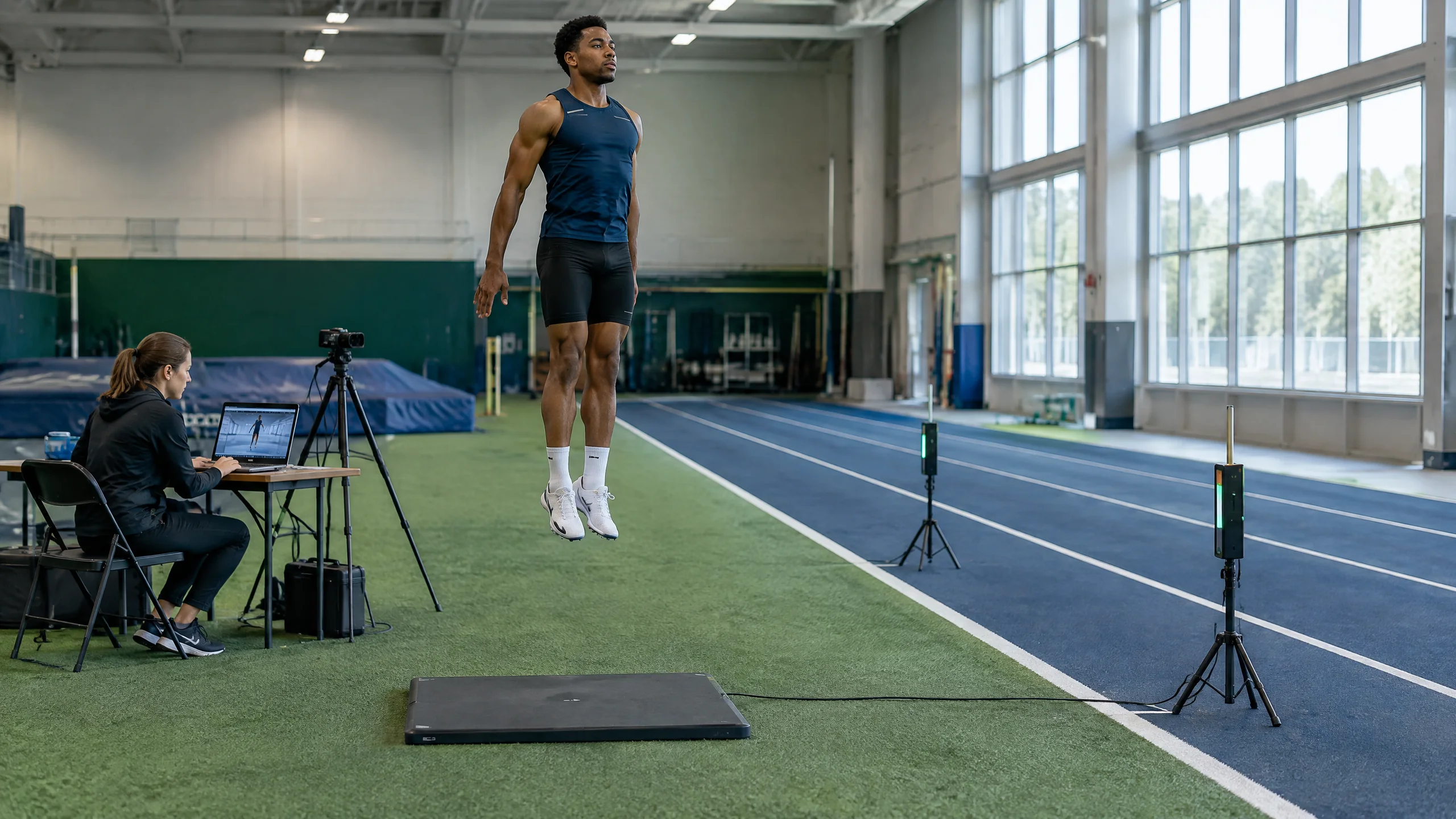
What is performance technology in sports?
Performance technology in sports comprises equipment, sensors, cameras, software and procedures that help collect or interpret evidence about an athlete's movement, workload, technique or training response. A device can be worn, attached to equipment, installed at a training venue or used to organise reports. The NCAA Sport Science Institute's 2026 responsible-use recommendations explicitly include both directly attached technologies and indirect monitoring such as cameras, surveys and software. A stopwatch with a consistent protocol can be more useful than a sophisticated system whose output nobody can explain.
This page owns the broad question: which technology fits which performance decision, what does it actually measure and how should its limits affect use? The athlete performance tracking guide owns the daily people-and-review process; wearable technology in sports owns body-worn sensors; sports analytics owns interpreting multiple data sources. None of these is a substitute for coaching judgement or independent clinical care. A tool deserves attention only when its output answers a question the team can act on.
Start with the decision, not a device catalogue
Ask who must decide what, by when and with what consequence. A sprint coach may need a repeatable 10-metre split to compare acceleration work over a training block. A strength coach may want a standardised jump test to discuss lower-body performance. A technical coach may want video of a movement rather than an inferred joint angle. In each case, define the athlete population, venue, question, comparison period and possible action before collecting anything. If the answer would not alter a sensible decision, additional measurement has little practical value.
Write the decision as a short question with an owner: 'For this athlete and the same test conditions, is the observed change large enough to justify a coaching review?' Record the reference test, measurement error and contextual factors, including surface, fatigue from recent sessions, travel and interruptions. Decide in advance whether the output starts a conversation, changes a training drill or simply needs retesting. A review trigger is not a diagnosis, selection verdict or prediction of a future result.
A practical map of performance technology tools
Different tools answer different questions. Force plates measure ground-reaction force during a defined task. Timing gates record when an athlete breaks a beam at each split. Video and motion capture estimate movement from image sequences; an analyst can also annotate clips without estimating precise joint angles. Body-worn GNSS devices estimate outdoor position and movement, inertial sensors estimate movement or orientation, and heart-rate systems measure or estimate physiological response. Software joins records and helps users review them. These outputs are not interchangeable, even if a dashboard places them next to one another.
Choose a method by its target construct rather than brand. To observe a sprint split, use a standardised sprint test and appropriate timing method; a force plate is not a direct sprint-time device. To understand why a skill breaks down, an annotated video sequence may explain more than a single score. To follow repeated training exposures, a log plus athlete account may be needed alongside sensors. The sports technology master guide maps the wider ecosystem; this page stays with performance measurement and its decision boundary.
Force plates and jump tests: what is actually measured?
A force plate records the force applied to it over time during a defined movement. In a countermovement jump, software can derive quantities such as impulse, phase durations and estimated jump height when collection and calculation rules are specified. The number on a screen is not the raw measurement: task instructions, warm-up, weighing, plate zeroing, sampling, event detection and software definitions all shape it. A 2025 PLOS ONE scoping review of repeated-measures force-plate studies found substantial differences in protocols and even in the meaning of common peak-force labels. Cross-study comparisons therefore need care.
A useful testing note records the task, device and firmware, footwear, surface, warm-up, number of trials, rest between trials, calculation method and the person's own repeatability. Compare a repeated test with the same protocol where possible. A lower jump metric after an unfamiliar session may warrant retesting or discussion, but it does not prove fatigue, predict injury or justify exclusion from play. If a vendor changes how a phase is defined, do not silently merge the new and old series into one trend.
Sprint timing gates and the start-procedure trap
Photocell timing gates can make sprint comparisons easier, but a gate records a beam interruption, not an abstract property called speed. A systematic review of photocell validity and reliability found that start position, beam geometry and sensor configuration can especially affect very short acceleration intervals. An arm or leg may break a single beam before the athlete's trunk crosses it. A standing start, split start, rolling start and flying sprint cannot be compared as if they were identical tests. Gate height, distance from the start line and finish placement belong in the record.
For an academy protocol, mark the line and start stance, use the same distance and surface, keep familiarisation and recovery consistent and document timing-system settings. If one athlete's 10-metre result differs by a very small amount, compare that difference with the test's local repeatability before changing a training plan. When moving from hand timing to gates, establish a new baseline rather than pretending the devices measure identically. An unusually fast split is also a reason to inspect the setup and the video before celebrating a definitive improvement.
Cameras, video and motion capture
Video helps an athlete and coach inspect a real movement and discuss technique with visible context. Motion-capture systems go further by estimating positions or joint movement. Marker-based laboratory capture, markerless multi-camera systems and smartphone-based video tools have different preparation costs and error patterns. A 2025 review of sport motion-capture technologies notes that camera placement, calibration, lighting, clothing, background and the movement itself affect output quality. Agreement shown for one task or population should not be treated as validation for every competition situation.
Frame rate, shutter, synchronisation and camera angle matter when comparing clips across sessions. Preserve the original video when a derived angle or AI label is disputed. Avoid presenting a camera-estimated joint angle as a clinical diagnosis or a claim that one athlete has an unsafe movement. The computer vision in sports pillar explains detection, identity tracking, calibration and model-review responsibilities; AI video analysis in sports focuses on the footage-to-evidence workflow. This article asks when video is the appropriate performance measurement in the first place.
Wearables, positioning and physiological measures
Outdoor satellite positioning, indoor local-position systems, inertial sensors and heart-rate devices can support repeated monitoring beyond a single lab test. Their outputs differ: distance is not the same construct as effort, a movement count is not a measure of technique, and heart rate is not a direct diagnosis of readiness. Placement, coverage, body movement, software filters and sporting environment affect data quality. A measurement that performs acceptably during a steady outdoor run may not behave the same way indoors, during contacts or during a stop-start court drill.
Use wearable technology in sports for sensor-by-sensor measurement, validation and procurement; use athlete performance tracking for the programme that receives and questions those records. If a training session contains a disputed number, inspect the original signal, collection conditions and athlete account before aggregating it into a staff report. Keep an alternative route for athletes who cannot use a particular device or for a session lost to battery or connectivity problems.
A decision-to-device comparison, not a shopping list
A helpful comparison starts with four columns: decision, observation needed, suitable measurement method and failure mode. For acceleration technique, a timed split plus reviewable video may be enough; a laboratory force trace answers a different question. For repeated squad movement exposure, a validated tracking system may provide context, provided its sampling and missing data rules are known. For a jump-test review, a stable force-plate protocol can describe change in the test, not a universal athlete 'readiness' score. These are illustrative matches, not vendor endorsements or evidence that a device improves results.
Add two more columns before purchasing: who interprets the output and what happens when the tool fails. Compare staff time for preparation, athlete burden, data export, repairability and the ability to keep a consistent definition across seasons. A club with only a camera and marked track lane may answer its main decision more reliably than a club buying several poorly maintained subscriptions. Test one real workflow and its constraints before scaling equipment to more athletes or venues.
How to validate a sports performance measurement
Validation asks whether the method represents the construct sufficiently well for a particular task, athlete group and decision. Reliability asks whether comparable tests under comparable conditions produce reasonably consistent values. Agreement with a relevant reference method, known uncertainty, missingness, feasibility and athlete acceptability also matter. A manufacturer's accuracy claim may use a different drill, age group or environment than your programme. Ask for the testing protocol and the conditions under which the system has not been evaluated, not just the most favourable overall number.
Run a small local trial with defined instructions and several comparable observations. Keep the original signal and reference notes, mark unusable sessions and estimate how much natural and measurement variation is present. Decide what size and kind of change triggers a second review rather than selecting a threshold after seeing a preferred result. Watch for an apparent improvement caused by a new firmware version, athlete familiarity, a changed surface or a different start protocol. Sports analytics owns broader model validation; this page focuses on whether a sports performance instrument measures the intended task.
Reading change without overclaiming a result
A graph can make a one-day fluctuation look important. Compare like with like: the same athlete, task, procedure and relevant conditions. Check the range of repeated baseline results and whether any trial was excluded. A jump height, split time and self-reported effort can disagree without one being defective: they describe different aspects of a session. A coach should ask whether the apparent change repeats and whether another explanation fits before altering a plan. A single number cannot isolate the effect of new shoes, a training programme or the device itself.
A clear performance note distinguishes measured observation, plausible interpretation and proposed action. For example, 'two comparable split trials were slower than this athlete's earlier test range' states the observation; 'the reason is unknown' states the limit; 'review setup and athlete feedback, then repeat under the same protocol' is an action. The specialist guide when load data disagree offers a deeper reconciliation procedure. Avoid converting a difference into a guaranteed future result, talent ranking or causal effect without an appropriate study.
A hypothetical multi-method session
Hypothetical example, not actual athlete data: a small training group wants to examine changes in acceleration and jump-test performance over a month. Staff record two comparable timed runs and a defined jump protocol at planned intervals, with simple video retained for review. Before each session, they check surface, gate placement, plate zeroing, footwear and recent training; athletes can report illness or a disrupted journey privately. An analyst flags missing or implausible records without replacing them with an invented value. The data set is small, so no injury or population-level claim follows from it.
At the review meeting the group looks at each athlete's repeated range, coaching context and video rather than ranking everyone by one composite index. A disputed first split is checked for an early beam trigger; an unusual jump reading prompts a protocol check. Staff document whether a drill changed, whether another test is needed and who may see the individual records. This example illustrates a review workflow, not evidence that combining technologies produces an improvement. A choice not to change training is a legitimate documented outcome.
Performance technology in Indian sport
India-based programmes differ sharply across professional teams, academies, university sport and community settings. Avoid assuming a national rollout because one organisation adopted a platform. Begin with the sport, the number of people who can operate a test, the surface and climate, power and network reliability, available equipment and what coaches already record. Cricket bowling workload, indoor court sprint tests and outdoor field-sport tracking do not call for the same hardware or comparison rule. Heat, monsoon weather, travel and equipment wear can change collection conditions; they should be recorded, not treated as proof of any particular athlete effect.
A low-cost approach can start with a standardised timing or video protocol, secure notes, athlete feedback and a regular review meeting. Validate new hardware locally against that baseline when the proposed decision warrants it. Keep instructions understandable in relevant languages and offer offline collection where connectivity is unreliable. If students or minors participate, pay particular attention to purpose limitation, responsible access, safeguarding and a genuine correction route. Indian data-protection requirements have phased commencement and require context-specific review; this guide is not a legal compliance checklist.
Athlete rights, privacy and data security
The NCAA's 2026 recommendations call for a written plan, user education, defined data ownership, access and permissible uses, multidisciplinary technology selection and feedback from athletes. That is useful governance guidance, not a legal rule for every sport. Before collection, tell athletes which signals will be gathered, why, who will see them, how long they remain, how inaccurate entries are corrected and whether a refusal or a failed device has a fair alternative. Recording location or physiological data can reveal more than a coach originally asked to know.
Minimise collection and separate routine training records from clinical information. Protect storage, limit access by role and review vendor reuse and export terms. An athlete should be able to ask why a record informed an inference and report stress caused by monitoring. Uncertain measurements must not become a surveillance score or an automatic selection or medical ruling. Building an athlete data rights charter owns the fuller athlete-facing governance workflow, including correction and accountability.
Procuring and implementing a system
Before a purchase or long pilot, ask whether the device has been tested in the relevant sport and movement, what the raw data and processed outputs mean, which software version creates the score, and whether data can be exported and later deleted. Include setup time, training, replacement parts, repairs, battery and offline use in a total operating-cost estimate. Ask who owns the data and whether a vendor can reuse it for another purpose. A trial should define the success criterion in advance: did staff understand and use the measurement in a defensible decision? Do not use a vendor case study as independent proof of performance gains.
Stage implementation. First agree on one decision and a manual baseline. Next run the selected technology alongside existing practice, document errors and ask athletes and coaches what burden or value it created. Then decide whether the extra evidence changes an action, improves clarity or merely adds work. Preserve earlier data definitions before software upgrades. Expand only when the method, staff training, access controls and correction path are stable. A small programme can stop at a simple solution without failing an imaginary maturity test.
Common errors and claims to avoid
The first error is to buy a device and search afterward for a useful question. The second is to merge incompatible testing protocols and read the resulting series as a change in the athlete. The third is to use a proxy measure as if it were a direct outcome: a jump metric is not an injury diagnosis, a GPS distance is not effort, and a video model's label is not an independently verified movement fact. Apparent precision does not remove uncertainty. Another frequent mistake is to use a good result from one validation study to certify every sport, venue, age group or task.
Keep claims tied to what was actually observed. A team may say a method helped staff discuss a sprint split more consistently; it should not say a technology caused faster sprinting without a suitable comparison. Never present personal monitoring as a guaranteed selection advantage or a substitute for qualified medical assessment. Revisit the purpose when athlete feedback reveals anxiety or when a data outage makes reports unreliable. A responsible system makes it possible to pause and explain, not only to keep measuring.
FAQ and the next step
Is a wearable necessary for sports performance technology? No. Timing gates, video, force plates and well-kept training records may fit a specific question without a body-worn device. Which tool is best? There is no universal answer: define the sport, movement, population, decision, error cost and operating constraints, then compare methods under the same conditions. Can AI predict an individual's injury or guarantee improvement? No such claim follows from a device reading or the evidence in this guide. Ask instead whether a model was evaluated for the actual task, setting and decision, with human review.
Start with one written decision-to-measurement card: decision owner, observed quantity, test conditions, expected variation, response to missing or disputed data, athlete notice and review date. Run a small pilot, keep results alongside context and remove a metric that cannot help answer the original question. For ongoing daily follow-up, continue to athlete performance tracking; for equipment on the body, follow wearable technology in sports; for analysis across sources, use sports analytics. Those pages each own a different next question.