The uncertainty came before the first setup
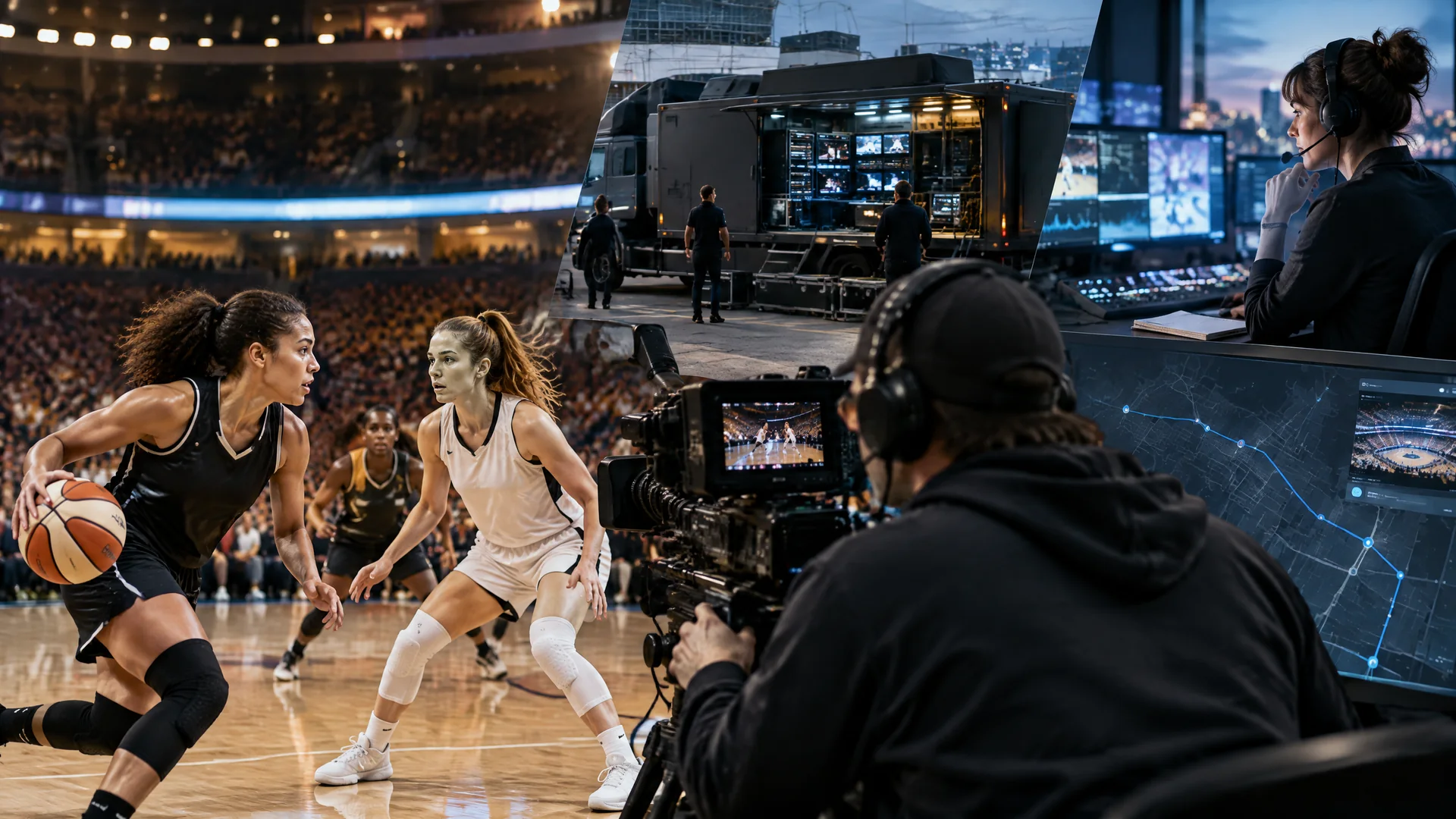
ESPN entered the 2026 WNBA playoffs without knowing every venue, matchup or travel sequence far enough in advance to follow one fixed production plan. Game selections depended on results through 24 September, while trucks, crews and transmission resources also had to move into later assignments. The material technology story is therefore not a single camera or graphics tool. It is the need to prepare several workable production configurations before the final schedule locked. Each option had to preserve a common editorial baseline while allowing for different buildings, travel windows and mobile-unit availability. That planning layer is easy to overlook, but it determines whether the visible systems can be installed, tested and operated on time.
Parallel plans protect the operating baseline
The production and operations groups built alternate truck, staffing and technical scenarios rather than waiting for one definitive bracket. A contingency plan is useful only when its dependencies are explicit: which mobile unit can reach the next city, what configuration it will carry, which crew members travel, which functions remain remote and what changes if a series ends early. ESPN's account shows production planning as a technical control surface. The network could hold a consistent 1080p HDR and remote-production baseline while changing the path used to assemble it. SportyTechs' guide to sports broadcasting technology explains the wider capture-to-delivery chain. The playoff case shows why that chain needs more than one rehearsed route.
Trucks and configuration changes create pressure
Mobile units do not remain in one sport all year. ESPN reported that some units were moving into fall assignments or changing configuration as the WNBA postseason began. That creates a compound timing problem: the destination may be uncertain, but the truck still needs a load-in window, power, venue connectivity, camera paths, audio positions, replay resources and a tested transmission plan. A team cannot solve that problem by adding equipment at the last minute. It needs pre-approved variants, known interface points and a clear decision time for choosing one. The existing SportyTechs article on remote production without losing venue control provides the practical boundary: centralization can move functions, but local access, communication and fallback responsibilities remain essential.
The camera plan starts from 1080p HDR
ESPN said it planned to produce the playoff games in 1080p HDR. A typical setup would use seven manned cameras, two to four super-slow-motion licences, robotic cameras above the rims and fixed views below them. Those details describe a baseline, not an identical guarantee for every game. Venue geometry, series round, truck configuration and available positions can change what is feasible. The source does not publish camera models, lens choices, HDR monitoring procedures or end-to-end distribution measurements. It is therefore accurate to report the format and planned camera families, but not to claim that HDR by itself improved picture quality or that one configuration represented the entire postseason. The distinction mirrors SportyTechs' analysis of ESPN's Monday Night Football HDR workflow, where delivery format and production design must be separated.
Later rounds add selected capture positions
For selected second-round games, ESPN planned an eighth manned position using an RF handheld and a wireless DSLR-style system. Those additions can give production teams more freedom around benches, arrivals, celebrations or other close-range moments, but they also introduce coordination and spectrum requirements. Wireless mobility is valuable only when the team knows who controls the shot, how the signal returns, where the operator may move and what happens if the path degrades. The wording in the source is future-facing and selective. It should not be turned into a claim that every game received the same eighth camera, that every venue supported the same RF path or that more cameras automatically produced a better broadcast.
Player, coach and bench audio need editorial control
The playoff plan included microphones on selected players and coaches, along with bench and other on-court or off-court interviews. Access can make a live production more immediate, but it also creates delay, consent, privacy and editorial-review responsibilities. The source describes the planned access; it does not explain every approval workflow, monitoring role or moment that would be cleared for air. A responsible production needs a defined owner for listening, a path for excluding restricted material and a shared understanding with participants about when audio may be used. The same principle applies to any technology that brings athletes closer to the program: capture capability does not remove the human decision about context, safety and fairness.
REMI and home analysis distribute the crew
ESPN said the regular-season workflow relied heavily on REMI and REMCO production from Bristol, Connecticut. Its rules analyst first contributed from a voiceover booth there and then moved to a Live From Home kit in Georgia. The account also names AWS cloud-based super-slow-motion, HDR super-slow-motion and Viz Libero analysis and telestration. These tools do not all perform the same job. Remote integration moves selected production roles away from the arena; cloud replay supports a specific replay path; telestration helps explain a sequence; and the home analyst contributes expertise through a controlled return path. A distributed design needs synchronized communication, confidence monitoring and an agreed local fallback. The report does not publish latency, outage or workload measurements, so it supports an architecture description rather than a reliability claim.
What production teams can learn
The transferable lesson is to design uncertainty into the plan before the schedule forces a decision. Build a stable minimum production baseline, identify which elements can scale by round, document alternate truck and staffing routes, and set the deadline for choosing among them. Rehearse communication between venue, mobile unit, central control room and home-based contributors. Track whether each variant preserves audio review, replay access, graphics, timing, accessibility and incident escalation. After the event, compare the plan with what actually happened: configuration changes, missed tests, travel pressure, faults, recoveries and crew workload. ESPN's account establishes that multiple plans, 1080p HDR and distributed roles were part of the postseason approach. It does not establish that the approach reduced cost, improved audience response or made every game technically identical.