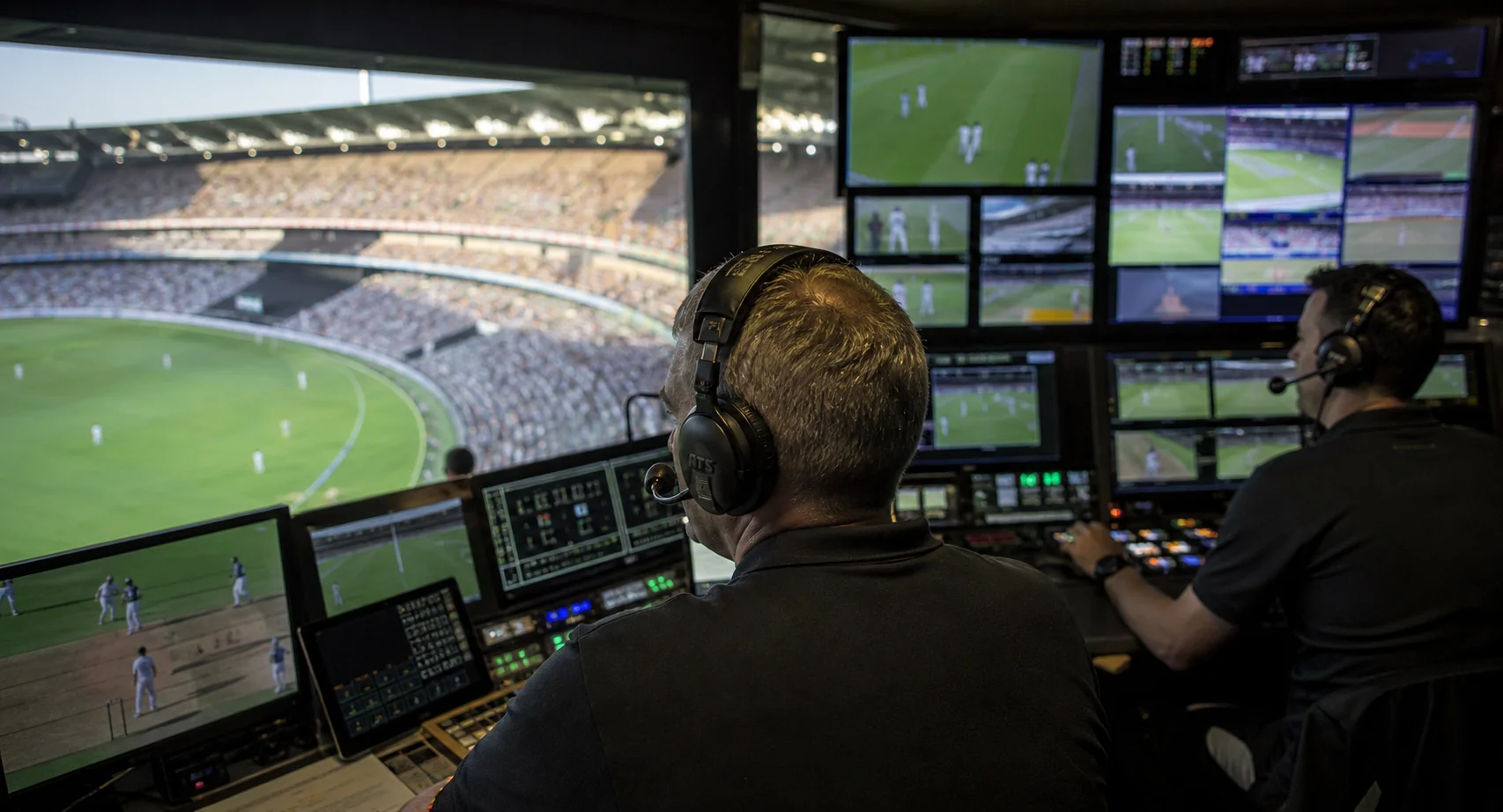
Remote production changes where decisions are made, not where the venue’s responsibilities end. Cameras still need access, power, safe cable routes, lens cleaning, line-of-sight checks, and local troubleshooting. Treat the remote team as a production partner with explicit interfaces, rather than assuming connectivity turns an on-site operation into an unattended one. The intended result should be stated in plain operational language before specifications are written. The venue should make this choice deliberately rather than inheriting it from a default setting. It is a decision about people, process, and physical space as much as a decision about equipment.
Create an event-day responsibility matrix that follows the signal. Identify who confirms camera positions, who checks audio sources, who owns contribution encoding, who watches the return feed, who declares an incident, and who authorises a fallback. Include contact methods that work if the primary collaboration platform or venue internet is unavailable. A clear readiness check exposes dependencies that procurement documents often miss. Frontline staff need a short instruction that remains usable when communication is imperfect. Document the normal workflow and the exception workflow; both need an owner. That discipline keeps investment choices connected to a credible event-day workflow.
Local resilience deserves a clear design. A venue may retain a small confidence-monitoring position, local recording, programme audio monitoring, and a method to show essential information even if the remote programme is interrupted. The right fallback depends on the event, but it must be tested as an operating procedure rather than treated as a diagram in a tender document. Observe the boundary between teams, where handoffs and unclear language commonly cause delay. Prefer a small intervention made early to a dramatic change made after options have narrowed. Field checks should challenge the model whenever the live environment has changed.
Latency decisions are editorial decisions as well as technical ones. Camera control, officiating support, commentator interaction, crowd-facing screens, and replay review can each have different tolerance. Map the path end to end and test the actual workflow, including talkback and returns. A low average network delay does not prove that a director can make the required decision comfortably. Pair every speed or utilisation metric with an observation of fairness, access, or resilience. Use evidence with humility: sensors, records, and observations each describe only part of the scene. Protect the route for people who need more time, space, or assistance to act on the instruction.
Access governance becomes more complex when people work off site. Use role-limited accounts, event-specific permissions, secure remote support, and an auditable method for granting temporary access. Avoid shared credentials or informal screen-sharing practices, particularly when feeds include security views, participant areas, or commercially sensitive production assets. Privacy and safety rules need a named custodian and a route for frontline questions. Access should be proportionate to the task, with logs that support review without creating busywork. Limit collection and visibility of personal information to what the task genuinely requires. This keeps the arrangement understandable to the people who must act on it.
Rehearsals should include failure communication. Ask the remote crew to report a degraded feed, then observe whether the local team knows which check to make, whether the venue can protect a camera position, and whether the show can continue in reduced form. This reveals dependencies that a technical connectivity test rarely captures. Temporary event changes should have a deadline, inspection, and rollback plan. An exercise should include at least one failed assumption, so recovery is genuinely practised. Rehearse the degraded mode before a crowded event makes experimentation unsafe. The same record can support a fair review when a decision is questioned later.
After the event, conduct a joint debrief across venue, production, network, and security roles. Compare incidents against the responsibility matrix and update the exact handoff that failed. Distributed production improves when it preserves local judgment and makes remote decisions visible, not when it attempts to hide distance behind a collection of dashboards. Learning compounds when the team changes one variable at a time and records the outcome. The mature outcome is a service the venue can explain, operate, and improve with confidence. Continual improvement depends on honest feedback from users, crews, and supervisors.