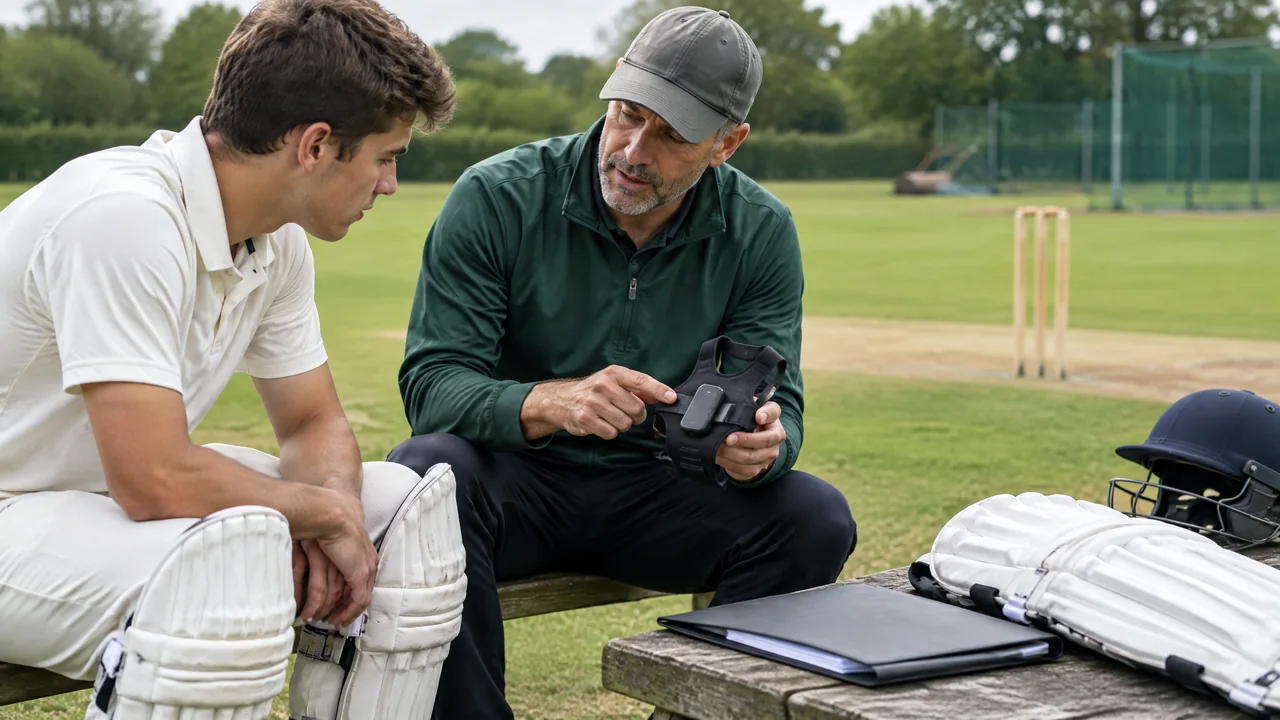
Is a GPS vest automatically allowed on cricket match day?
A GPS vest used in training is not automatically allowed in a cricket match. There is no worldwide yes-or-no clearance for every vest, tracker and competition. For a specific match, read the current playing conditions and any match instructions, obtain any required competition confirmation, and show the unchanged item to the umpires before the toss. Last checked: 6 October 2026.
The key decision is not whether the device is small, soft or hidden under a shirt. It is whether this exact configuration is permitted for this competition and this match.
No. The Laws of Cricket are the worldwide foundation, but MCC explains that most matches also use playing conditions set by the competition authority. Those conditions can replace or add to the Laws, and they vary between competitions.
That means an item used at a training session does not gain match permission by default. Nor does an example from professional cricket, a product description or a social post establish what a local league, school, state competition or international fixture permits.
Start with the match identity: competition, format, teams, date and venue. Then find the current playing conditions, competition regulations, entry conditions and any equipment circular for that competition. A document for another format, season or tournament is not an answer for this match.
Start with the competition playing conditions, not the product page
Use the competition documents to establish the rule framework before looking at the vest. Search for provisions on player equipment, clothing, protective equipment, dangerous items, electronic communications, data transmission, uniforms and pre-match approval. Read the clauses themselves, not just a heading labelled “equipment.”
MCC’s guidance explains the hierarchy: the Laws are universal, while playing conditions are not. If the documents name an approval route, use it. Silence is not a product approval.
A general explanation of wearable technology in sports can help distinguish a wearable from other equipment, but it cannot decide whether that wearable is allowed in a particular cricket match.
Describe the exact vest and tracker configuration
A useful request for clarification is factual and specific. Record the vest and tracker model; where each part is worn; whether any component is visible, rigid or altered; and whether the setup only stores data or sends or receives information while the player is on the field.
Changing the tracker, placement, visibility or connectivity changes the question and may require another check. Covering an item under a playing shirt is not a substitute for the applicable rule.
Check equipment, clothing and electronic-communication clauses together
MCC Law 2 says that, before the toss and during the match, umpires must satisfy themselves that no player uses equipment other than that permitted. It also makes the umpires the sole judges of fair and unfair play. This is an on-field equipment-control duty; it does not replace any binding competition approval process.
The ICC Men’s T20I Playing Conditions illustrate why a one-word answer is unsafe. They repeat the umpire’s equipment-control duty and define visible external protective equipment, but they do not provide a universal GPS-vest approval. Their electronic-communications appendix prohibits electronic devices or equipment used to communicate with players on the field, subject to a narrow broadcaster-to-player exception with prior participating-country consent.
They do not establish that every data recorder is forbidden or clear a particular vest or communications setup. Check the item, in-play function and competition instructions together.
Get the competition answer before the match
If the competition documents require or permit a request for approval, ask the named authority before match day. Supply the factual configuration, retain the written response with the match documents and make sure it applies to the right competition and fixture. A vendor statement, a reply about another event or no reply at all is not confirmation.
For international cricket, ICC clothing and equipment regulations say that event-specific agreements and regulations must also be consulted, and that those event-specific records prevail if they conflict with the general regulations. That is another reason to preserve the exact ruling rather than rely on a general rule page.
Before the toss, show the exact unaltered item to the umpires. Do not swap components at the ground. The pre-match response and the umpire’s equipment-control role work together.
When the practical decision is training-only
If the applicable record does not expressly clear the setup, or the required authority has not confirmed it, treat the vest as training-only for that match. Remove it rather than assuming that an unnoticed item is permitted.
This is a match-administration decision, not a statement about whether the technology is useful, accurate or appropriate for a monitoring programme. The separate task of interpreting already collected information belongs in Turning GPS Tracks Into Training Decisions, not in a match-equipment ruling.
It also does not follow from a named association’s monitoring announcement that a vest is authorised in play. The Cricket Association of Bengal GPS-vest announcement concerns stated monitoring use; it is not evidence of permission for a particular match or competition.
A short match-day checklist
- Identify the exact competition, match and current document version.
- Retrieve the playing conditions, regulations and match or equipment instructions.
- Describe the unchanged vest, tracker, placement, visibility and in-play connectivity.
- Check equipment, clothing, safety and electronic-communication clauses together.
- Obtain any required written competition response before match day.
- Present the same item to the umpires before the toss.
- If permission remains unconfirmed, leave it out of the match.
Sources and scope
This article was checked against MCC’s Laws and Playing Conditions guidance, MCC Law 2 on the umpires, the ICC Men’s T20I Playing Conditions issued for October 2026, and the ICC Clothing and Equipment Regulations. It is a rules-reading and match-administration guide, not legal advice, device approval, health guidance or a ruling on a named competition, player or fixture.