Start with the specific competition
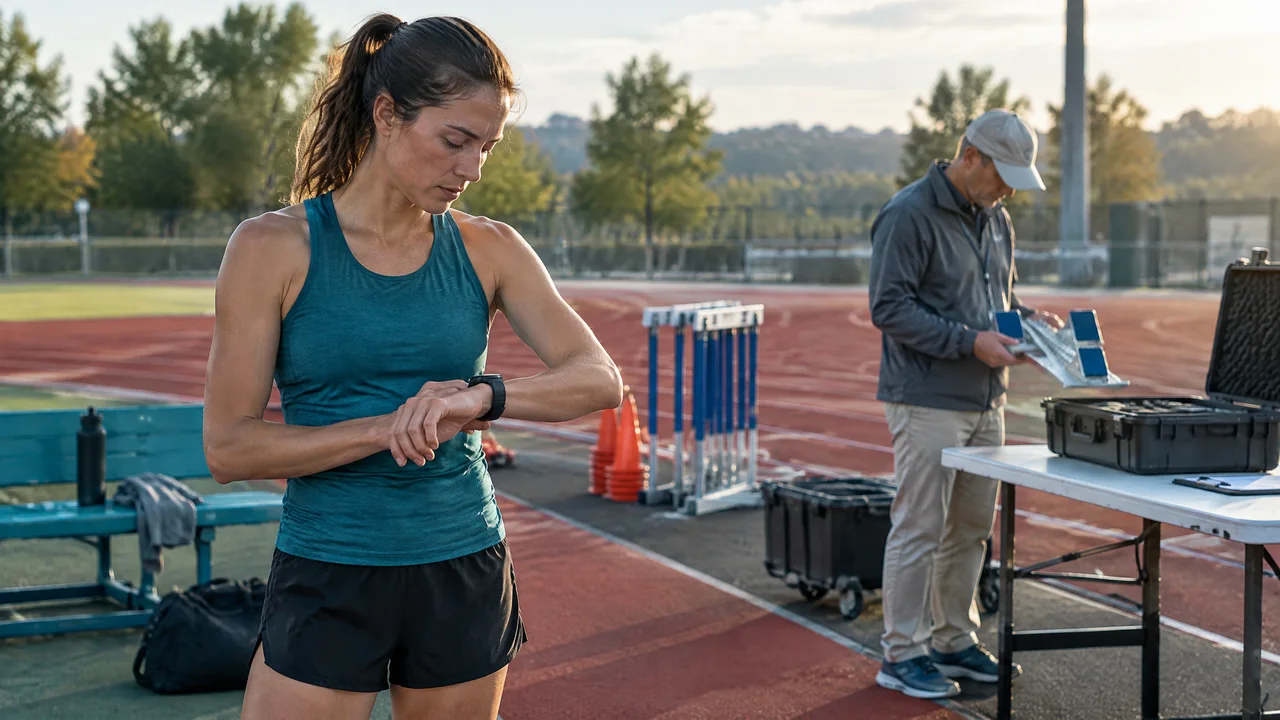
A GPS watch is not automatically cleared for every track-and-field competition. World Athletics’ current rules support a conditional answer: Technical Rule 6 allows personally worn speed/distance monitors and similar devices when they cannot communicate with another person. Separate clothing-and-accessory regulations expressly permit a watch, including a smartwatch, in defined competition scopes.
Check what the device does, which competition rules apply and what the event’s own instructions require. Last checked 6 October 2026.
A watch brand, training habit or another athlete’s experience does not decide permission. Identify the competition and its governing documents; different categories may use different regulations and procedures.
Then keep two questions separate:
- May the athlete wear the device in the relevant area?
- May the athlete use its active functions while competing?
The questions overlap but are not identical. A watch can be physically worn under a scoped clothing rule while its use must still meet the assistance rule and any event instruction. General device literacy, such as wearable technology in sports, cannot settle that competition-specific question.
Read Technical Rule 6 by function
Technical Rule 6, Assistance to Athletes, treats possession or use of mobile phones, radios, radio transmitters and similar devices in the competition area as assistance that is not allowed. It also prohibits technology that provides an advantage not otherwise available through equipment permitted by the Rules.
It separately allows personally worn heart-rate, speed/distance and stride monitors, or similar devices, provided the device cannot communicate with another person.
A GPS watch should not therefore be labelled simply “allowed” or “banned.” Recording speed or distance can fit the named category, but the communication condition remains. The text does not approve a model, app, alert or configuration.
What C7.2 and C7.4 add
World Athletics C7.2 covers World Athletics Series events. It permits a watch, including a smartwatch, in the warm-up area and Field of Play, while listing prohibited devices unless the Competition Rules expressly permit them.
C7.4 has comparable watch wording within its own scope: invitation meetings, circuits and Label road races. These regulations clarify the physical-wear question in their defined categories; they are not a universal event pass and do not displace Technical Rule 6.
For their purposes, the Field of Play includes the Call Room and, at non-stadium events, the course. C7.2 also bars a watch in the area leading to or on the podium for a medal ceremony.
Use a four-document event check
Before Call Room or the start of an event, check the official documents in this order:
- Competition regulations: find the governing framework and device or assistance provisions.
- Athlete information or technical manual: check electronic-device, equipment and venue instructions.
- Call Room procedures: check what officials will inspect or ask athletes to remove.
- Official clarification route: if unresolved, request written clarification through the organiser or relevant referee process before competing.
Keep the event name, document version and response. A recollection from a previous race is not reliable evidence.
This is not a training-data decision. Turning GPS Tracks Into Training Decisions covers that separate reader task; it is not evidence that a device is permitted in competition.
Ask four questions about the device
Describe the actual device and intended use without guessing at the answer:
- What is the athlete relying on it to record: speed, distance, heart rate, stride or something else?
- Can it communicate with another person?
- Is the athlete relying on another function that may raise a separate assistance issue?
- Does the event document impose a stricter instruction or a particular procedure?
This is not a method for finding a workaround. It gives an organiser or referee the facts needed to apply the relevant rules. Where a function is uncertain, treat it as unconfirmed for that event until the applicable authority provides clarification.
What the rules do not prove
The materials do not show that every organiser uses the same procedure. They do not approve every smartwatch feature, a specific model or use in a race, jump or throw.
They also do not establish permission at a named meet without that meet’s official documentation. A broadcast picture or another athlete’s equipment is observation, not permission evidence.
For the separate question of assessing a measurement system, see Performance Technology in Sports. For programme accountability, Athlete Performance Tracking addresses a different organisational task.
A conditional answer for athletes and officials
Under the 2026 World Athletics Technical Rules, a personally carried or worn speed/distance monitor or similar device is allowed only if it cannot communicate with another person. In the defined scopes of C7.2 and C7.4, World Athletics also expressly permits a watch, including a smartwatch, in the warm-up area and Field of Play, subject to the wider rules and applicable instructions.
For a particular competition, the final answer comes from its regulations, athlete information, Call Room procedures and responsible official’s direction. That preserves the key distinction between wearing a watch and assuming every enabled function is permitted.
Sources and scope
This article was checked against World Athletics’ Technical Information index, its 2026 Technical Rules (especially Technical Rule 6), and C7.2 and C7.4 clothing-and-accessory regulations.
It is a rules-reading guide, not a ruling on a particular device, athlete or event. Event regulations and officials’ directions remain necessary for a competition-specific answer.