The short answer: only when the match process allows it
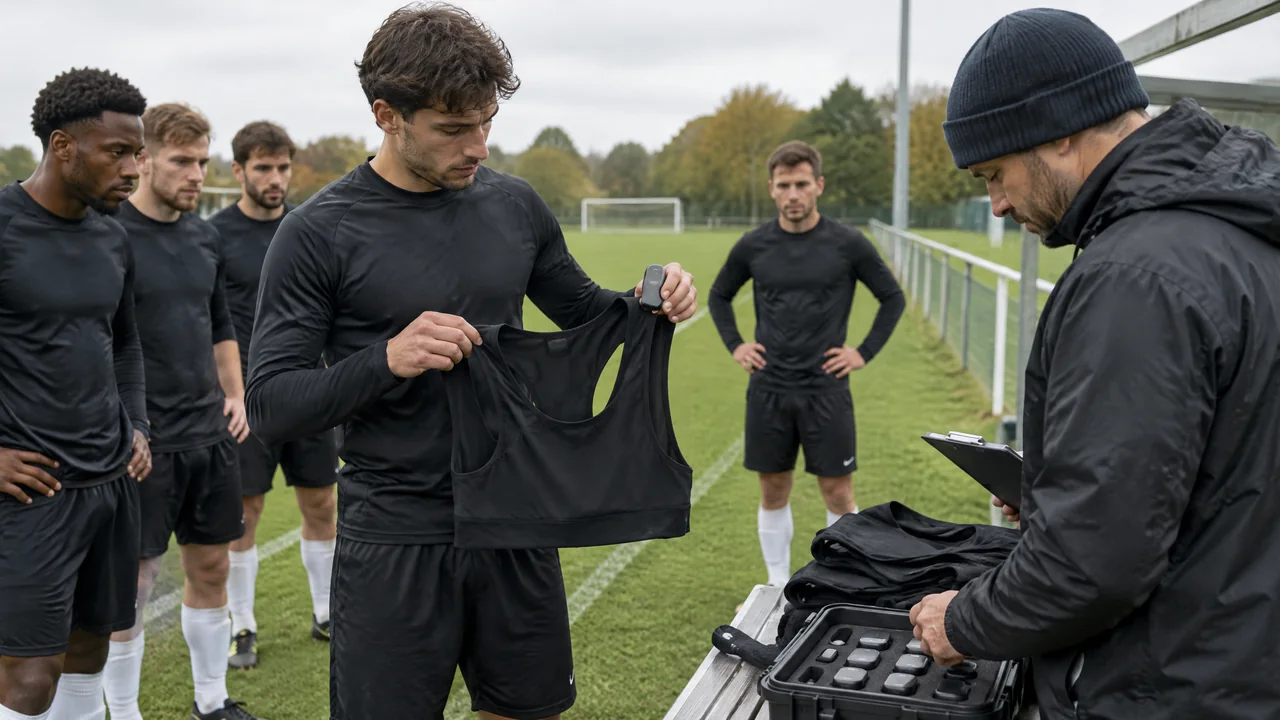
A player may be able to wear a GPS vest in a football match, but it is not automatically allowed because the vest is sold for football or carries a FIFA-related marketing claim. For an official competition under FIFA, a confederation or a national association, Law 4 puts a duty on the competition organiser: wearable electronic performance and tracking systems (EPTS) attached to player equipment must be safe and meet the FIFA Quality Programme requirements for wearable EPTS.
That is a conditional route, not an individual entitlement. The organiser’s current competition instructions and the pre-match equipment process still decide the practical answer for this match. A referee’s safety and equipment control also remains relevant. Last checked 6 October 2026.
This is a rule-reading checklist, not legal advice, for an administrator who needs a documented match-specific answer.
Why a tracking vest is not ordinary permitted kit
Law 4 generally does not permit players to wear or use electronic or communication equipment, except where EPTS is allowed. A vest is not cleared simply by being soft or worn under a shirt; it remains electronic equipment attached to player equipment.
Players are inspected before the match. A player using unauthorised or dangerous equipment can be required to remove it or leave the field at the next stoppage. That control is not replaced by a supplier page.
If the question is how wearable systems work or what they may measure, that is a different reader task covered by Wearable Technology in Sports. The question here is narrower: may this item be worn in this competition today?
The organiser sets the match-day route
For the official competitions covered by Law 4, the competition organiser is the party expressly named to ensure that wearable EPTS attached to player equipment is not dangerous and meets the FIFA programme requirements. That wording does not make a manufacturer the match-day decision-maker.
Start with current competition regulations and team instructions. They may set a notification, inspection or equipment procedure beyond the baseline rule. If unclear, ask the organiser’s designated contact before players dress, using the exact system name rather than a brand name alone.
Match officials still control whether equipment is authorised and safe. Give the organiser’s process time to operate and present any requested product record before the pre-match check.
Four checks before the player dresses
1. Identify the exact item. Record the system or product name the player will wear, not just the provider or the phrase “GPS vest.” A record for another item in the same catalogue is not enough.
2. Check the current FIFA Resource Hub record. Its EPTS listing shows product name, provider, system type, mark and certification period. Confirm that the exact listed system and displayed period match the proposed item. For the separate record-reading task, see how FIFA EPTS certification works. A generic logo, old announcement or provider-wide claim is not the same evidence.
3. Check the competition’s own instructions. Establish whether the organiser permits the item and what must happen before the match. A FIFA record is product evidence; it does not identify a competition, approve a player or confirm a setup.
4. Complete the pre-match equipment process. Have the item available for the required check. If the organiser or match officials say it is not authorised or safe, do not put it on the player.
This sequence deliberately puts competition permission before any discussion of use or interpretation. Once a programme is already permitted and operating, Wearable Workflows for Tournament Weekends addresses a separate operational question.
What a FIFA-related vendor claim can prove—and cannot
A claim that a product appears in FIFA’s programme justifies a closer check of the exact public record and displayed period. It does not prove permission for a named league, cup or friendly, or show that the product will pass a particular match’s process.
The September 2026 FIFA EPTS application guide states that the impact assessment is mandatory under the Laws of the Game for wearable EPTS used in official competitions. Certification remains a product-system process; it does not remove the organiser’s Law 4 responsibility.
Keep certification literacy separate from match permission. A club deciding whether data from a permitted system should influence selection has another question entirely; see Validating a Wearable Before It Shapes Selection.
When the organiser provides the system
Law 4 contains an additional, specific responsibility when EPTS are provided by the match or competition organiser. In that circumstance, the organiser is responsible for ensuring that information and data transmitted from EPTS to the technical area during an official competition are reliable and accurate.
This condition is tied to organiser-provided EPTS and information sent to the technical area. It does not decide whether a team-owned item is permitted; return to the four checks.
Do not infer permission from what you have seen elsewhere
A televised match, training photograph, supplier case study or another competition’s routine is not proof that a vest may be worn in this match. None identifies the applicable regulations, exact product record, organiser’s decision or safety outcome.
The safe answer is conditional: “It may be allowed only if the exact system’s current record, the organiser’s instructions and the match-day safety/equipment process all line up.” If a link is missing, mark permission unconfirmed rather than turn marketing language into clearance.
Sources and scope
The rule baseline was checked against The IFAB’s Laws of the Game 2026/27, Law 4. Product-programme details were checked against FIFA’s September 2026 EPTS Application Guide and FIFA’s public Resource Hub. These sources support a match-day permission hierarchy; they do not document deployment at a named event, endorse a supplier or establish a universal league policy.