A useful programme starts by framing the choice, not by asking for more data. For Fast, reliable video-tagging operations, the choice is which tags are necessary to retrieve and discuss the patterns that matter this week. In a weekly competition cycle where review has to reach coaches before the next training design is fixed, write that question on the brief beside the user, timing, and alternatives. A proposal that cannot name an action should remain exploratory rather than influence people. This opening discipline prevents an attractive metric from wandering into selection, tactical, or operational use without a corresponding standard of evidence.
Instead of judging the work by how much it produces, test whether it remains useful. Track time from final whistle to usable playlist, agreement on a sampled set of tags, and retrieval success when a coach asks for a previously discussed pattern. Pair quantitative checks with reviewed examples, including counterexamples where the expected pattern did not appear. The review should ask whether users interpret the result as intended and whether a different action would have been plausible. This is a stronger standard than measuring clicks or report volume. In practice, record this step in the shared operational log so that the next reviewer can see the context, owner, and unresolved question without reconstructing it from memory.
Work backward from the question to the evidence. The relevant ingredients are clip boundaries, team phase, location, trigger, outcome, annotator confidence, and a limited set of coach-defined labels. They need a shared definition, time reference, and owner before anyone combines them. The technical approach is to use a stable core taxonomy for retrieval and add temporary, clearly dated campaign tags only when a specific question needs them. Make a small source map showing where each signal enters, how it is transformed, and where its meaning can change. It gives coaches a way to query the analysis and gives engineers a way to find a broken assumption.
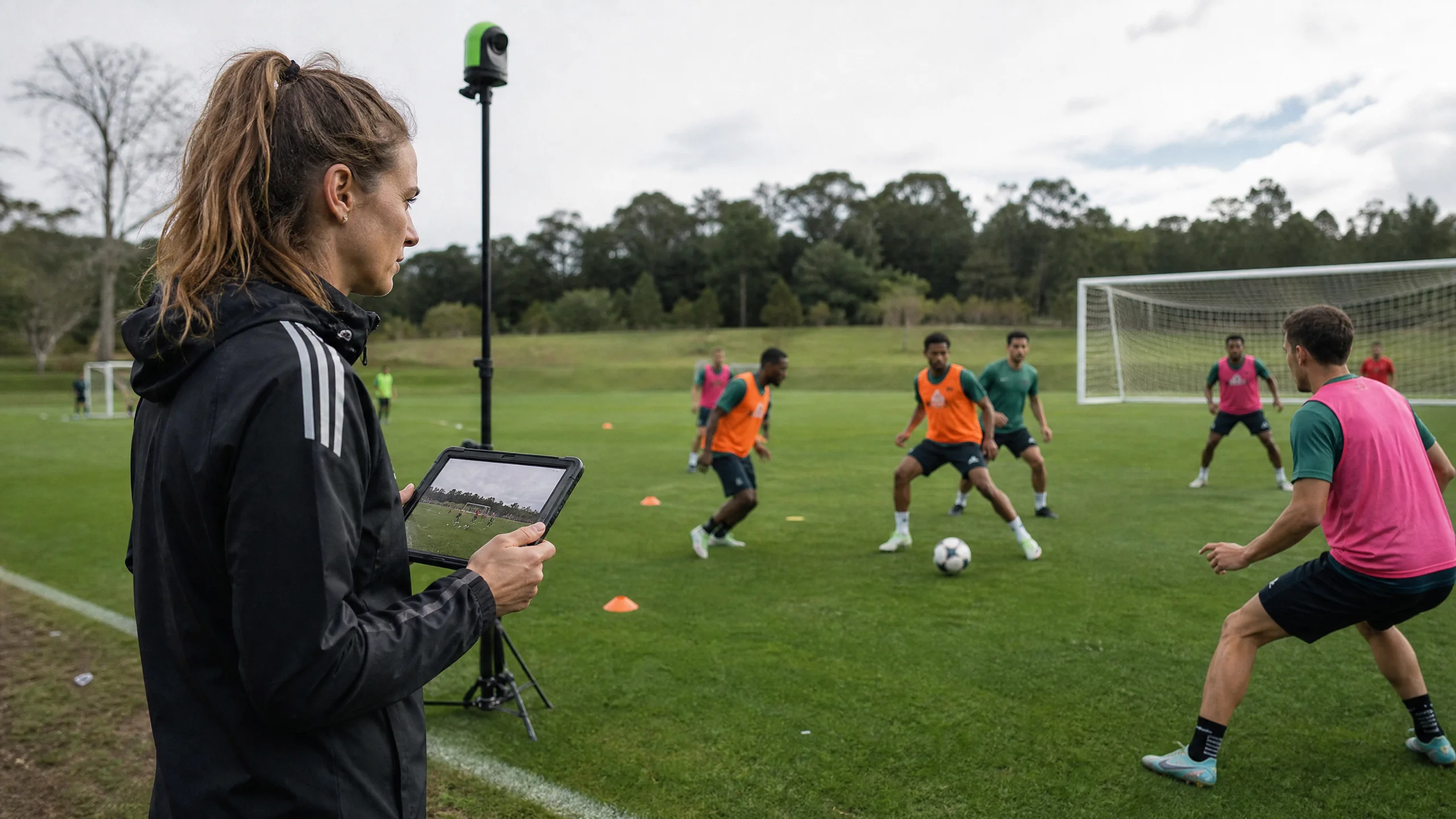
Delivery succeeds when a modest weekly rhythm is explicit. After upload, an analyst checks timecode and creates a quick first pass using keyboard shortcuts. A second pass is reserved for ambiguous clips and priority phases; anything unresolved goes to an exception queue rather than blocking delivery. Coaches receive a curated playlist with a two-line framing question and can return clips for a different cut. Keep a visible boundary between discovery work and material that informs a scheduled decision. That boundary protects staff from last-minute interpretation and helps users know whether a number is provisional. When a handoff fails, record the practical consequence—late clip, missing source, unclear owner—rather than only a technical error code.
Every interpretation has an edge. tag counts depend on definitions, camera angle can hide triggers, and expanding a taxonomy to capture every variation slows work while reducing consistency State those conditions in the same place as the conclusion, with a concrete next check. An analyst should be able to say “this applies to these sequences, not to every situation” without weakening the project. Limiting scope is a practical safeguard against false certainty, especially when the output will be read quickly by busy staff. In practice, record this step in the shared operational log so that the next reviewer can see the context, owner, and unresolved question without reconstructing it from memory.
Choose the next step according to operational value: Protect a next-day delivery threshold, then improve the highest-value tags through weekly sampling. If a label does not change retrieval or discussion, remove it. Begin with a bounded pilot, collect disagreements, and make the continuation decision in a forum that includes the people affected by the workflow. The resulting practice will be more durable than a model that is technically clever but unsupported when the context changes. In practice, record this step in the shared operational log so that the next reviewer can see the context, owner, and unresolved question without reconstructing it from memory.
Controls have to travel with the workflow. Define who may add labels that concern an individual, preserve an edit history, and avoid using informal tags that imply character, health, or intent. Access should match the review purpose. Include them in onboarding, routine access reviews, and incident discussions. The person using an output should know the owner, the version, and the challenge route. If a concern arises, preserve the relevant input and decision record long enough to investigate it, then follow the agreed retention rules rather than keeping sensitive material indefinitely.