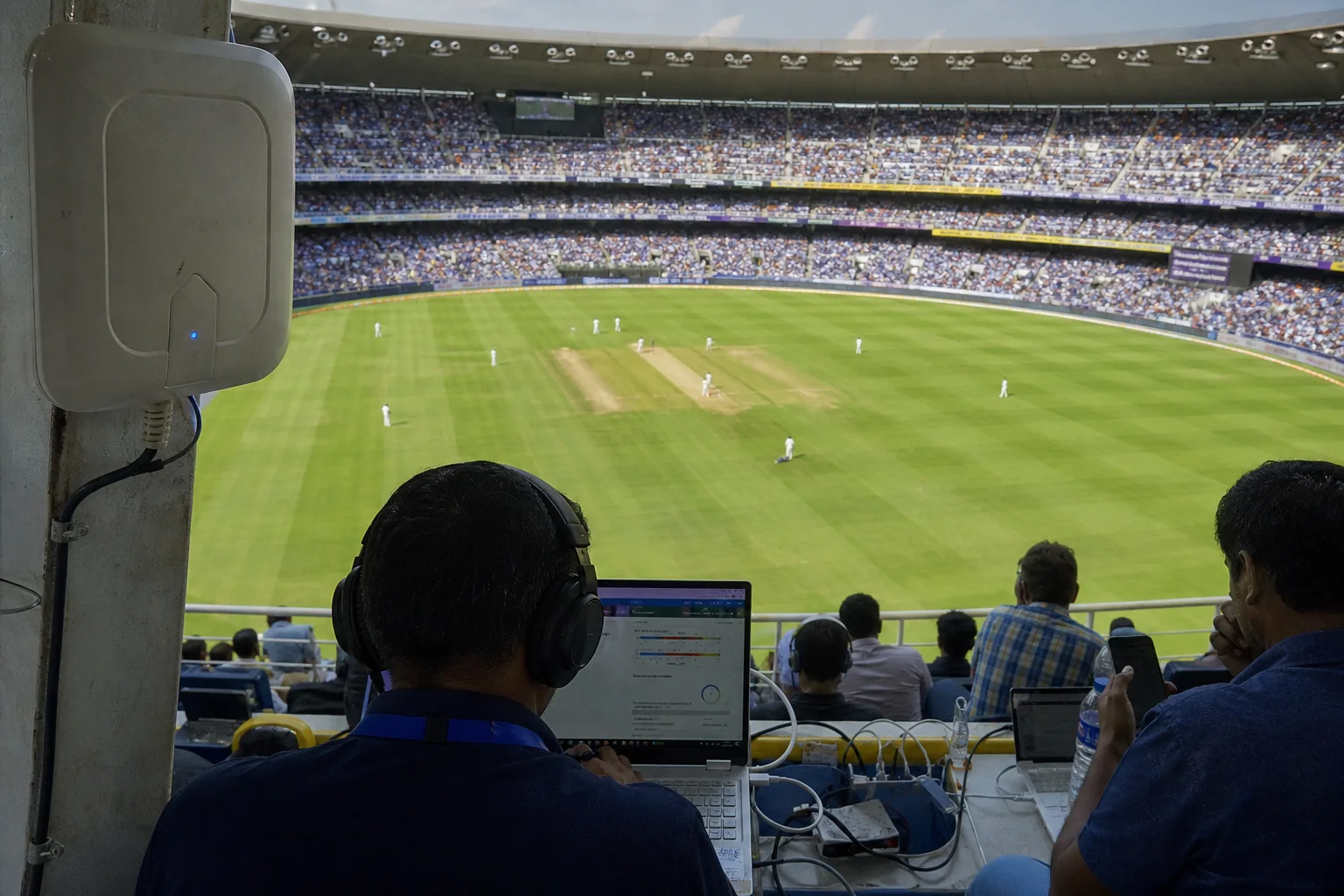
Fans notice Wi-Fi only when it fails, but the design brief begins earlier with the applications that share it. Ticket scanning, point of sale, staff radios on Wi-Fi, media uploads, and fan devices produce different traffic shapes. Treating every connection as identical leaves the network unable to protect the services that run the event. This frames the work as an operating capability rather than a technology purchase. The practical test is whether the arrangement makes the next event easier to run safely. The intended result should be stated in plain operational language before specifications are written.
Begin with a venue map that marks seat geometry, concourse ceilings, hospitality rooms, production compounds, and service corridors. Radio placement should follow likely device concentration and building materials, not a neat seating grid. The wired path must then provide enough resilient capacity from each access point to distribution rooms and the external connection. Name the owner, the handoff point, and the manual fallback before approving a design. Build the procedure with facilities, customer-facing teams, and technical staff in the same room. A clear readiness check exposes dependencies that procurement documents often miss.
Capacity planning benefits from scenarios rather than a single attendance assumption. Model arrival, pre-match dwell, half-time, and departure separately because people and applications cluster differently in each phase. A sparse crowd can still load a network when everyone is trying to enter, pay, upload, or check travel information at the same moment. The decision should be tested against the people who will use it under event pressure. If a condition cannot be observed in the field, it is a weak trigger for an event decision. Observe the boundary between teams, where handoffs and unclear language commonly cause delay.
Segmentation is the practical safeguard. Keep operational devices, payment equipment, broadcast support, guest access, and contractor equipment in separate policy domains, then set priority rules for the services that cannot pause. It is better to deliberately constrain a low-priority guest experience than to let it degrade a gate reader or a staff coordination tool. Keep the public experience, staff workload, and safety consequence visible in the decision. Choose controls that reduce a defined risk without quietly shifting it to another group. Pair every speed or utilisation metric with an observation of fairness, access, or resilience.
Testing needs realistic movement and contention. Walk routes with representative devices, load a controlled set of test clients, and include doors, queues, lift lobbies, and temporary overlays. A dashboard showing strong signal is not proof that an attendee can authenticate, receive a ticket update, and complete a payment while the venue is busy. Use a documented review point so assumptions can be revised rather than defended. Keep a concise record of exceptions, because recurring exceptions reveal design debt. Privacy and safety rules need a named custodian and a route for frontline questions.
Operations teams need a compact event-day view rather than an engineering console full of raw counters. Track connection success, time to obtain service, area-level retransmissions, and critical application availability with thresholds that trigger named actions. Link each alert to a field check, because a local obstruction, failed switch, or mispatched cable can look similar in aggregate telemetry. Any partner involved should understand both its technical role and its authority boundary. Roll out in a bounded pilot where a supervisor can reverse the change quickly. Temporary event changes should have a deadline, inspection, and rollback plan.
Plan renewal as part of the initial business case. Software support, spare radios, temporary event overlays, cable records, and post-event tuning consume attention long after installation. Preserve current diagrams and change logs, then review complaints and service traces together so future investment addresses the actual pressure points rather than the loudest anecdote. Good practice preserves a workable service when the preferred digital path is unavailable. Use the debrief to replace anecdote with a specific adjustment for the next event. Learning compounds when the team changes one variable at a time and records the outcome.