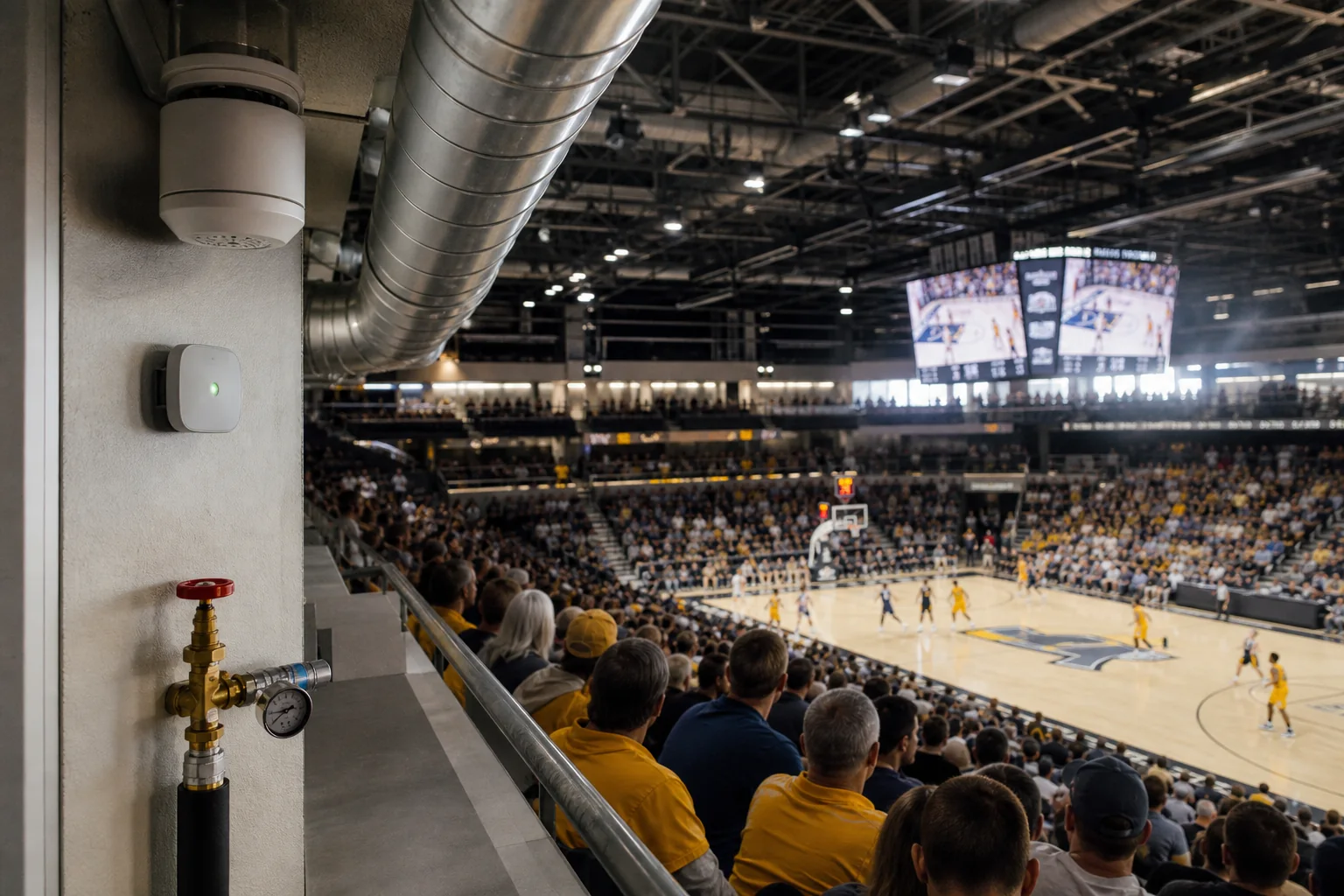
Large venues often operate spaces that open, fill, and empty on very different schedules. Suites, kitchens, locker rooms, concourses, media areas, and offices should not receive identical conditioning simply because they share a building. Start with an operational calendar that identifies occupancy, thermal loads, food service, cleaning, and required comfort periods for each zone. It is a decision about people, process, and physical space as much as a decision about equipment. The resulting plan should be simple enough for an event supervisor to apply without opening a technical manual. This frames the work as an operating capability rather than a technology purchase.
Connect building controls to verified schedules rather than an assumption that a ticketed event equals full building use. A practice session, a concert build, and a match can use the same rooms differently. Facilities staff should be able to override automation safely when a schedule changes, and the override should be visible so temporary choices do not become invisible permanent settings. Document the normal workflow and the exception workflow; both need an owner. That discipline keeps investment choices connected to a credible event-day workflow. Name the owner, the handoff point, and the manual fallback before approving a design.
Occupancy sensors and booking data can assist, but they do not fully describe comfort or air quality. A sensor may report presence while a room remains unsuitable because a kitchen is active, a door is open, or a group is waiting in a corridor. Use multiple cues, direct checks, and complaint patterns before changing setpoints that affect fans, staff, or participants. Field checks should challenge the model whenever the live environment has changed. It also gives the team a practical basis for changing the approach after a debrief. The decision should be tested against the people who will use it under event pressure.
Water management requires the same operational detail. Identify high-use washrooms, cleaning activities, irrigation, kitchens, and cooling systems, then trace both consumption and leak response. A digital meter can flag a pattern, but a named team must investigate it. Include accessible toilet availability and cleaning turnover in performance review rather than treating water use as the only outcome. Protect the route for people who need more time, space, or assistance to act on the instruction. The point is a clear operational choice rather than a more elaborate technical description. Keep the public experience, staff workload, and safety consequence visible in the decision.
Comfort metrics need boundaries. Temperature averages can hide hot queues near glazing, stale meeting rooms, or cold operator positions. Collect time-and-location feedback from frontline teams alongside equipment readings, then look for recurring conditions. Avoid aggressive optimisation that shifts discomfort to workers or creates humidity and condensation problems that later require reactive maintenance. Limit collection and visibility of personal information to what the task genuinely requires. This keeps the arrangement understandable to the people who must act on it. Use a documented review point so assumptions can be revised rather than defended. Keep a concise record of exceptions, because recurring exceptions reveal design debt.
Cyber and resilience controls now reach building systems. Limit remote access, maintain asset records, back up configuration files, and define manual operating modes for critical plant. An efficient control strategy is fragile if a contractor account, failed sensor, or network problem leaves staff unable to run basic ventilation, water, or cooling functions during an event. Rehearse the degraded mode before a crowded event makes experimentation unsafe. The same record can support a fair review when a decision is questioned later. Any partner involved should understand both its technical role and its authority boundary.
Use a seasonal review that combines utility traces, maintenance tickets, comfort observations, water incidents, and event schedules. Select a small number of adjustments, test them in comparable conditions, and keep a rollback option. Efficiency is an operating habit: it comes from understanding how the building serves people, not from chasing a single meter reduction without context. Continual improvement depends on honest feedback from users, crews, and supervisors. That makes the next event safer to run and the system easier to maintain. Good practice preserves a workable service when the preferred digital path is unavailable.