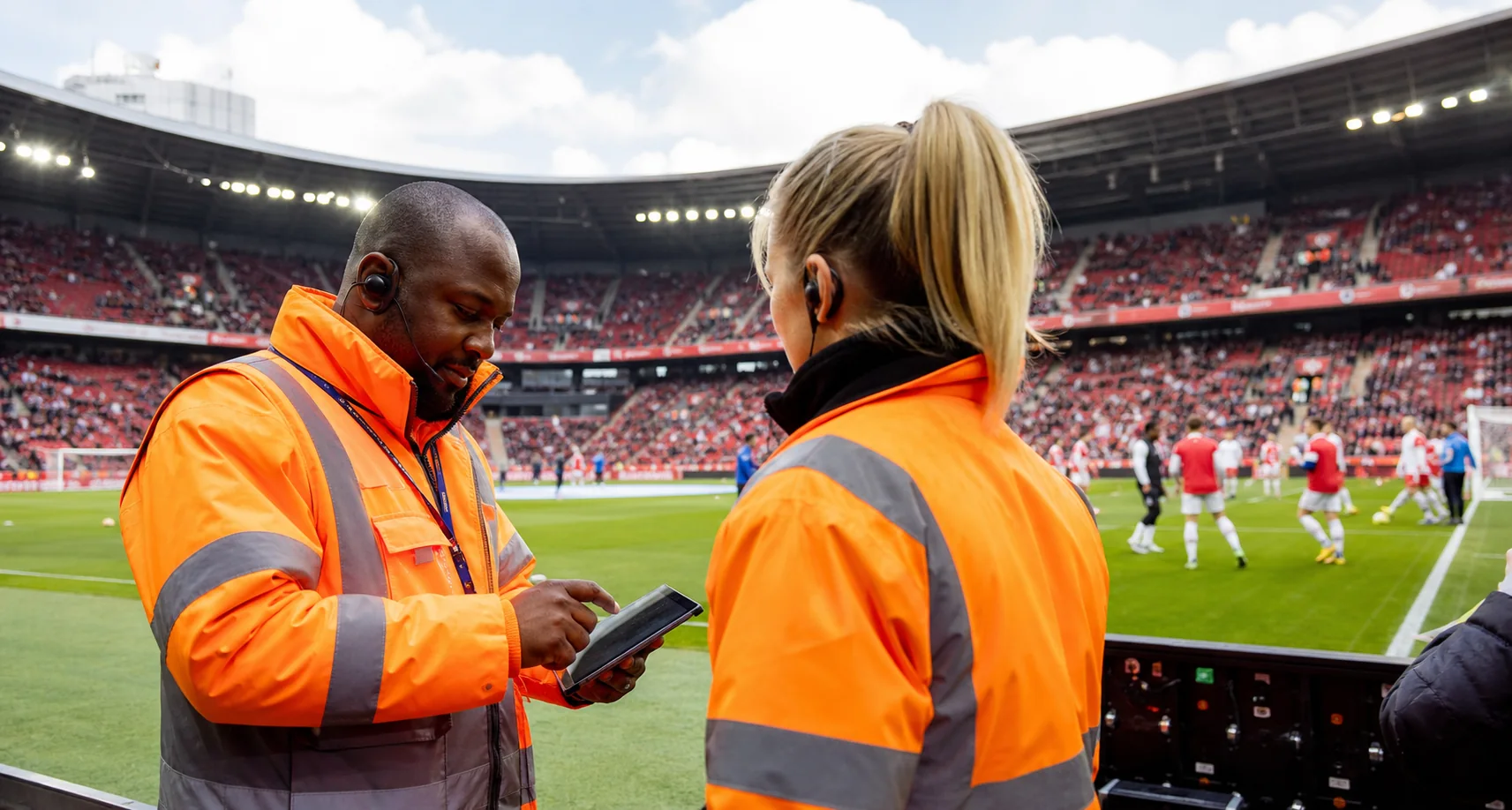
Venue operations depend on people arriving prepared, finding their post, completing checks, and escalating concerns quickly. Digital tasking can strengthen this chain, but the aim should be clear work coordination rather than continuous individual monitoring. Start with the operational decisions the tool must support: attendance confirmation, asset checks, incident assignment, relief coverage, or supervisor handoff. It is a decision about people, process, and physical space as much as a decision about equipment. The resulting plan should be simple enough for an event supervisor to apply without opening a technical manual. This frames the work as an operating capability rather than a technology purchase.
Design tasks as observable outcomes. “Check Gate C” is vague; “confirm reader power, barrier position, accessible lane clear, and radio contact by the readiness time” gives a supervisor useful information. Attach a simple exception path so staff can report a blocked route or missing equipment rather than falsely closing a task because the application expects a tick. Document the normal workflow and the exception workflow; both need an owner. That discipline keeps investment choices connected to a credible event-day workflow. Name the owner, the handoff point, and the manual fallback before approving a design.
Location features require particular restraint. A venue may need to locate a response team during an incident, but that does not make permanent granular tracking necessary for every role and every hour. Define purpose, accuracy limits, access roles, retention, and conditions for use. Tell workers what is collected and offer a route to raise concerns or correct a record. Field checks should challenge the model whenever the live environment has changed. It also gives the team a practical basis for changing the approach after a debrief. The decision should be tested against the people who will use it under event pressure.
Integrate contractors carefully. Security, cleaning, catering, engineering, and event crews may share a site while reporting to different organisations. Provide only the access each role needs, avoid exposing personal schedules unnecessarily, and coordinate escalation language. A shared dashboard can create confusion if it hides different authority lines or makes one contractor appear responsible for another team’s task. Protect the route for people who need more time, space, or assistance to act on the instruction. The point is a clear operational choice rather than a more elaborate technical description. Keep the public experience, staff workload, and safety consequence visible in the decision.
Measure adoption through operating quality, not app activity. Consider missed handoffs, readiness exceptions found early, time to acknowledge an incident, repeated equipment faults, and supervisor workload. A high number of taps or location pings may indicate busy work rather than improved readiness. Validate digital records against field walkthroughs and worker feedback. Limit collection and visibility of personal information to what the task genuinely requires. This keeps the arrangement understandable to the people who must act on it. Use a documented review point so assumptions can be revised rather than defended. Keep a concise record of exceptions, because recurring exceptions reveal design debt.
Resilience requires paper and radio fallbacks. Devices run out of power, guest networks become busy, applications fail, and temporary workers may not have compatible phones. Prepare printed post lists, phone contacts, check sheets, and a method to reconcile later. A fallback is not resistance to technology; it is a safety control for a workforce operating in changing conditions. Rehearse the degraded mode before a crowded event makes experimentation unsafe. The same record can support a fair review when a decision is questioned later. Any partner involved should understand both its technical role and its authority boundary.
Review the tool with representatives from operations, workers, privacy, security, and facilities after a run of events. Remove fields that no longer serve a purpose, correct tasks that create false completion, and adjust access as roles change. Workforce orchestration is mature when it helps people coordinate safely and gives them a fair, understandable account of how their work data is used. Continual improvement depends on honest feedback from users, crews, and supervisors. That makes the next event safer to run and the system easier to maintain. Good practice preserves a workable service when the preferred digital path is unavailable.