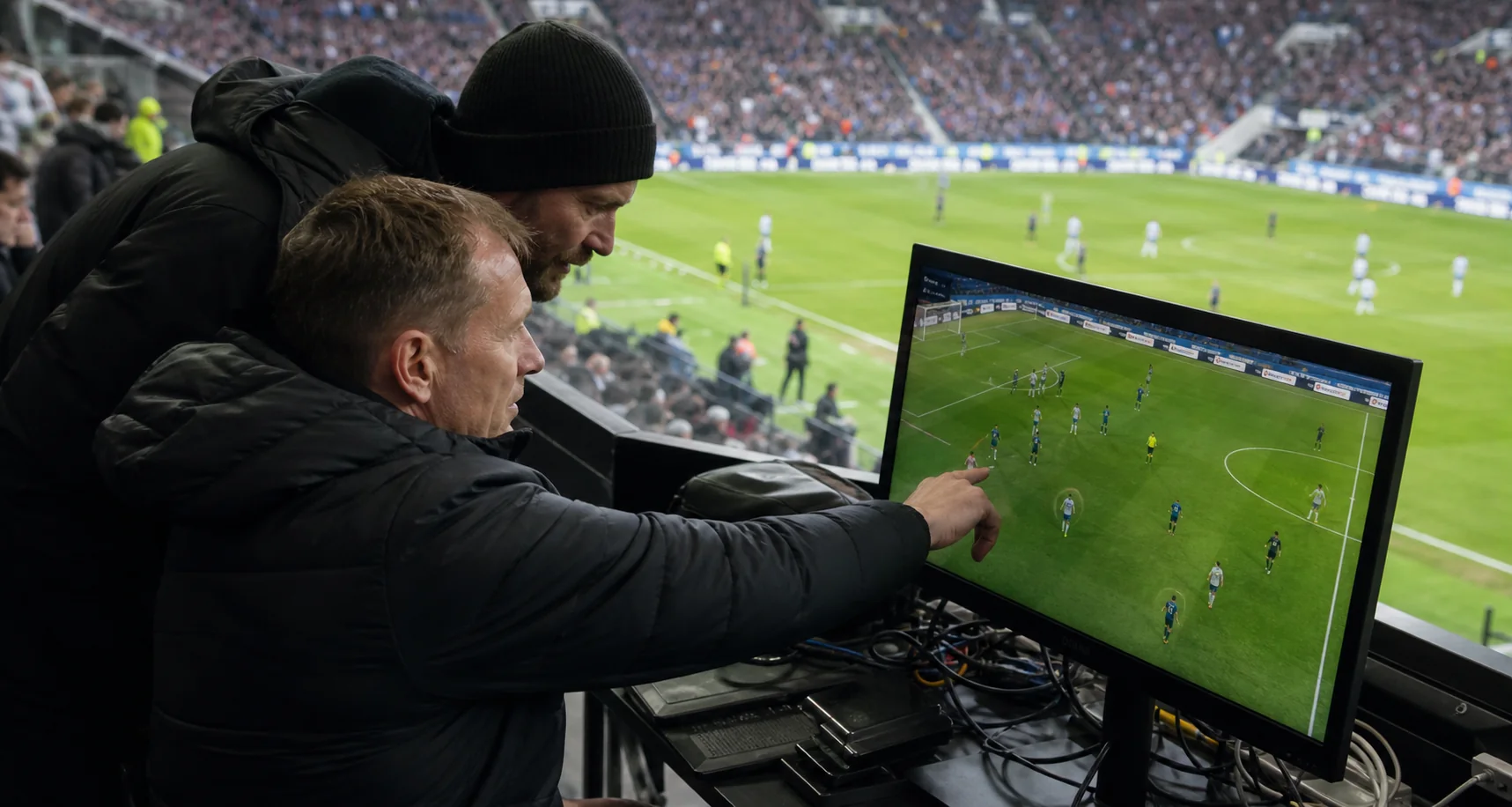
The first step in video analysis is not clipping; it is agreeing on the decision the team wants to improve. “Defend transitions better” is too broad, whereas “recognise when the far-side fullback can step before the first forward pass” gives analysts, coaches, and players something observable. Write the question in plain language and specify the visual cues, the preferred response, and the consequence of getting it wrong. This prevents a review from becoming a catalogue of mistakes or an analyst-led tour through every interesting moment in a match. That decision should be captured in the session note, then checked against the athlete and coach response at the next review.
Create a coding sheet that separates event, context, and decision. The event might be a turnover; context includes score state, field zone, player numbers, and opponent shape; the decision is the action selected with the available information. That separation matters because the same outcome can follow a good choice in one context and a poor choice in another. Analysts should tag uncertainty rather than forcing every clip into success or failure. A clip with an obstructed camera angle or an unclear communication cue should be marked as limited evidence, not used to make a confident claim.
Use a small sample of contrasting clips instead of a long highlight reel. Two examples that reveal the same cue in different game states often teach more than twelve nearly identical sequences. Place a freeze frame just before the decision point, then ask players what they see, what options are available, and what information they need from a teammate. Let the room answer before revealing the outcome. This turns video into perceptual practice rather than a lecture, and it gives coaches evidence about whether the shared language is actually understood.
The most valuable edit is often the bridge from screen to grass. Design one practice constraint that recreates the target information without copying the exact clip. For example, a transition game can award points for a defender stepping early only when cover is present, forcing the group to scan both ball pressure and the far side. Brief the session with the same cue language used in review. Afterward, coaches should note whether players recognised the cue, not merely whether the drill produced the desired pattern. Revisit the choice after a comparable task so the programme learns from a pattern rather than from a single impression.
Protect player trust by defining who sees what and why. Individual clips should not become public rankings or permanent evidence of a player’s worth. Use group footage for shared tactical themes, reserve private conversations for sensitive individual feedback, and limit raw video access to staff who need it for their role. If youth players are involved, establish parent-aware consent and a retention period for recordings. Video contains identifiable personal information, so governance is part of coaching quality rather than a separate administrative task. This creates a practical feedback loop: decision, delivery, observation, and a proportionate adjustment for the following session.
Avoid false precision in coded rates. Small samples, inconsistent camera coverage, changing opposition quality, and subjective tagging can make a percentage look sturdier than it is. Track tagging definitions, have a second staff member review a small selection of clips, and report confidence in words when numbers are not stable. A trend that appears across several matches may justify a practice emphasis; a single sequence rarely does. The analyst’s credibility grows when they explain what the footage cannot show as carefully as what it can. The staff can then distinguish a useful adaptation from a temporary workaround and communicate the next step clearly.
Finish each review with one ownership assignment and one follow-up check. The assistant coach may own the practice design, a unit leader may repeat the cue in walkthrough, and the analyst may capture two new examples during the next match. At the following review, revisit the original question before introducing a new one. This closed loop protects attention in a crowded week. It also keeps tactical video connected to coaching operations: a decision is named, practised, observed, and refined rather than filed away in a library no one uses. Staff should record the adjustment, observe the next meaningful exposure, and revise the plan if the evidence changes.