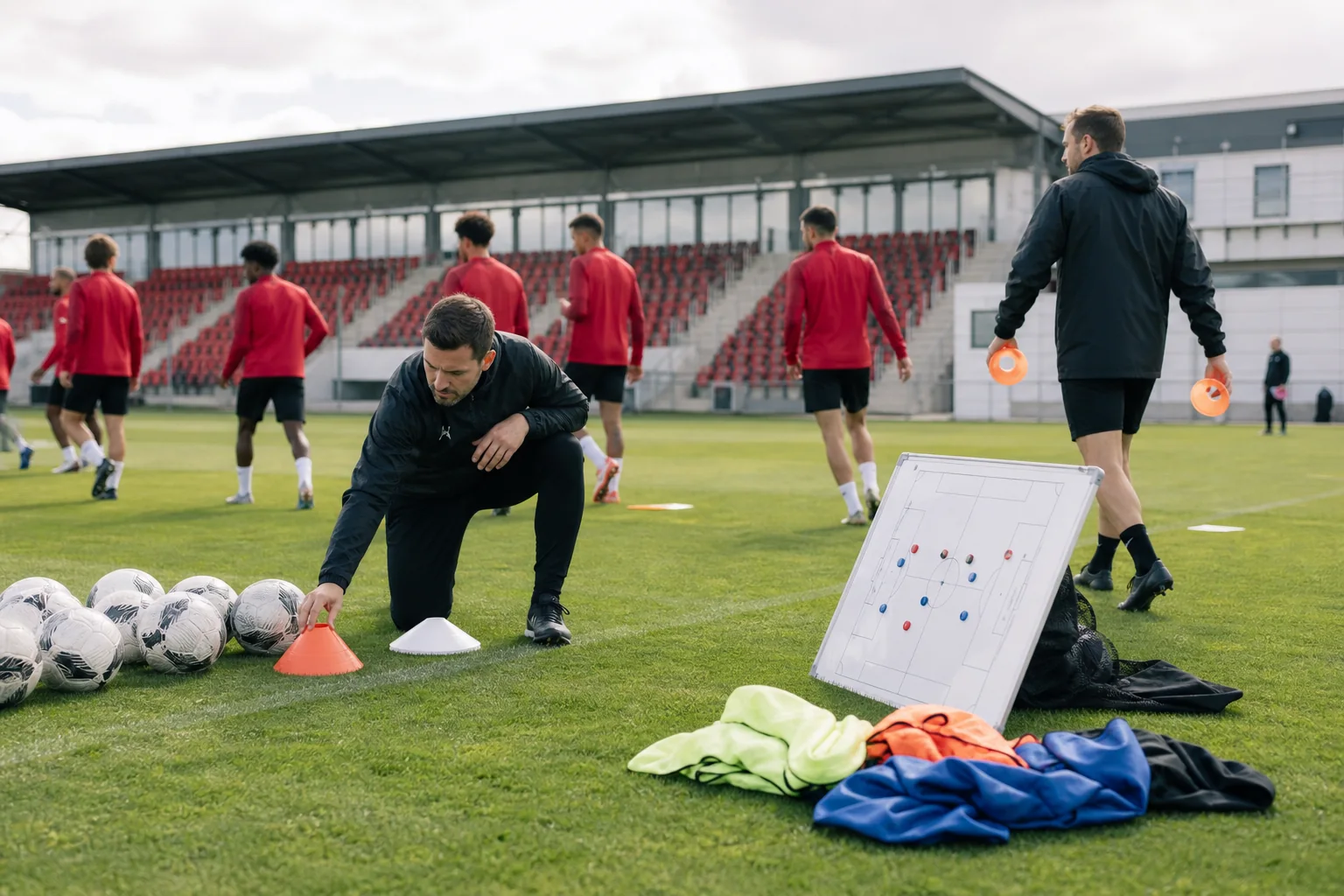
Practice begins well before the first whistle. Create a session run sheet that names the objective, start and finish times, space layout, equipment list, groupings, safety considerations, and owner for each transition. Keep it short enough to use at the field edge. The run sheet is not a script that removes coaching judgement; it is a shared picture that prevents staff from rediscovering logistics while athletes wait. When plans change, update the current version and make one person responsible for communicating the change across coaching, performance, and venue teams. The staff can then distinguish a useful adaptation from a temporary workaround and communicate the next step clearly.
Map the physical environment with purpose. Mark the arrival route, equipment drop, athlete briefing point, water access, medical escalation path, and the boundaries of each activity before the group arrives. A clear setup reduces needless walking and allows coaches to observe rather than hunt for cones. It also makes safety visible: unstable goals, slippery areas, poor lighting, and conflicting activities can be addressed early. Photograph a proven field layout from above and store it with the session card, but revisit it whenever venue dimensions or group numbers change. Staff should record the adjustment, observe the next meaningful exposure, and revise the plan if the evidence changes.
Assign transition ownership, because the quality of the next drill is often decided during the previous one. One assistant moves equipment, another gathers a unit, a performance coach prepares the next physical exposure, and the lead coach remains available to observe and teach. Rotate these roles so knowledge is not held by one indispensable person. Use a simple verbal handoff when the plan changes: what has been completed, what is next, and what constraint or load adjustment now applies. This reduces the quiet drift that turns a seventy-minute session into ninety minutes of diluted work.
Equipment management needs a check-in and check-out rhythm. Pack by session zone, label containers with neutral identifiers, and inspect balls, bands, markers, radios, and recording equipment before departure. Avoid relying on an athlete to remember specialist kit unless that responsibility is explicit and appropriate. A missing item should trigger an alternative setup, not a public scramble or blame. Keep a low-tech backup for critical functions: printed session diagrams, spare timing device, basic cones, and a way to record attendance when connectivity fails. Use the follow-up to confirm whether the tradeoff worked in practice rather than assuming that the first response was correct.
The session leader should protect the opening minute. Athletes need to know the problem they are solving, the start condition, the safety limit, and how success will be recognised. Long tactical speeches at the start consume attention before movement begins. Deliver the essential cue, let the task reveal the rest, and use pauses only when they earn their cost. Design a predictable close too: a short cool-down or reset, a private feedback route, equipment return, and a clear next instruction. Finishing cleanly matters for recovery, punctuality, and respect for athlete time.
Record operations separately from performance. Attendance, duration, space changes, weather, equipment failure, interruptions, and deviations from the plan explain why a session may not resemble its original design. These records are not surveillance of staff; they are evidence for improvement. Restrict personal information to those with a legitimate role and avoid using session logs as informal selection files. Where filming occurs, identify the purpose and access group in advance. Operational clarity protects privacy because it limits the casual spread of athlete data through unstructured channels. Revisit the choice after a comparable task so the programme learns from a pattern rather than from a single impression.
Review operations weekly using three questions: where did athletes wait, where did staff improvise, and what condition repeatedly reduced quality? Fix the highest-leverage friction first, whether it is late field access, unclear equipment ownership, or a briefing that starts too long. Invite assistants and athletes to contribute observations; they notice different failure points than the head coach. A mature practice system makes excellence more repeatable without making the session sterile. It frees coaches to adapt to the group because the basic architecture is already dependable. This creates a practical feedback loop: decision, delivery, observation, and a proportionate adjustment for the following session.