Sports analysis becomes valuable only when it changes a decision. That sounds obvious, yet many tactical projects begin with an available dataset rather than a coaching question. The result may be statistically impressive but impossible to apply during a busy training week.
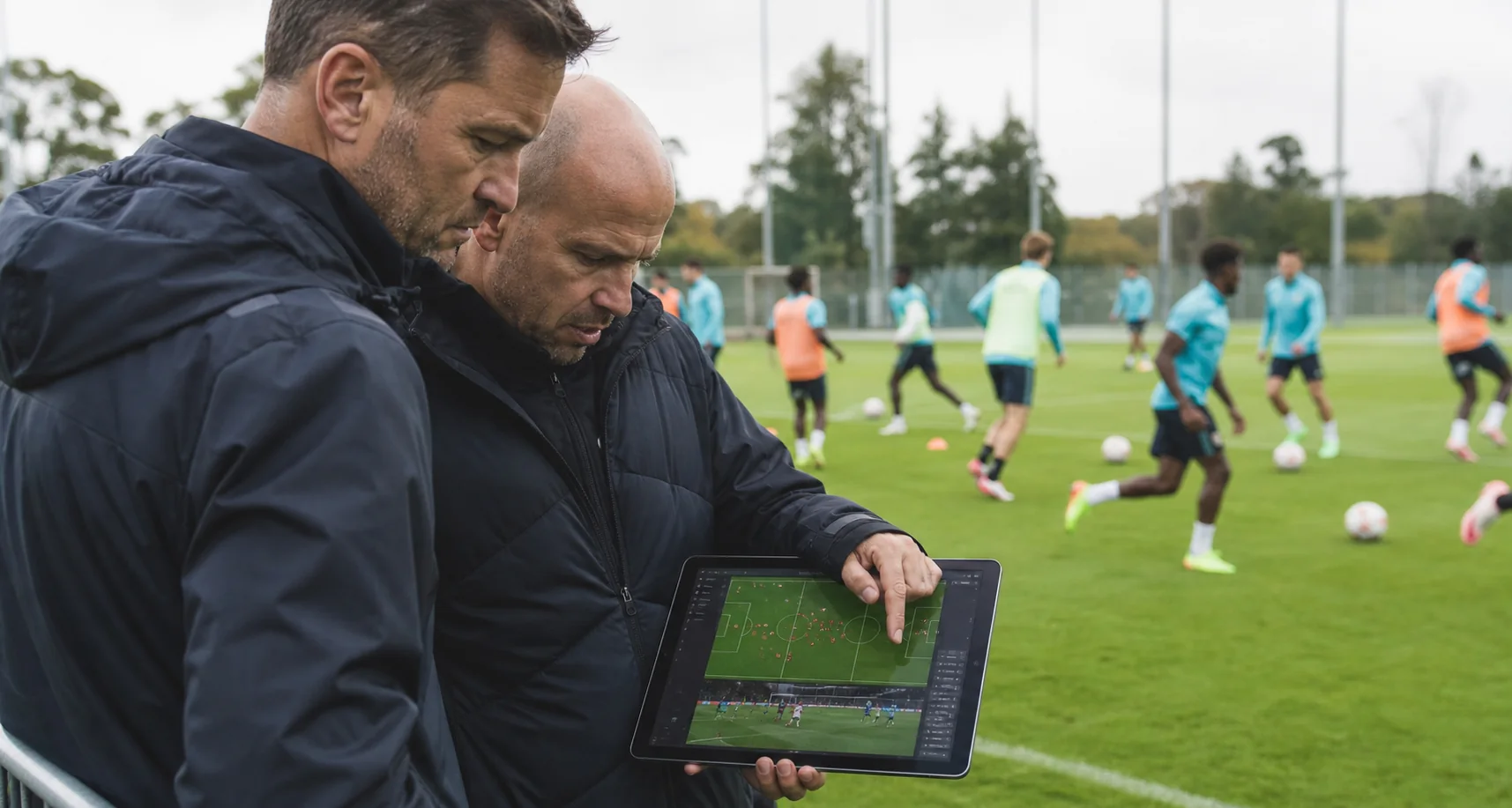
A stronger workflow starts by defining the decision, the time available and the language used by the coaching staff. Analysts can then select a small number of measures that describe space, pressure or progression in a way that matches the team's playing model. Video examples should accompany every summary so the numbers remain connected to observable behaviour.
Good models also invite disagreement. When coaches can challenge an assumption and trace a conclusion back to match footage, analysis becomes part of the learning process rather than a verdict delivered by a black box.