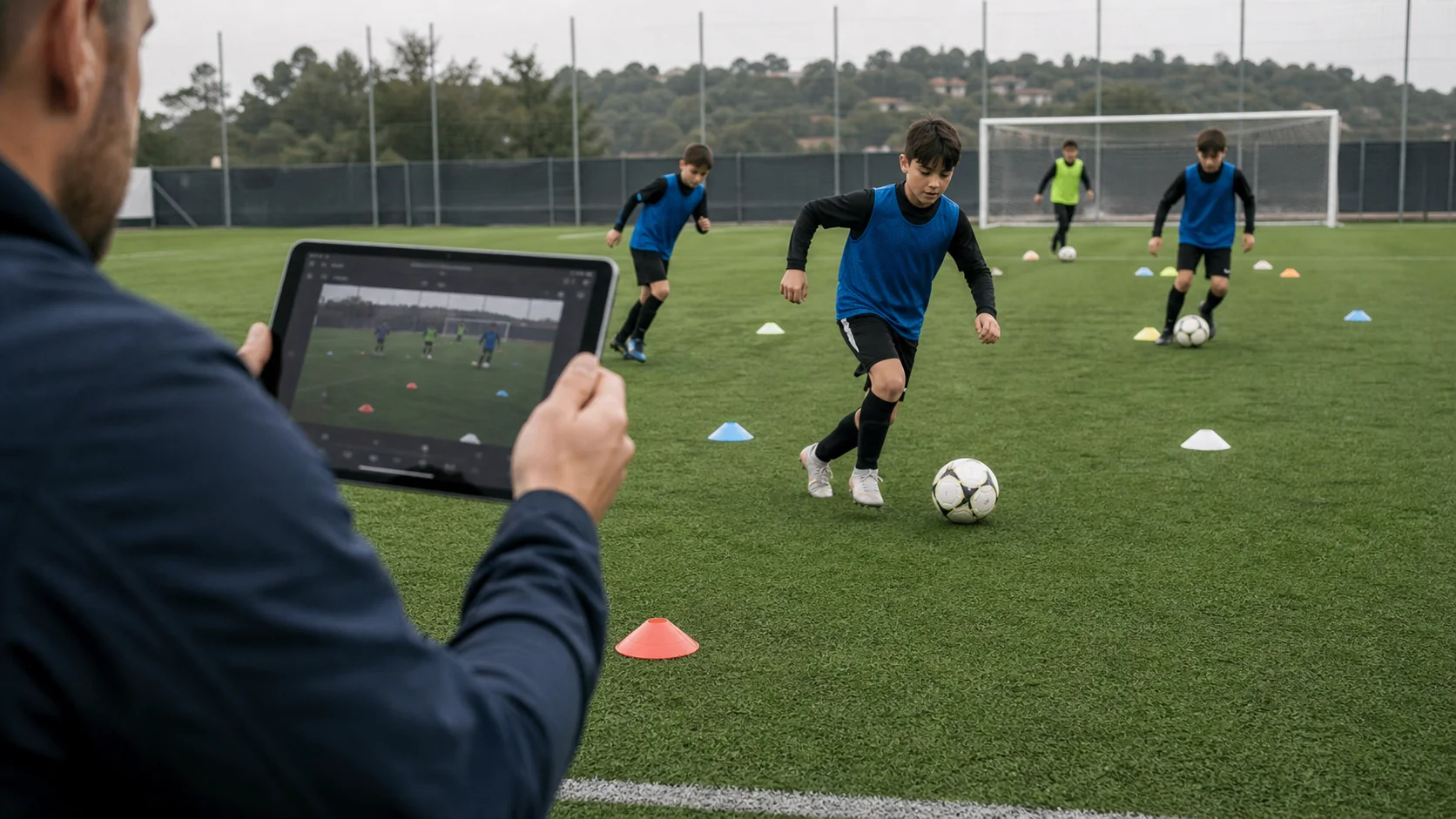
A constraint is a feature of the practice environment that makes a useful action more likely without prescribing every joint angle or decision. It can involve space, time, scoring, equipment, player numbers, or the information available before an action. The coach begins by naming the skill in its competitive context: receiving while scanning, releasing under pressure, landing after a contested rebound, or selecting a length in bowling. That clarity stops practice from becoming generic repetition. The aim is not a drill that looks tidy; it is a task that repeatedly invites the intended perception and response.
Design from the game backward. Identify the relevant information source, the action that should be available, and the pressure that makes the choice meaningful. A passing activity might narrow one channel to reward early scanning while leaving another route open for a late decision. A batting practice could vary field placements and release cues so the athlete must pick up information rather than rehearsing a preselected shot. Keep the constraint connected to the actual problem. If it removes all uncertainty, it may build choreography instead of adaptable skill. This creates a practical feedback loop: decision, delivery, observation, and a proportionate adjustment for the following session.
Change one or two variables at a time. When space, rules, opposition, equipment, scoring, and feedback all change together, staff cannot tell what created the behaviour. Begin with a baseline task, state the observation target, and alter a single constraint for several repetitions. Record whether the desired behaviour appears, whether athletes discover unintended but effective solutions, and whether task quality remains high. This measured approach is especially helpful when coaches disagree about a drill; the group can test an idea rather than defend a preference based on how it feels.
Feedback should direct attention without trapping athletes in internal mechanics. Questions such as “What did you see before the defender stepped?” or “Which landing gave you the fastest next move?” keep the learner connected to the task. Use brief demonstrations where they clarify a visual goal, then return quickly to play. Delay some feedback so athletes must evaluate their own outcome, and avoid speaking after every attempt. Silence is not neglect when the practice design supplies clear information. The coach’s job is to tune the problem and notice when an athlete needs a different entry point.
Progressions should add representative pressure, not merely more complexity. A larger area may be appropriate while a novice learns the visual pattern, followed by a smaller area, less time, or more opponents as their actions stabilise. For experts, vary the cue timing or opponent behaviour to prevent overfitting to one setup. Track transfer in a related game form and in competition clips, but do not expect every practice gain to appear immediately in match statistics. Skill development is noisy, and an isolated outcome often reflects opponent quality or opportunity as much as learning.
Safety and inclusion belong in constraint design. Adjust contact rules, landing surfaces, implement size, and recovery intervals to match the group’s experience and the session’s physical cost. Give athletes a route to declare discomfort or uncertainty without public penalty. In mixed-age or mixed-experience groups, use differentiated rules that protect challenge for all participants rather than letting the strongest dominate every repetition. The coaching staff should explain why a constraint exists, because understanding the task encourages players to explore intelligently instead of searching for the hidden answer. Use the follow-up to confirm whether the tradeoff worked in practice rather than assuming that the first response was correct.
Review constraints through observation notes, not only outcome counts. After practice, ask whether athletes noticed the target cue, whether the task produced enough decisions, which solutions emerged, and what next variation is justified. A short video sample can support this review if recording and access are governed appropriately. Keep a library of task cards with purpose, setup, likely adaptations, and cautions. Over a season, that library becomes a coaching asset: it captures how the squad learns while leaving space for each athlete to solve the game in their own effective way.