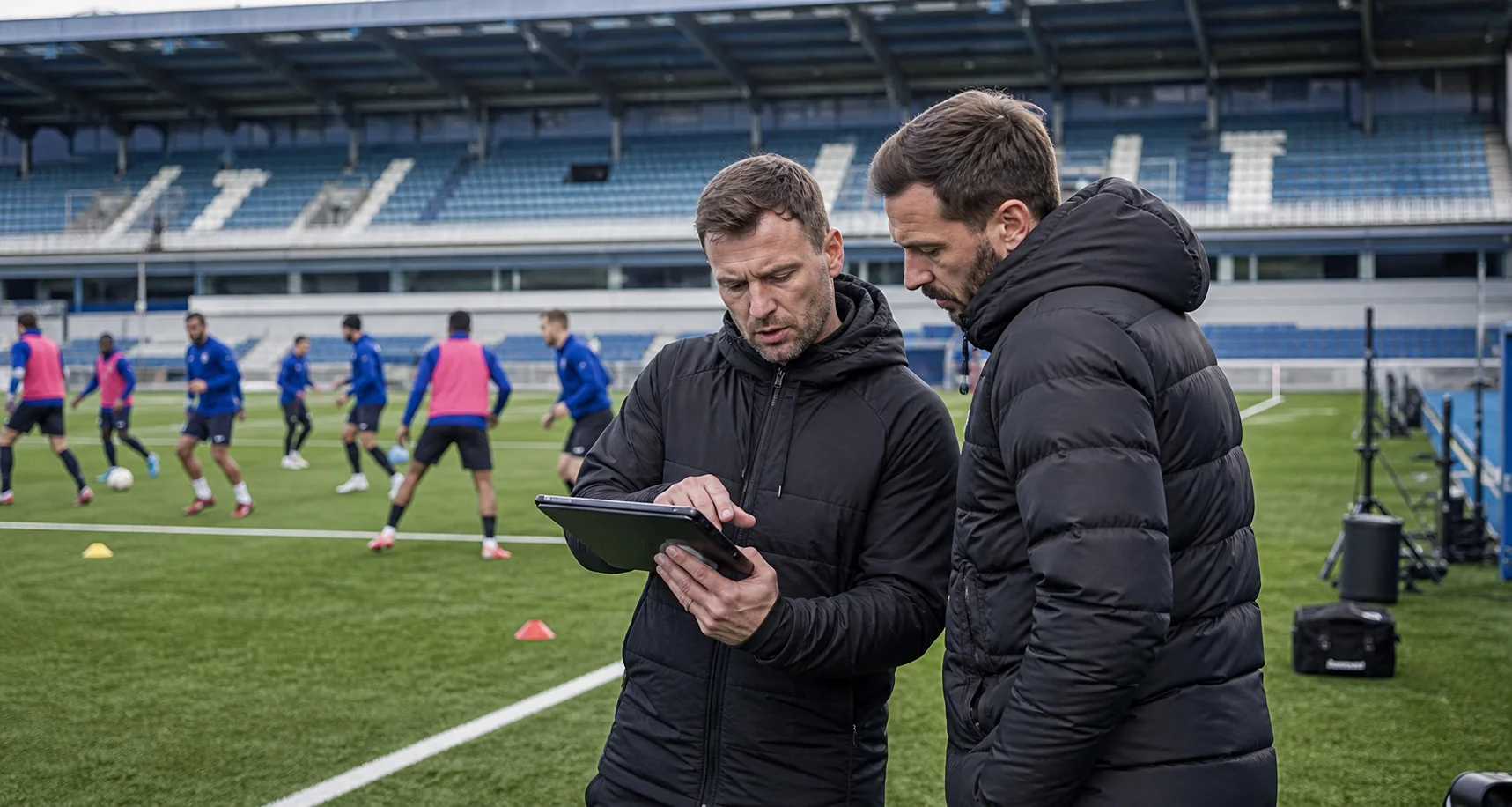
Analysts and coaches can watch the same sequence and describe different problems because their language was never aligned. Solve this before building a large tagging framework. Select the team’s core principles, write working definitions in everyday coaching terms, and test them against several clips together. What exactly counts as a press trigger, a successful exit, a second-ball win, or a broken line? Definitions do not need to be universal; they need to be stable enough for this staff to make consistent decisions. The goal is a shared operational language, not a perfect taxonomy.
Create a clip standard that serves the conversation. Each example should include enough lead-in to show the available information, the action point, and a brief aftermath. Add context in the analyst’s note: phase, location, player numbers, score state where relevant, and any camera limitation. Avoid decorative edits that make a point feel more certain than the evidence allows. A wide tactical angle and a close technical angle answer different questions; choose deliberately. When footage cannot show communication or an off-screen option, say so. Trust grows when edits reveal their boundaries.
Use a weekly question cycle. The head coach identifies one or two decisions worth exploring, the analyst returns a concise evidence set, assistants translate it into a practice constraint, and players encounter the same language on the field. After competition, the group reviews whether the cue appeared and whether the response was useful. This cycle gives analysis a route into coaching operations. It also protects analysts from becoming clip factories, producing long reports that are admired briefly but never influence session design or player understanding. Staff should record the adjustment, observe the next meaningful exposure, and revise the plan if the evidence changes.
Hold calibration sessions between staff. Take a small random sample of clips and ask two or three observers to tag them independently, then discuss disagreements. The purpose is not to punish inconsistency; it is to improve definitions and discover where the game is genuinely ambiguous. Keep a record of rule changes so seasonal comparisons remain interpretable. If a metric depends heavily on subjective judgement, present it as a coached observation rather than a hard fact. A number with unresolved ambiguity can still prompt a useful question, but it should not dictate a selection or development verdict.
Design feedback routes by audience. A head coach may need a three-minute summary and two clips; a unit meeting may need an interactive question; an individual player may need a private, specific observation connected to their next practice action. More detail is not always better. Avoid copying entire analyst reports into athlete group chats or displaying personal clip counts without context. Video and tagged data can identify people, reveal strategy, and become burdensome when shared casually. Access and retention rules should be part of the analyst workflow from the first upload.
Link analytical work to planning artefacts. The session card should state the tactical question, target cue, drill constraint, and intended observation. The match review should point back to the same language. This creates traceability without making every training activity data-driven. Coaches retain the right to change direction based on what they see, but the reason for the change becomes visible. Operations staff can then support the actual need: a different camera location, unit meeting space, extra setup time, or field layout that allows the intended tactical problem to emerge. A brief note on context and outcome makes the next coaching decision easier, more transparent, and less dependent on memory.
Review the system quarterly. Which definitions still help? Which reports consistently change a practice or game plan? Where do staff misunderstand one another? Which data collection creates work without influencing a decision? Remove low-value outputs and invest in the interfaces that athletes experience: clear questions, credible clips, and consistent coaching cues. A shared language does not make football, hockey, or any sport predictable. It makes the staff’s response to complexity more coherent, giving players fewer conflicting messages and analysts a meaningful role in the performance environment. Revisit the choice after a comparable task so the programme learns from a pattern rather than from a single impression.