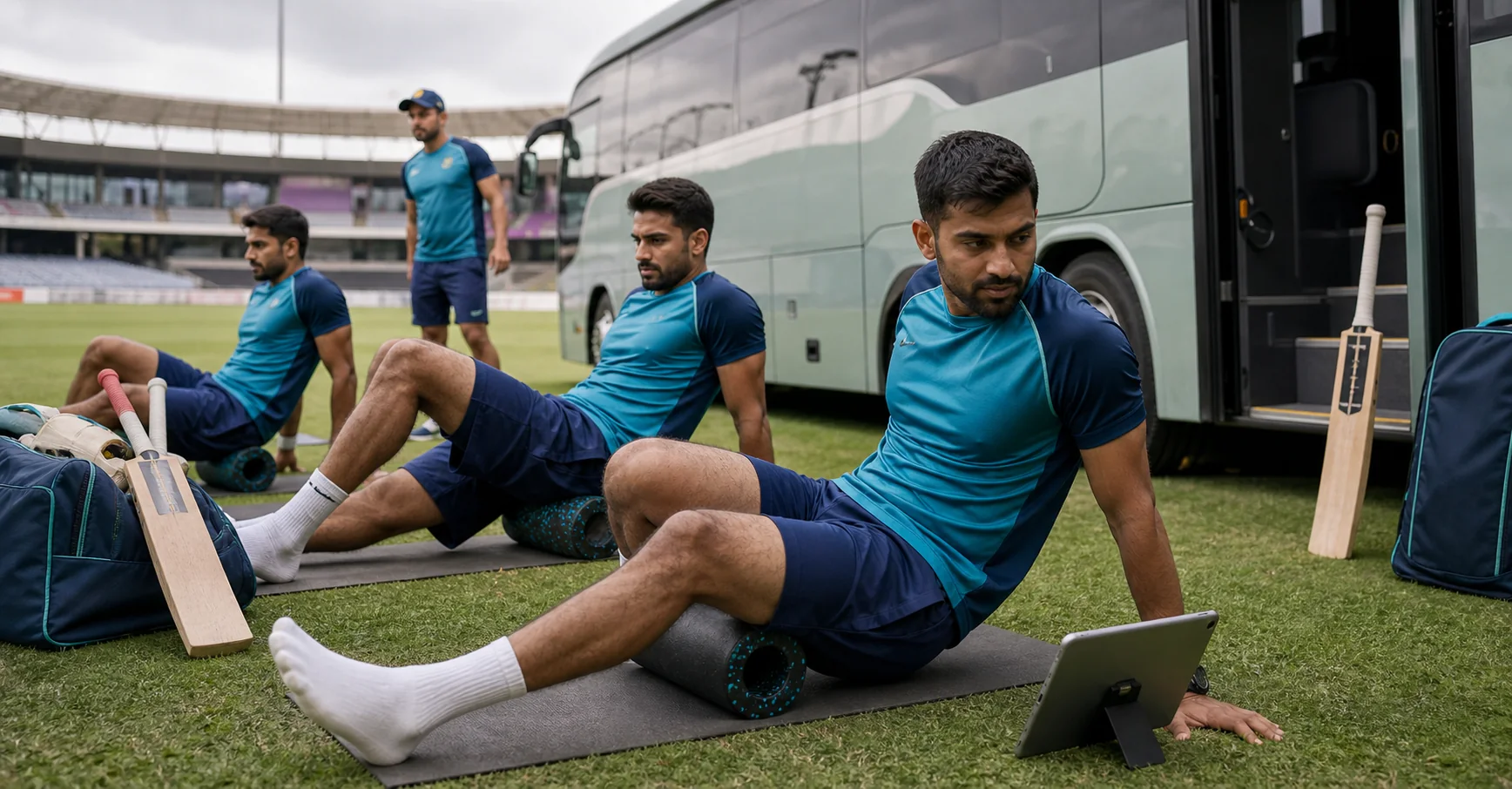
A long domestic travel day can change training readiness through interrupted meals, crowded transfers, unfamiliar beds, late arrivals, heat, and simple loss of control over routine. In India, road and rail legs can add unpredictability even when the travel distance looks modest on a schedule. Begin planning at the door-to-door level, not at departure time: hotel exit, venue waiting, security, transfer, arrival, meal access, and room allocation all matter. The performance lead should build the itinerary with operations staff so recovery is designed into the journey rather than offered as an optional activity afterward.
Create a travel brief with only the information athletes can act on. It should state wake and departure windows, meal opportunities, hydration access, planned movement breaks, arrival expectations, and a contact for changes. Avoid overprescribing personal habits that staff cannot observe or support. Give players options: a quiet seat, a short mobility routine, a walk after check-in, or protected downtime. Choice reduces friction because athletes arrive with different family, cultural, and sleep routines. The common standard is preparation for the next activity, not identical behaviour throughout the trip. The staff can then distinguish a useful adaptation from a temporary workaround and communicate the next step clearly.
Use movement breaks to counter long, passive periods rather than to add another workout. Brief walks, ankle and hip range movements, light trunk activation, and a few controlled breathing cycles can help athletes transition before a meeting or training session. Keep the work low-cost and adaptable to the setting. A cramped terminal is not a gym, and forcing everyone into a visible routine can create embarrassment or resistance. Staff should model the available options, identify a safe space, and make participation easy without turning the break into a compliance test.
Arrival training should answer a narrow question: does the group need to rehearse, loosen up, or simply reset its routines? A short familiarisation session may be more useful than trying to recapture a missed high-load day. Consider surface, lighting, travel duration, ambient heat, and fixture proximity before deciding. Coaches should resist the urge to make athletes “earn” recovery through extra work. The cost of a hard arrival session can appear after the team has already committed to it, while the tactical benefit may be small if attention is low and the session goal is unclear.
Measure the travel process with a few operational markers. Track actual arrival time, missed meals, room readiness, training access, and a short private athlete check-in about perceived freshness and sleep opportunity. These markers identify controllable failures without pretending to measure recovery perfectly. Wearable data may add context, but it cannot explain a disrupted room allocation or an athlete’s inability to unwind. Compare travel types across the season and review patterns with logistics colleagues. The result should be practical fixes, such as earlier meal packs or a changed transfer plan, not an abstract fatigue score.
Respect privacy when collecting travel feedback. Athletes may reveal sleep problems, family pressures, or other personal issues in a check-in, so restrict detailed responses to an appropriate support group. Share only operational themes with wider staff unless the athlete agrees or escalation is required under policy. Never use a low readiness response as a public indicator of commitment. The safer the reporting environment, the more truthful the signal. A clear retention schedule also keeps a temporary travel log from becoming a permanent, unexamined personal record. A brief note on context and outcome makes the next coaching decision easier, more transparent, and less dependent on memory.
After each trip, run a ten-minute after-action review. Compare the planned and actual itinerary, identify one friction point that staff can control, and decide whether the next day’s training needs an adjustment. Keep the notes tied to decisions: a later breakfast, an earlier departure, a shorter activation, or no change. Over time, the club learns its own reliable routines across airports, highways, trains, and venues. Recovery then becomes a visible part of coaching operations—quietly reducing avoidable disruption while leaving athletes with enough autonomy to manage their own routines. Revisit the choice after a comparable task so the programme learns from a pattern rather than from a single impression.