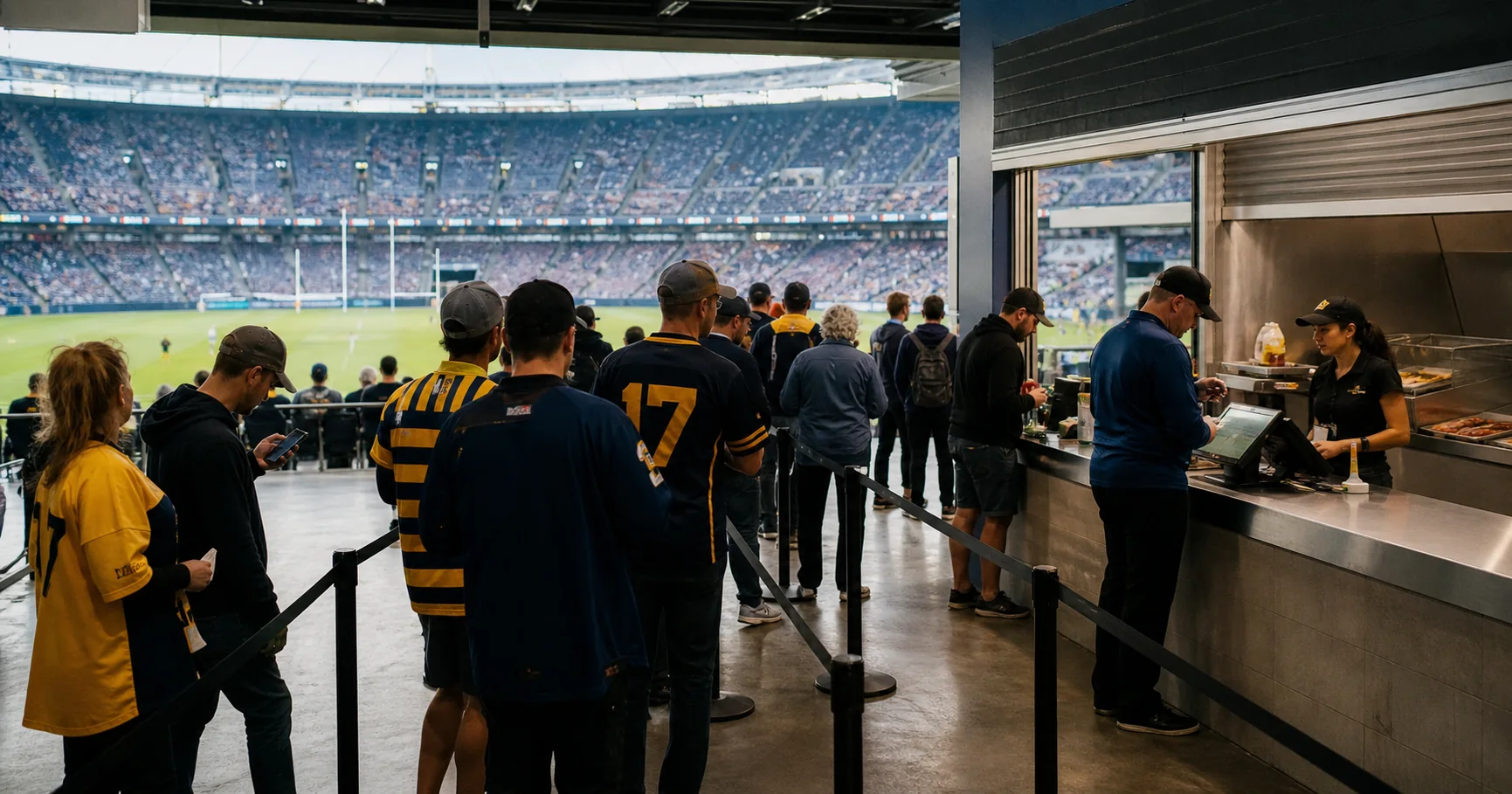
A queue is a temporary piece of venue architecture. It consumes width, redirects movement, changes sightlines, and can block a route long before wait time becomes unacceptable. Treat gates, food service, restrooms, merchandise, lifts, and help desks as a connected network. A solution that shortens one line can push people into a more sensitive pedestrian space nearby. The practical test is whether the arrangement makes the next event easier to run safely. The intended result should be stated in plain operational language before specifications are written. The venue should make this choice deliberately rather than inheriting it from a default setting.
Observe the actual arrival curve before redesigning. Ticket scan records, sales timestamps, steward notes, and walk-through observations can show when and where queues form, but each has blind spots. Time samples by location and note the reason for delay: payment, preparation, bag check, missing information, staff handoff, equipment recovery, or people waiting for companions. Build the procedure with facilities, customer-facing teams, and technical staff in the same room. A clear readiness check exposes dependencies that procurement documents often miss. Frontline staff need a short instruction that remains usable when communication is imperfect.
Physical design should make the desired behaviour obvious. Use barriers sparingly but clearly, preserve a through-route, protect door swings and emergency access, and provide room for turning, mobility aids, and families. Place menus, eligibility rules, or preparation instructions before the decision point so customers do not discover a problem only when they reach the counter. If a condition cannot be observed in the field, it is a weak trigger for an event decision. Observe the boundary between teams, where handoffs and unclear language commonly cause delay. Prefer a small intervention made early to a dramatic change made after options have narrowed.
Staffing is a routing tool, not only a service input. A trained greeter can direct people to a shorter appropriate line, identify an accessible alternative, resolve a simple ticket issue, or close a lane before it becomes unsafe. Define when staff may open a temporary queue and when they must seek approval because a change affects adjacent movement. Choose controls that reduce a defined risk without quietly shifting it to another group. Pair every speed or utilisation metric with an observation of fairness, access, or resilience. Use evidence with humility: sensors, records, and observations each describe only part of the scene.
Digital wait displays and mobile ordering can help, but only if the operational promise is credible. A displayed estimate that ignores an equipment outage or a sudden event break reduces trust. A mobile collection point can create another crowd if its location, notification pattern, and pickup capacity are not designed. Maintain a non-digital path for visitors who cannot or do not wish to use a phone. Keep a concise record of exceptions, because recurring exceptions reveal design debt. Privacy and safety rules need a named custodian and a route for frontline questions.
Measure queue conditions with several indicators: observed length, service completion time, abandoned transactions, route obstruction, accessibility complaints, staff interventions, and density around the queue edge. Avoid using a single average wait time to justify a layout. The longest or least predictable queue may be the one that changes safety conditions, even if the overall average is acceptable. Roll out in a bounded pilot where a supervisor can reverse the change quickly. Temporary event changes should have a deadline, inspection, and rollback plan. An exercise should include at least one failed assumption, so recovery is genuinely practised.
Make queue changes reversible. Test a layout at a lower-risk event, brief every affected team, photograph the set-up, and compare results against a similar operating period. Retain a clear emergency route regardless of demand. The best queue design gives fans understandable choices while leaving supervisors space and authority to adapt when the pattern changes. Use the debrief to replace anecdote with a specific adjustment for the next event. Learning compounds when the team changes one variable at a time and records the outcome. The mature outcome is a service the venue can explain, operate, and improve with confidence.