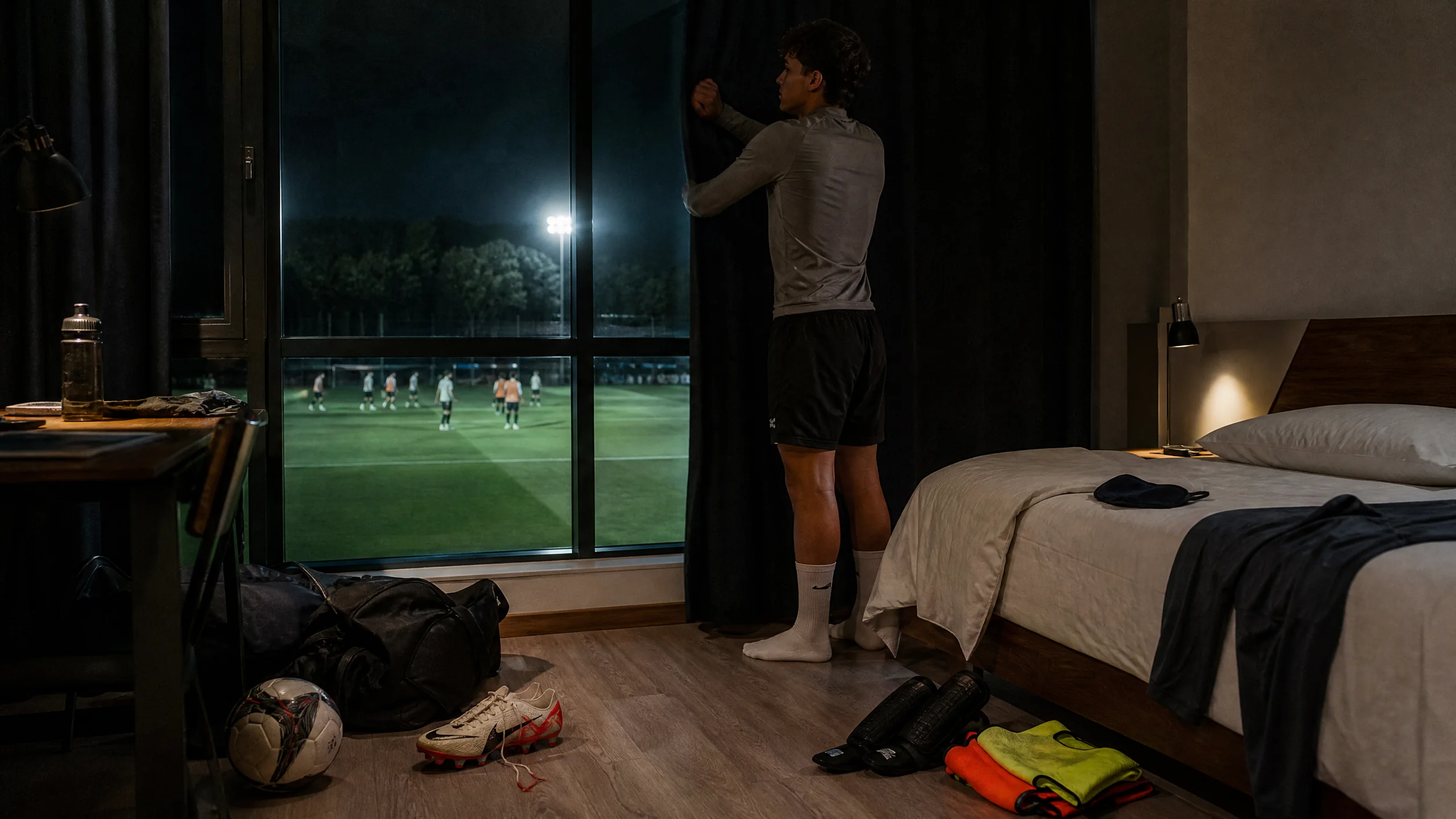
Training camps compress practice, meetings, meals, travel, and team-building into a small number of days. The first operational question is whether the timetable leaves athletes a realistic opportunity to wind down and sleep, not whether staff can collect the most detailed sleep data. Map the final obligation, meal timing, transfer duration, room arrival, next wake window, and early-morning noise. In residential academies and tournament camps, small scheduling decisions can compound quickly. Treat protected quiet time as part of the training plan, not as empty space available for another meeting. A brief note on context and outcome makes the next coaching decision easier, more transparent, and less dependent on memory.
Design evening routines around predictability. Publish the next day’s essentials early, set a reasonable final team communication window, and avoid last-minute room changes unless necessary. Keep video meetings concise and distinguish information that must be delivered at night from material that can wait until morning. Operations staff should coordinate catering, transport, and security so athletes are not repeatedly interrupted after they return to their rooms. The desired culture is calm and prepared, not rigid. Athletes will have different personal routines, so a common quiet window should leave room for autonomy.
Room allocation can support recovery without turning preference into entitlement. Consider access needs, roommate compatibility, noise exposure, travel arrival patterns, and opportunities for quiet rather than using only seniority or convenience. Explain the process discreetly and provide a way to raise an issue without public embarrassment. Earplugs, eye masks, and quiet areas may be available as practical options, but staff should not promise that any one item will solve sleep. The operations goal is to remove avoidable friction, not to prescribe a universal bedtime routine for a diverse squad. This creates a practical feedback loop: decision, delivery, observation, and a proportionate adjustment for the following session.
Use self-report sparingly and privately. A brief morning check-in can reveal whether a schedule or room issue needs attention, but it should not become a test of commitment or a public leaderboard. Avoid requiring athletes to share detailed personal sleep information with the full coaching staff. If someone raises a health concern, refer through qualified support channels rather than asking coaches to interpret it. Device-based sleep estimates have limits as well: they can be affected by wearing habits and algorithms, and they should never be treated as proof of what happened in a room.
Link sleep opportunity to daily decisions carefully. One poor night does not automatically require a player to miss training, and a high device score does not guarantee readiness. Review the athlete’s report alongside the planned session, recent travel, observed behaviour, and their preference for support. Possible choices include adjusting optional extras, simplifying a role in a high-cognitive block, protecting a recovery window, or making no change. The decision should be proportionate and revisited, not an irreversible label. Explain the rationale so athletes understand that honest reporting leads to sensible planning.
Data governance is especially important because sleep information can feel intrusive. State what is optional, who sees individual responses, how long records are kept, and whether data will ever be used in selection conversations. Restrict detailed information to those with a legitimate support role, and share broader operational themes—late arrivals, noisy corridors, delayed meals—without naming individuals. Provide a route to correct errors or withdraw from a non-essential monitoring element. Trust is more valuable than a complete-looking dataset built through pressure or ambiguity. That decision should be captured in the session note, then checked against the athlete and coach response at the next review.
Review camp operations after departure. Did meetings finish when promised? Were rooms ready, meals available, and morning departures orderly? Did athletes have realistic time to reset after high-demand days? Turn the answers into venue and schedule requirements for the next camp. This kind of review produces durable improvement because it focuses on controllable conditions. Sleep support remains appropriately modest: staff create opportunity, protect privacy, and adapt the plan when needed, while avoiding claims that they can measure or engineer every aspect of an athlete’s recovery. Use the follow-up to confirm whether the tradeoff worked in practice rather than assuming that the first response was correct.