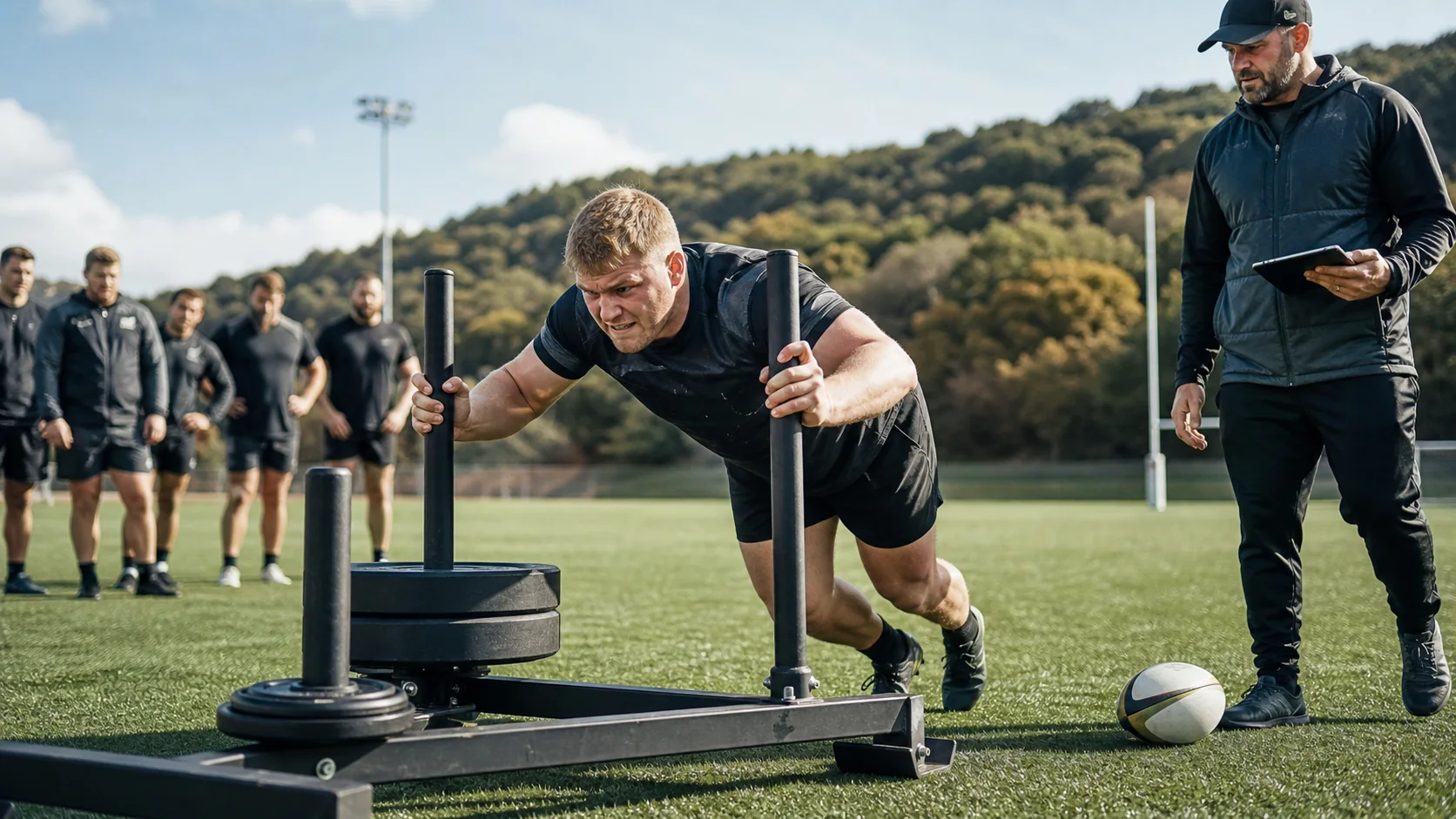
“Power” is a broad label, so begin with the action the athlete needs to express: a first step, a jump into contact, a rapid change of direction, a throw, or a repeated acceleration. Then identify what part of the action the gym or field session can reasonably influence. A loaded jump may support one type of force expression; a medicine-ball throw may support another; neither reproduces every sport decision. Naming the action keeps exercise selection grounded. It also prevents staff from adding visually impressive variations simply because they appear athletic on social media or in another sport’s programme.
Place power work according to its purpose and cost. High-quality explosive efforts usually need attention, recovery, and clear instruction, so they often belong early in a physical session or separated from the most demanding tactical work. In a congested week, a short low-volume microdose may maintain familiarity better than a long session that erodes the next day’s practice. Coordinate with sprinting, jumping, contact, and match demand on one planning board. The critical tradeoff is not gym versus field; it is whether the combined exposures leave room for athletes to produce the intended action well.
Progress through task features rather than simply adding load. Change the starting position, direction, implement, speed, or decision cue one at a time, while preserving a standard of movement and intent. A novice may need repeatable basic patterns; an experienced athlete may need more variation or role-specific timing. Do not turn every power session into a test. Testing requires stable conditions and can distract from training. Use a few quality observations—intent, repeatability, coordination, and athlete feedback—to decide whether the selected dose was appropriate for that day. The staff can then distinguish a useful adaptation from a temporary workaround and communicate the next step clearly.
Connect the physical task back to practice. A lateral bound might precede a defensive closeout drill, a short resisted acceleration might prepare a transition session, or a rotational throw might accompany a sport-specific sequencing discussion. The connection should be explained without claiming direct one-to-one transfer. Coaches can ask athletes what they notice when moving from the preparation task to the game task and adjust the bridge accordingly. This dialogue helps prevent the gym from becoming a separate performance culture with different language, priorities, and assumptions about what success looks like.
Measurement tools require context. Bar velocity, jump height, contact time, or throw distance can be useful references when setup, warm-up, and technique are consistent. But a number may change because of device placement, surface, motivation, or task variation. Record the condition, compare like with like, and treat sudden changes as prompts for conversation rather than verdicts. Do not publish individual power metrics as rankings. Performance data belongs to the athlete and authorised staff, and its interpretation should respect the difference between a training signal and a claim about competitive ability.
Safety is shaped by coaching and operations. Inspect surfaces and equipment, create enough landing and throwing space, teach clear collection routes, and avoid crowded circuits where athletes rush to protect their turn. Match the task to experience and fatigue, and allow people to stop or modify without public scrutiny. A report of pain or other health concern should move through the appropriate qualified process. Coaches are responsible for the training environment; they do not need to make medical judgments in order to make a prudent session adjustment. Use the follow-up to confirm whether the tradeoff worked in practice rather than assuming that the first response was correct.
Review power work at the end of a block by asking whether it supported the sport programme. Did athletes repeatedly express the targeted action with quality? Did the timing interfere with tactical learning or recovery? Which exercises were operationally simple enough to deliver well, and which created more setup than value? Keep a short record of the decision, not a catalogue of every variation. Durable transfer comes from coherent, repeated exposure and shared coaching language. It is rarely created by a complicated exercise list or a single impressive test day.