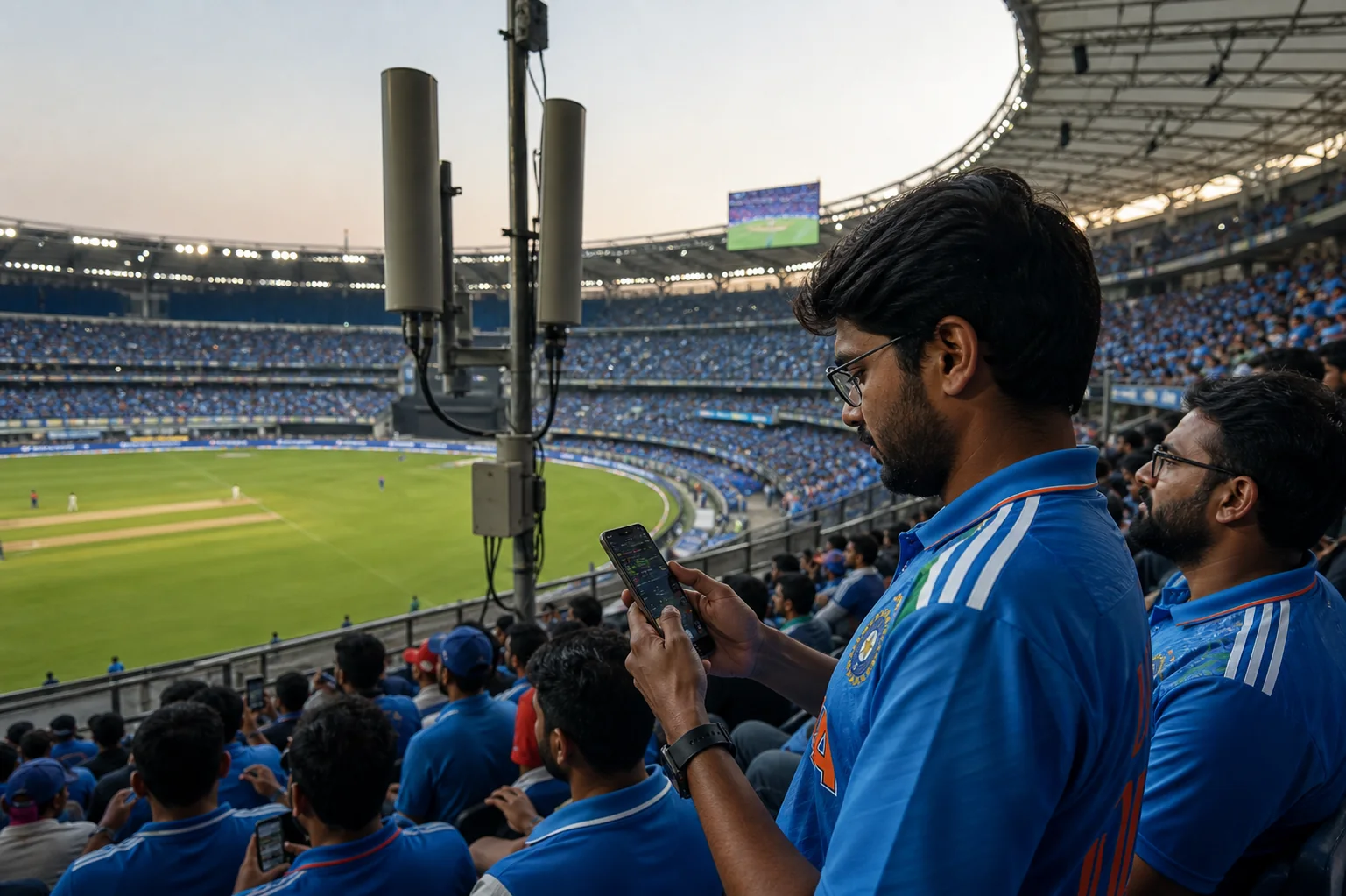
Indoor mobile coverage is a service design problem with several parties: venue owner, network operators, event promoters, emergency planners, and construction teams. A neutral-host model can reduce duplicate infrastructure, but it introduces decisions about access, upgrades, fault ownership, and use during temporary events. Write those decisions down before discussing antenna locations. The practical test is whether the arrangement makes the next event easier to run safely. The intended result should be stated in plain operational language before specifications are written. The venue should make this choice deliberately rather than inheriting it from a default setting.
An early survey should distinguish outdoor signal leakage from usable indoor service. Bowl roofs, concrete cores, hospitality glazing, underground loading areas, and packed concourses each behave differently. The survey also needs to identify available risers, equipment-room cooling, resilient power, fibre routes, and safe maintenance access, since those constraints often dictate the feasible architecture. Build the procedure with facilities, customer-facing teams, and technical staff in the same room. A clear readiness check exposes dependencies that procurement documents often miss. Frontline staff need a short instruction that remains usable when communication is imperfect. Document the normal workflow and the exception workflow; both need an owner.
Commercial governance merits equal attention. The venue should define who funds base capacity, who approves incremental sectors, how a promoter requests extra coverage, and what happens when a carrier changes technology. Service-level language should describe observable outcomes and event response times instead of promising a vague notion of full coverage. If a condition cannot be observed in the field, it is a weak trigger for an event decision. Observe the boundary between teams, where handoffs and unclear language commonly cause delay. Prefer a small intervention made early to a dramatic change made after options have narrowed.
Choose capacity triggers with care. Busy-hour radio utilisation can help locate stress, but it does not explain whether users were unable to attach, constrained by backhaul, or affected by an application problem. Combine technical logs with walk tests, supporter feedback by location, and a chronology of gates, show moments, and egress. Choose controls that reduce a defined risk without quietly shifting it to another group. Pair every speed or utilisation metric with an observation of fairness, access, or resilience. Use evidence with humility: sensors, records, and observations each describe only part of the scene.
Temporary production needs a formal change path. A concert stage, media platform, or crowd-control barrier can shadow antennas and change the radio environment. Event planners should send final overlay plans to the connectivity owner at a defined deadline, followed by a field confirmation after build. An approved drawing is not a substitute for looking at the installed scene. Keep a concise record of exceptions, because recurring exceptions reveal design debt. Privacy and safety rules need a named custodian and a route for frontline questions. Access should be proportionate to the task, with logs that support review without creating busywork.
Resilience should focus on functions, not merely duplicate boxes. Identify which portions support public mobile access, staff coordination, ticket recovery, and emergency communication, then establish the degraded service that is acceptable for each. Backup power and diverse fibre help only when teams know the dependency chain and can safely isolate the failing portion. Roll out in a bounded pilot where a supervisor can reverse the change quickly. Temporary event changes should have a deadline, inspection, and rollback plan. An exercise should include at least one failed assumption, so recovery is genuinely practised.
The handover pack is an operating asset. It should include rack labels, carrier contacts, escalation windows, cooling and power dependencies, approved antenna zones, and a simple procedure for event overlays. Revisit it after a season of mixed events, because accumulated temporary workarounds can quietly make a shared system difficult to operate. Use the debrief to replace anecdote with a specific adjustment for the next event. Learning compounds when the team changes one variable at a time and records the outcome. The mature outcome is a service the venue can explain, operate, and improve with confidence.