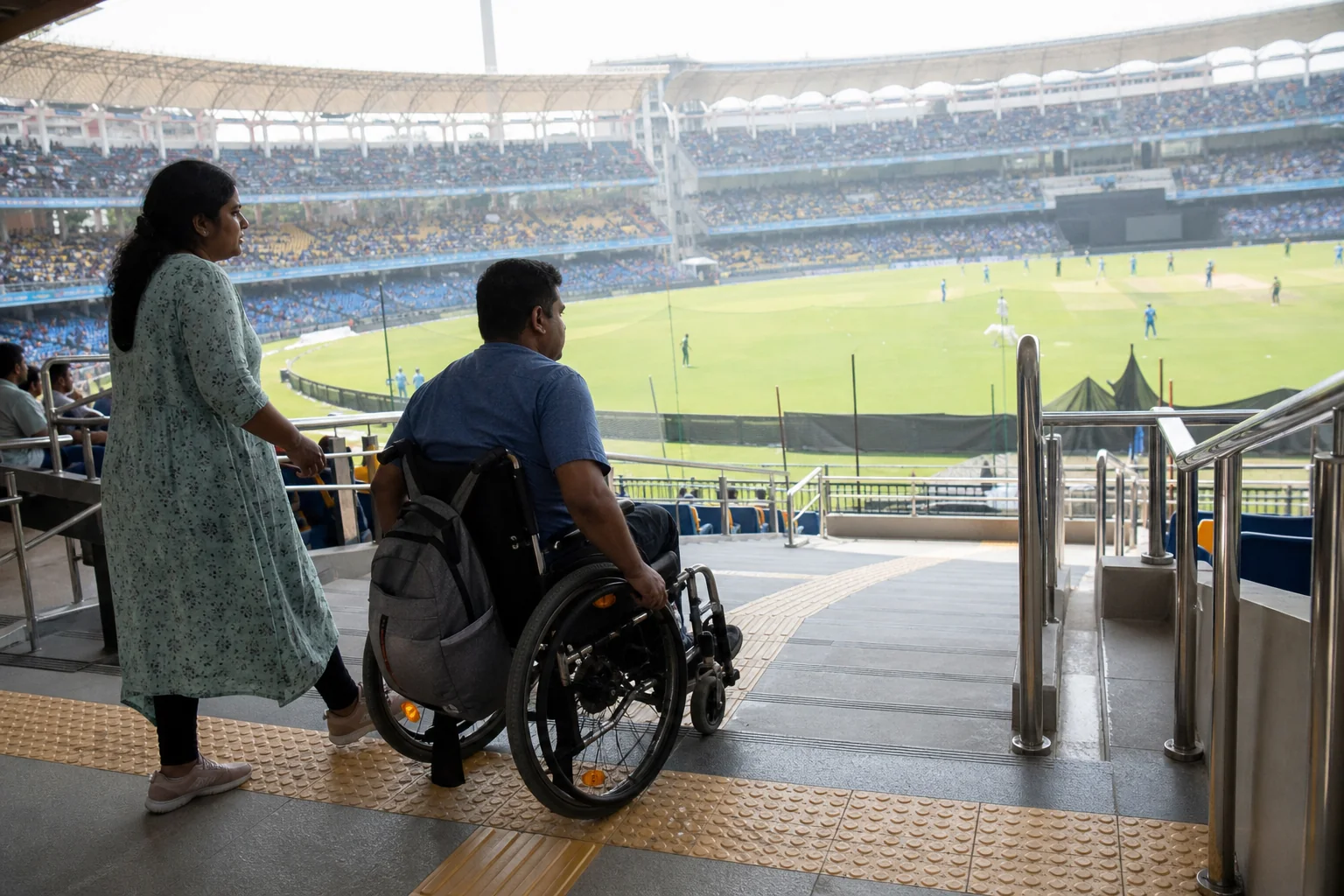
Accessibility planning should begin with a complete journey, from travel information and ticket purchase to transport arrival, entry, viewing, amenities, and exit. People may have mobility, sensory, cognitive, communication, or temporary access needs, often in combination. An Indian venue does not need to assume one standard fan profile; it needs to identify barriers in its own site and remove them systematically. The resulting plan should be simple enough for an event supervisor to apply without opening a technical manual. This frames the work as an operating capability rather than a technology purchase.
Information is a physical access tool. Explain routes, gate arrangements, drop-off points, assistance contacts, prohibited items, and available services before event day using clear language and formats that work on common devices. Where more than one local language is appropriate, translate the operational instructions and test their clarity. Avoid describing a route as accessible without checking it end to end. That discipline keeps investment choices connected to a credible event-day workflow. Name the owner, the handoff point, and the manual fallback before approving a design. Build the procedure with facilities, customer-facing teams, and technical staff in the same room.
Entry design should preserve dignity and choice. A wheelchair-clear lane that ends at a locked door, a bag-check table set too high, or an assistance queue that takes longer than standard entry defeats the intent. Brief staff to ask how they can assist rather than making assumptions. Provide a documented way to resolve ticket, companion, mobility-aid, or seating questions without sending people between desks. It also gives the team a practical basis for changing the approach after a debrief. The decision should be tested against the people who will use it under event pressure.
Sensory conditions deserve explicit consideration. Loud sound checks, flashing content, dense queues, unfamiliar security interactions, and sudden public-address messages can create distress for some visitors. Offer a clearly described lower-stimulation option where feasible, share event timing when it is known, and train a small group of staff to give calm, non-judgmental assistance. The option should not require disclosure of a diagnosis. The point is a clear operational choice rather than a more elaborate technical description. Keep the public experience, staff workload, and safety consequence visible in the decision. Choose controls that reduce a defined risk without quietly shifting it to another group.
Accessible viewing must account for sightlines after standing spectators, rails, cameras, and temporary event structures are installed. Inspect locations on event day, provide companion seating choices where possible, and avoid using accessible bays as overflow storage. Keep routes to toilets, food service, and exit areas clear throughout the event, not only at the time gates open. This keeps the arrangement understandable to the people who must act on it. Use a documented review point so assumptions can be revised rather than defended. Keep a concise record of exceptions, because recurring exceptions reveal design debt.
Measure access through experience and operations. Track assistance requests, route obstructions, equipment outages, complaints, time spent resolving exceptions, and feedback collected through voluntary channels. Numbers need context: fewer requests might mean smoother access, or they might mean people could not find the assistance point. Include disabled supporters and local access advisers in walkthroughs and debriefs. The same record can support a fair review when a decision is questioned later. Any partner involved should understand both its technical role and its authority boundary. Roll out in a bounded pilot where a supervisor can reverse the change quickly.
Build improvement into procurement and event change control. Require temporary structures, signage, digital services, and contractors to preserve agreed routes and communications. Publish a contact for access questions, audit changes before doors, and correct recurring problems publicly through better instructions. The goal is not a special service for a few guests; it is a venue operation that enables more people to participate independently. That makes the next event safer to run and the system easier to maintain. Good practice preserves a workable service when the preferred digital path is unavailable. Use the debrief to replace anecdote with a specific adjustment for the next event.