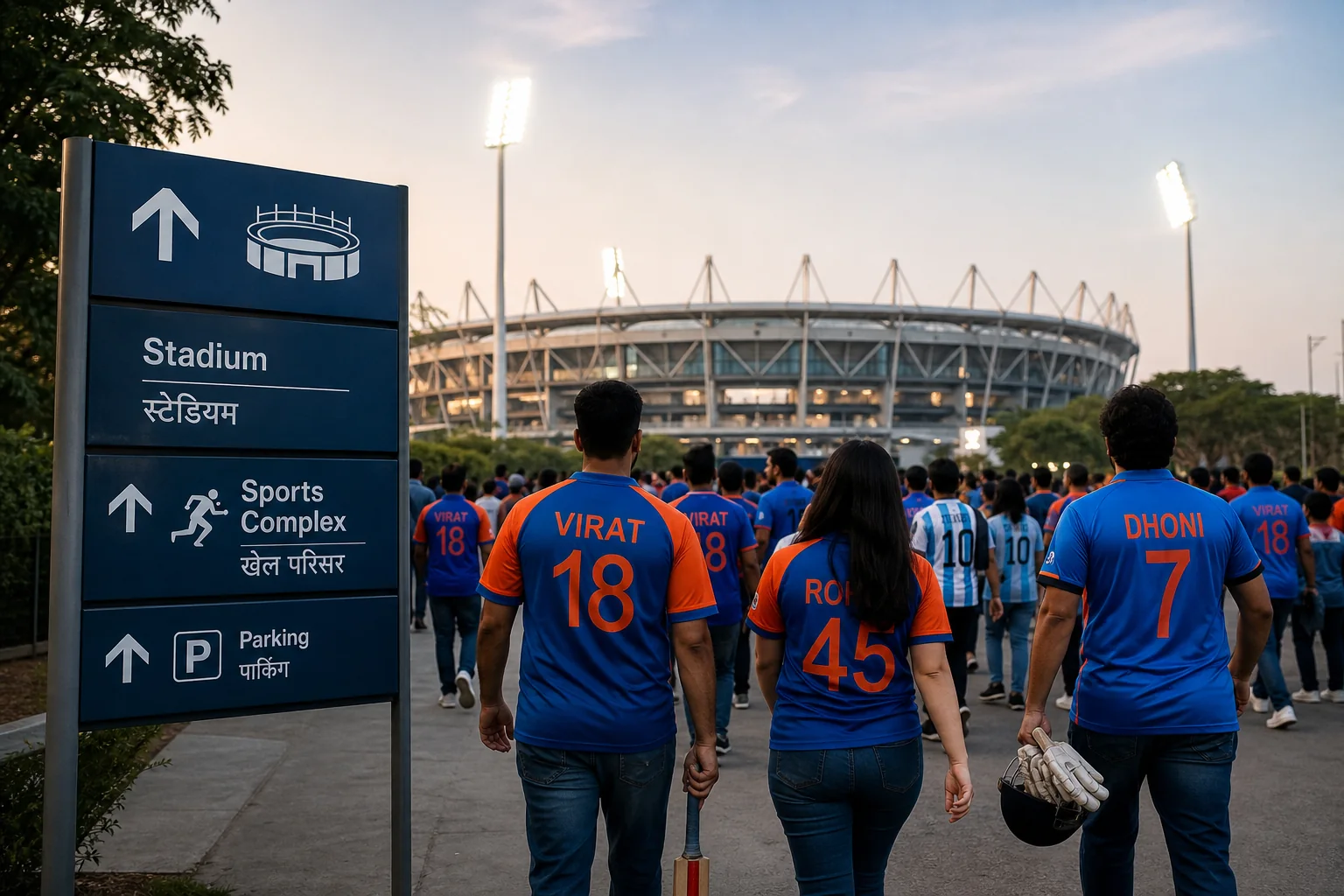
Last-mile wayfinding determines whether arrival pressure reaches the stadium as an orderly stream or an anxious crowd. In Indian cities, fans may approach on foot, by metro or rail, bus, rideshare, two-wheelers, private vehicles, and informal drop-off arrangements. The plan should acknowledge those choices instead of treating the venue perimeter as the beginning of operations. This frames the work as an operating capability rather than a technology purchase. The practical test is whether the arrangement makes the next event easier to run safely. The intended result should be stated in plain operational language before specifications are written.
Map decision points from each likely arrival path. A person needs to know where to leave a vehicle, which gate serves the ticket, whether a road is temporarily restricted, where assistance is available, and what to do if separated from a group. Field teams should test the route at arrival time because construction, vendors, weather, and police barriers can change the legibility of a map. Name the owner, the handoff point, and the manual fallback before approving a design. Build the procedure with facilities, customer-facing teams, and technical staff in the same room.
Coordinate messaging across the event organiser, venue, transport partners, local authorities, and private parking or shuttle providers where relevant. Each party does not need the same system, but they need a common operating picture: route changes, opening times, accessible drop-off, emergency access, and escalation contacts. Conflicting advice is more damaging than a simple route with limited digital features. The decision should be tested against the people who will use it under event pressure. If a condition cannot be observed in the field, it is a weak trigger for an event decision. Observe the boundary between teams, where handoffs and unclear language commonly cause delay.
Use layered guidance. Advance communications can describe broad options, digital maps can update conditions, fixed signs can orient people, and trained staff can resolve the exception that no graphic anticipates. Do not require a smartphone for a basic route. Use landmarks and visible gate markers so a visitor can confirm direction even when data service is slow or a battery is low. Keep the public experience, staff workload, and safety consequence visible in the decision. Choose controls that reduce a defined risk without quietly shifting it to another group. Pair every speed or utilisation metric with an observation of fairness, access, or resilience.
Accessibility must run through the last mile. Check curb cuts, surface changes, gradient, queue space, lighting, accessible parking or drop-off, toilet access, and the route back after dark. A nominally close drop-off can be a poor choice if it forces a person through a dense unmanaged crossing. Test with mobility-aid users and include their observations in traffic-management meetings. Use a documented review point so assumptions can be revised rather than defended. Keep a concise record of exceptions, because recurring exceptions reveal design debt. Privacy and safety rules need a named custodian and a route for frontline questions.
Measure arrival without over-collecting personal movement data. Combine aggregated gate times, manual counts at key junctions, transport status, incident reports, and voluntary feedback. Device-location data, if considered, should have a lawful purpose, transparent governance, and clear limits; it is not a substitute for people observing an unexpected obstruction at street level. Any partner involved should understand both its technical role and its authority boundary. Roll out in a bounded pilot where a supervisor can reverse the change quickly. Temporary event changes should have a deadline, inspection, and rollback plan. An exercise should include at least one failed assumption, so recovery is genuinely practised.
Prepare a departure plan with equal care. Fans leave in a different mood and often in a compressed period, while transport capacity and nearby roads may be constrained. Stagger messages when appropriate, keep staff at the last decision points, preserve accessible routes, and coordinate any changing restrictions. A venue earns trust when the trip home feels considered, not when the event ends at the final whistle. Good practice preserves a workable service when the preferred digital path is unavailable. Use the debrief to replace anecdote with a specific adjustment for the next event.