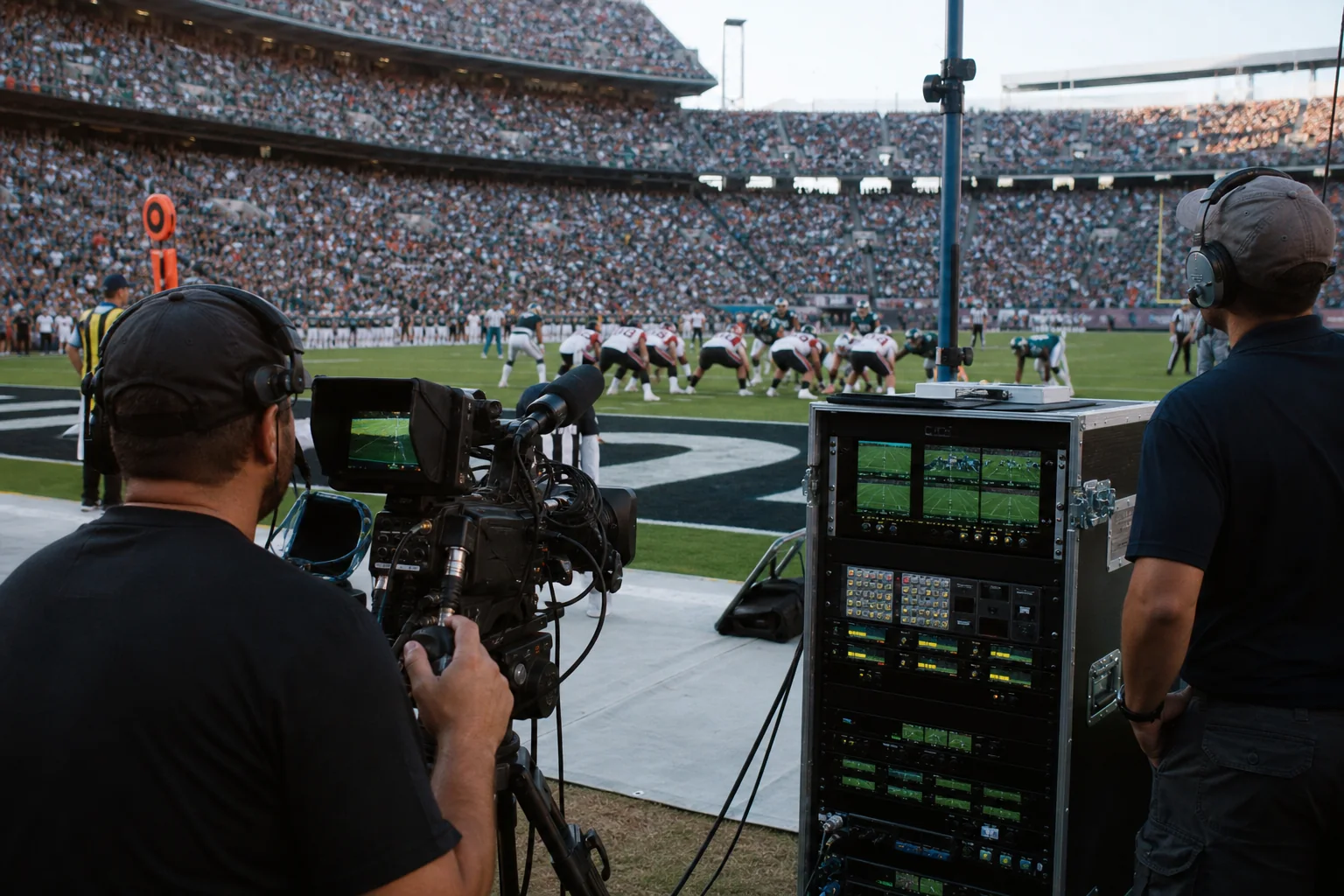
An IP broadcast transition is not simply a cable replacement project. Video, audio, timing, control, graphics, replay, venue screens, and remote contribution become dependent on shared engineering practices. Begin by mapping every signal that exists today, the tolerance for interruption, the operators who own it, and the fallback that permits an event to continue if the new path fails. The practical test is whether the arrangement makes the next event easier to run safely. The intended result should be stated in plain operational language before specifications are written. The venue should make this choice deliberately rather than inheriting it from a default setting.
Timing is the foundation that cannot be treated as background infrastructure. Systems that appear individually healthy can produce unacceptable results if clocks drift, paths are asymmetric, or timing priorities change during a fault. Document the timing hierarchy, monitor it separately, and train engineering staff to recognise the difference between a source problem, a network path problem, and a timing problem. Build the procedure with facilities, customer-facing teams, and technical staff in the same room. A clear readiness check exposes dependencies that procurement documents often miss. Frontline staff need a short instruction that remains usable when communication is imperfect.
Separate media flows from ordinary enterprise traffic through architecture and policy. Capacity reservation, multicast control, segmentation, and resilient paths require deliberate design and testing. Do not assume a network that carries office applications can carry uncompressed or low-latency production at show time. The operating model must state who can approve a change and when the production network is frozen. If a condition cannot be observed in the field, it is a weak trigger for an event decision. Observe the boundary between teams, where handoffs and unclear language commonly cause delay. Prefer a small intervention made early to a dramatic change made after options have narrowed.
Build the transition around parallel operation. Keep a proven path available while selected production functions use the new environment, then choose events whose risk profile fits the test. A smaller non-critical use can reveal timing, monitoring, and workflow problems without forcing operators to learn during a high-stakes live transmission. Choose controls that reduce a defined risk without quietly shifting it to another group. Pair every speed or utilisation metric with an observation of fairness, access, or resilience. Use evidence with humility: sensors, records, and observations each describe only part of the scene.
Monitoring should describe audience-impacting conditions. Packet counters and switch alarms are necessary but insufficient. Pair them with confidence checks at key outputs: production monitoring, venue displays, recording, commentator return, and contribution feeds. A technical alert has value when the engineering team can relate it to a visible or audible effect and choose a response quickly. Keep a concise record of exceptions, because recurring exceptions reveal design debt. Privacy and safety rules need a named custodian and a route for frontline questions. Access should be proportionate to the task, with logs that support review without creating busywork.
Cybersecurity must be part of broadcast readiness. Apply access control, asset inventory, supported software, network segmentation, removable-media procedures, and a tested isolation method. Third-party crews often require temporary connectivity, so provide a managed guest path rather than creating an exception inside the production domain. Security controls should preserve rapid recovery instead of blocking the people who need to repair a show. Roll out in a bounded pilot where a supervisor can reverse the change quickly. Temporary event changes should have a deadline, inspection, and rollback plan. An exercise should include at least one failed assumption, so recovery is genuinely practised.
Complete the change only when documentation and skills catch up. Maintain current logical diagrams, patch records, IP addressing, timing sources, show-file backups, and emergency operating procedures. Debrief every event that uses the system and update one issue at a time. A flexible IP facility is valuable only when staff can diagnose it calmly and deliver a safe degraded production when components fail. Use the debrief to replace anecdote with a specific adjustment for the next event. Learning compounds when the team changes one variable at a time and records the outcome. The mature outcome is a service the venue can explain, operate, and improve with confidence.