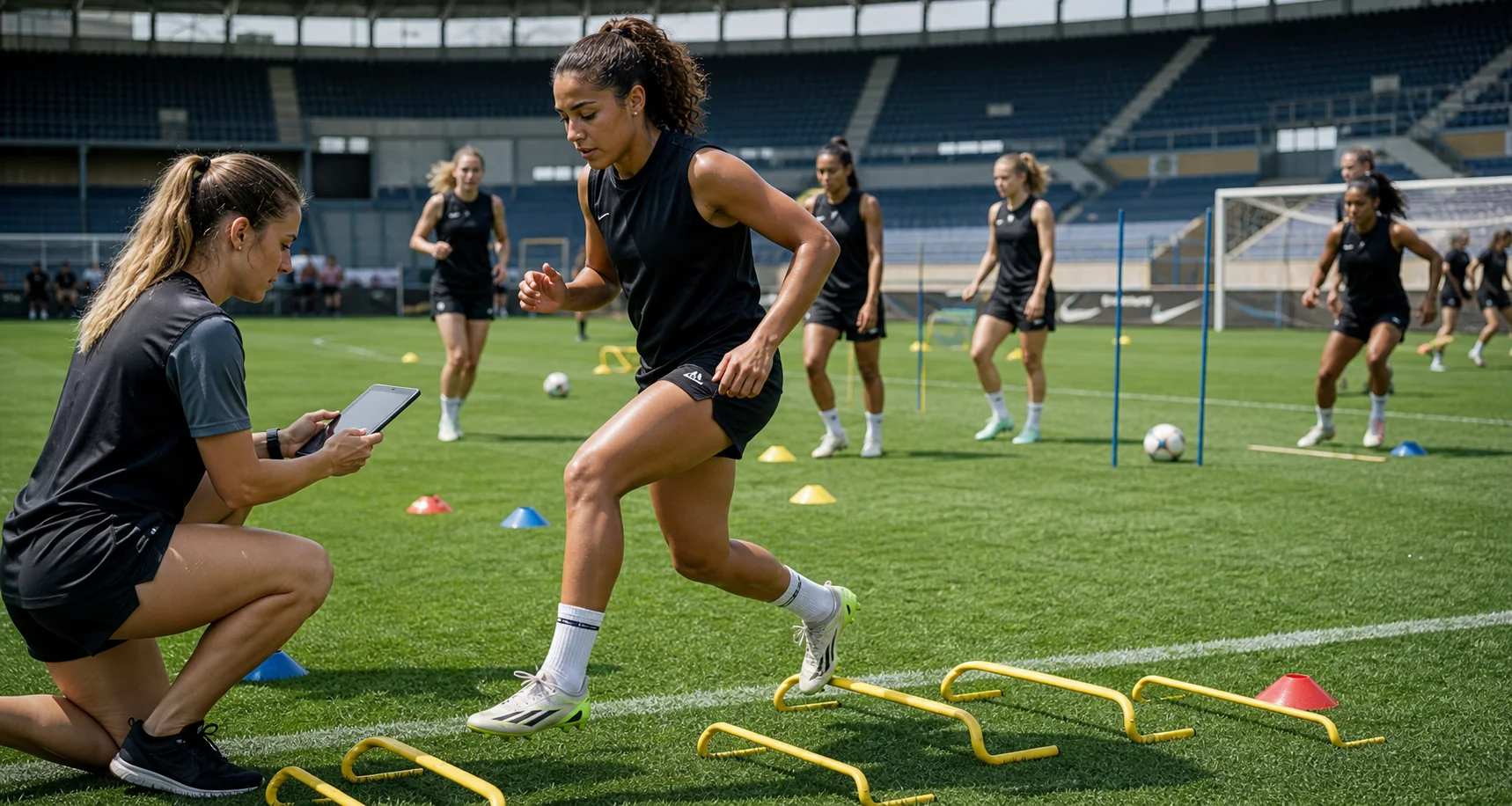
A women’s programme does not become individualised by applying a generic protocol to every athlete. It starts with learning how each player experiences training, travel, competition, recovery routines, role demands, and communication. Hold short, regular conversations that ask what is changing, what support would help, and what the athlete wants staff to know. Do not require personal disclosure as a condition of support. The coach’s responsibility is to create options and a respectful route for escalation, while athletes retain control over information that is not necessary for a legitimate performance decision.
Build an individual profile around training-relevant context. Role, preferred preparation, schedule constraints, movement history, communication preference, travel tolerance, and recent exposure can inform a plan without reducing anyone to a category. Review profiles with the athlete, invite corrections, and set an expiry date for sensitive information. Keep the profile separate from talent labels or character judgments. A useful profile helps a coach decide whether to offer an earlier activation, a modified extra block, or quiet recovery time. It does not claim to predict performance or explain every good or bad day.
Use choice architecture within a common team plan. The squad may share a tactical practice and broad physical objective, while individuals choose between equivalent activation options, receive a different work-to-rest ratio, or complete a role-specific technical block. Explain the purpose of each option so choice is informed rather than decorative. Track what was actually delivered, because an individualised plan that never survives operations is not a plan. The best options are simple enough for staff to run consistently and visible enough that athletes do not feel singled out for using them.
Communication needs deliberate boundaries. Private check-ins should be available with a staff member the athlete trusts, and sensitive discussion should not be forced into a group setting. Make clear what information might be shared, with whom, and for what decision. Coaches should avoid casual questions that presume a particular cause for fatigue, mood, or performance. If an athlete raises a medical or safeguarding concern, follow qualified internal procedures rather than attempting to diagnose or solve it through training advice. Respectful referral is an important part of high-performance coaching. Staff should record the adjustment, observe the next meaningful exposure, and revise the plan if the evidence changes.
Measure whether the system is functioning through process indicators. Are athletes using the check-in route? Are requested modifications feasible? Do staff know the next action and its owner? Are travel and session plans leaving room for individual routines? These questions are often more actionable than a single readiness score. Self-reported data is context-dependent and should be handled privately, particularly where selection is involved. Do not compare disclosure levels across athletes or reward people for sharing more. Trust is the infrastructure that makes useful information possible. That decision should be captured in the session note, then checked against the athlete and coach response at the next review.
Train staff on language and decision-making, not only on data collection. Rehearse how to ask open questions, how to respond without minimising a concern, and how to document only what is necessary. Clarify where coaching ends and qualified clinical or safeguarding support begins. Build a simple escalation map that can be used on a travel day or at a late training slot. Consistent behaviour across staff matters: an excellent policy is undermined if an athlete receives a different response depending on which assistant is present. Use the follow-up to confirm whether the tradeoff worked in practice rather than assuming that the first response was correct.
Review individualisation at the end of each block with the athlete’s voice included. Ask which choices genuinely helped, which created friction, and which should be retired. The aim is not maximum customisation; it is a fair system that directs attention and resources where they matter. A team can maintain high standards while recognising different routes to readiness and learning. When implementation is transparent, privacy is protected, and decisions are revisable, individualisation becomes an everyday coaching practice rather than a promise attached to a data platform. A brief note on context and outcome makes the next coaching decision easier, more transparent, and less dependent on memory.