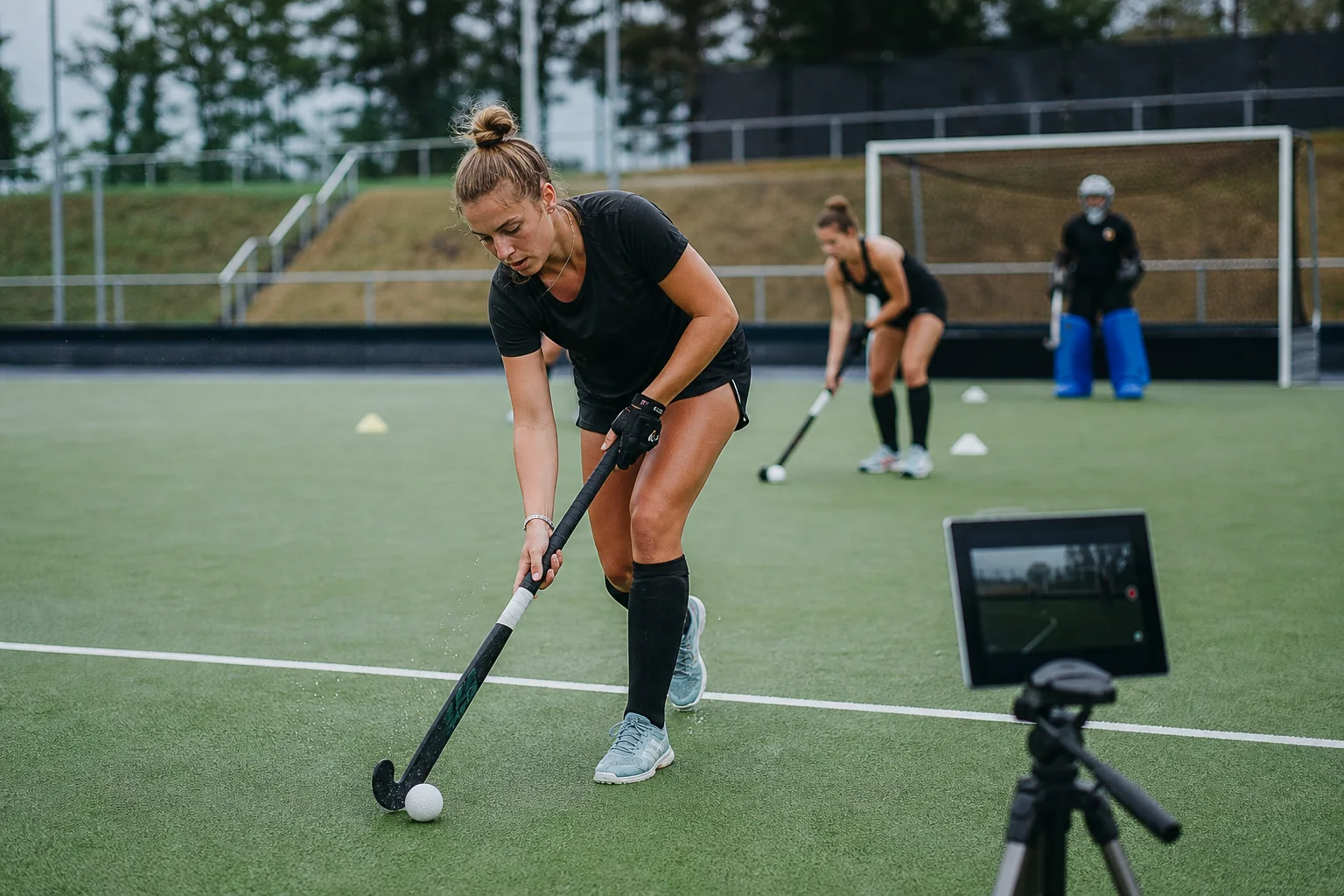
Hockey coaches often inherit surfaces that vary in pace, grip, watering, space, and consistency. The wrong response is to run the same plan and assume athletes will simply adapt. Begin every session with a brief surface check: ball roll, traction, wet or dry zones, visible joins, lighting, and available run-off. In Indian training contexts, access to a watered turf can differ by time slot and venue, making this check especially practical. The aim is not to grade the surface; it is to decide what tactical problem can be trained credibly and what physical exposure needs modification.
Keep the decision objective at the centre. If the goal is receiving under pressure, a faster surface may require smaller spaces or earlier release options, while a slower surface may need a closer defender or different starting distance. If the goal is pressing, ball speed changes the timing of triggers and recovery routes. Write the objective before adjusting the drill. This prevents staff from accidentally replacing a tactical session with generic conditioning because the turf feels different. Players also benefit when coaches explain which part of the task remains constant and which constraint has changed.
Run a short calibration block before the main activity. Let athletes test receiving, carrying, stopping, and turning at progressive speed in the actual area of play. Observe whether the ball is behaving as expected and whether footwear or water conditions create an unusual risk. Use the information to adjust pass distances, work-to-rest ratios, player numbers, or contact rules. Calibration is not wasted time; it reduces the chance that the main drill is spent correcting a setup error. Keep it focused, because a long technical warm-up can consume the attention reserved for the real session problem.
Account for physical cost beyond distance. A sticky surface may increase pushing effort and change movement rhythm, while a very fast surface can demand more abrupt reactions and decelerations. Record the surface condition and the intended session intensity alongside normal load notes, so later comparisons have context. Do not expect one wearable metric to capture stick work, crouched posture, or the mental cost of adapting to an unpredictable ball. Athlete feedback and coach observation remain essential. When a session feels unusually hard, reconstruct the task before assuming an individual problem.
Use video carefully when surface is part of the story. A low angle can show ball pace and receiving choices; a wide view can show spacing and support. Tag a small set of clips that compare the same tactical intention across conditions, then ask players what information changed. Avoid editing footage to make one surface look like an excuse or a fault. The lesson should be adaptability: when ball speed changes, which scanning cue, body position, or support line preserves the team’s principle? Store clips securely and limit access according to the club’s recording policy.
Safety decisions must be plain and fast. Halt or redesign activity when traction, water pooling, visibility, or run-off makes the original task unsuitable. Give staff authority to make that call without needing to prove a numerical threshold. Check that goals, boards, and training equipment are stable, and adapt contact expectations when the group is unfamiliar with the condition. Players should know how to report a surface concern without being accused of avoiding work. A transparent stop-or-modify protocol protects people and prevents last-minute arguments around a session that is already compromised.
Build a surface variation log across the season. For each notable condition, note the session objective, changes made, player feedback, and whether the next competitive performance suggested that practice transferred. The log becomes a local reference for venue bookings and contingency design. It also helps operational staff argue for the right access windows without relying on vague preference. The strongest hockey programme does not demand a perfect surface every day. It develops a stable tactical identity and a flexible practice process that respects the surface in front of it. Use the follow-up to confirm whether the tradeoff worked in practice rather than assuming that the first response was correct.