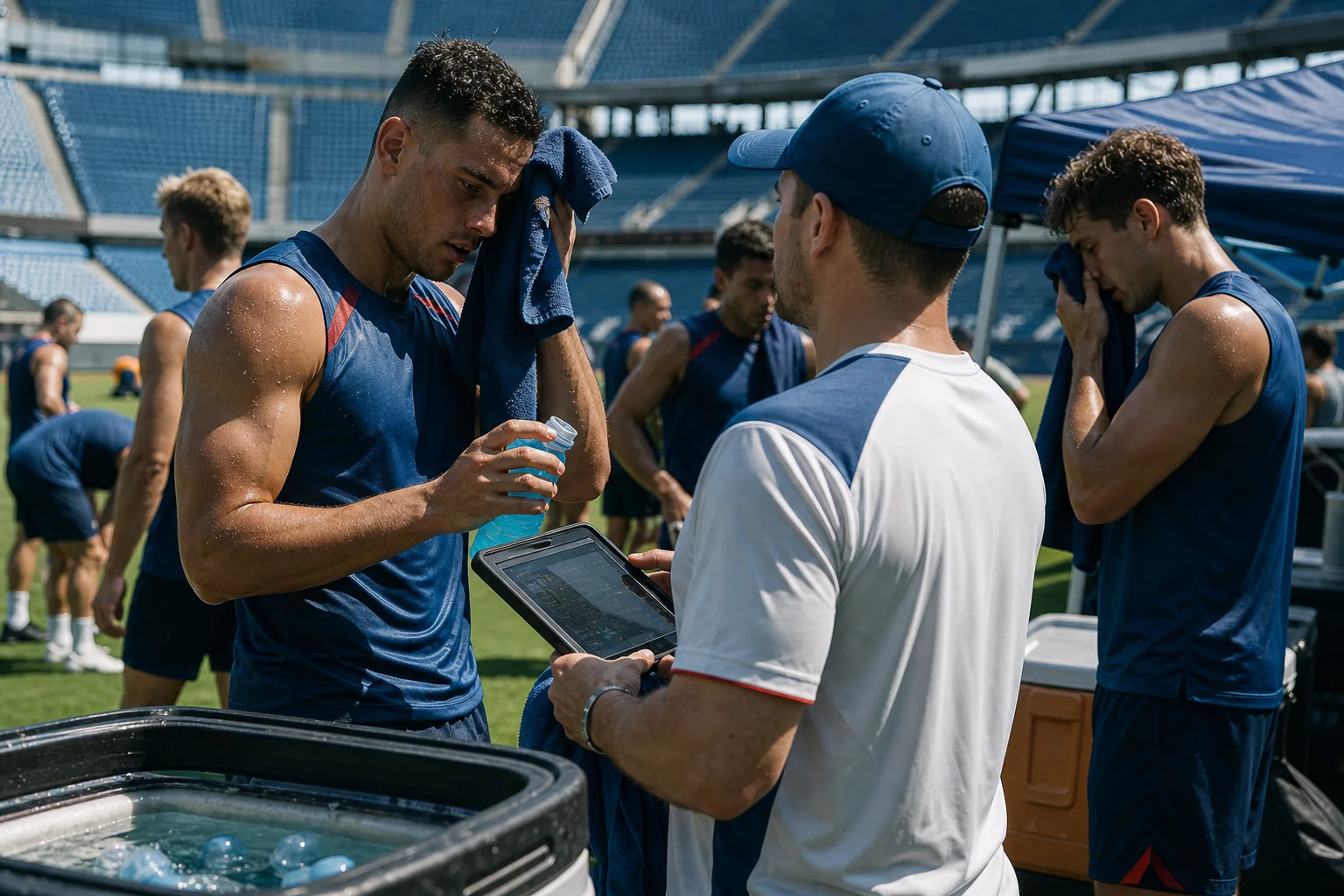
Heat changes the cost of ordinary practice. A drill that is appropriate in mild conditions may become harder to execute, supervise, and recover from when sun, humidity, limited airflow, or a delayed start raise thermal strain. In many Indian cities, coaches may also work around evening venue slots and long commutes, so avoiding heat entirely is not always realistic. Begin with a pre-session environmental check and a plan for the conditions you expect, but keep a live decision point at the venue. The goal is sensible adaptation, not a display of toughness.
Separate the tactical objective from the physical density of the session. A pressing or transition theme can remain intact while work bouts shorten, recovery expands, group numbers change, and explanations move into shade. Decide in advance which elements are essential and which can be removed first. A coach who waits until players are visibly struggling may be forced into a blunt cancellation. A tiered plan preserves quality: full format in manageable conditions, compressed format when heat rises, and a low-exposure alternative when the setting cannot support the original demand safely.
Prepare the environment before athletes arrive. Identify shaded briefing areas, water points, cooling opportunities that fit the venue, clear access to help, and a way to communicate a session change quickly. Check the surface, equipment temperature, clothing expectations, and whether breaks will create congestion. Assign staff to observe rather than assuming someone will notice a problem. The equipment list should include simple backups for water and communication, not a collection of untested devices. Good heat operations are visible in the setup and schedule, long before any individual response becomes a concern.
Use athlete communication that encourages early reporting. Explain the session modifications, invite people to say when they feel unwell or unable to continue, and make clear that speaking up is not a failure of commitment. Avoid public comparisons around who “handles” the conditions best. Any report of a health concern should be addressed under the organisation’s safety and qualified clinical procedures; coaches should not attempt to diagnose heat-related illness from the sideline. The immediate coaching decision is whether to stop, rest, modify, or seek the appropriate support, not to prove resilience.
Monitor the session with multiple ordinary observations. Are decision speed, technical execution, communication, and movement quality deteriorating across the group? Is the planned recovery actually occurring? Are athletes able to access water without missing the teaching point? A simple private effort check after training can add context, but it should not replace observation or be treated as a medical screen. Environmental readings are also estimates shaped by location and timing. Record conditions and modifications honestly so future planning can learn from what the session demanded. Use the follow-up to confirm whether the tradeoff worked in practice rather than assuming that the first response was correct.
Protect privacy and fairness in any heat-response record. If an athlete needs an adjustment, share only the information required to run the next activity. Do not display individual responses on a team dashboard, and do not let a self-report become a shortcut for judging selection or professionalism. Ensure the plan works for staff, ball people, and younger training partners as well as senior athletes. Safety systems fail when they focus only on the most visible performers. A clear escalation contact and incident record support learning while keeping sensitive detail appropriately restricted.
After practice, review whether the tactical purpose survived the adaptation. Did the group still receive enough meaningful decisions, or did the format become too diluted? Did shade, timing, and staffing work as intended? Use the answers to refine venue bookings, arrival times, drill library, and travel plan. Heat-ready operations are not a one-off protocol filed for summer. They are a season-long habit of matching ambition to conditions, explaining tradeoffs early, and protecting athletes’ ability to train well again tomorrow. Revisit the choice after a comparable task so the programme learns from a pattern rather than from a single impression.