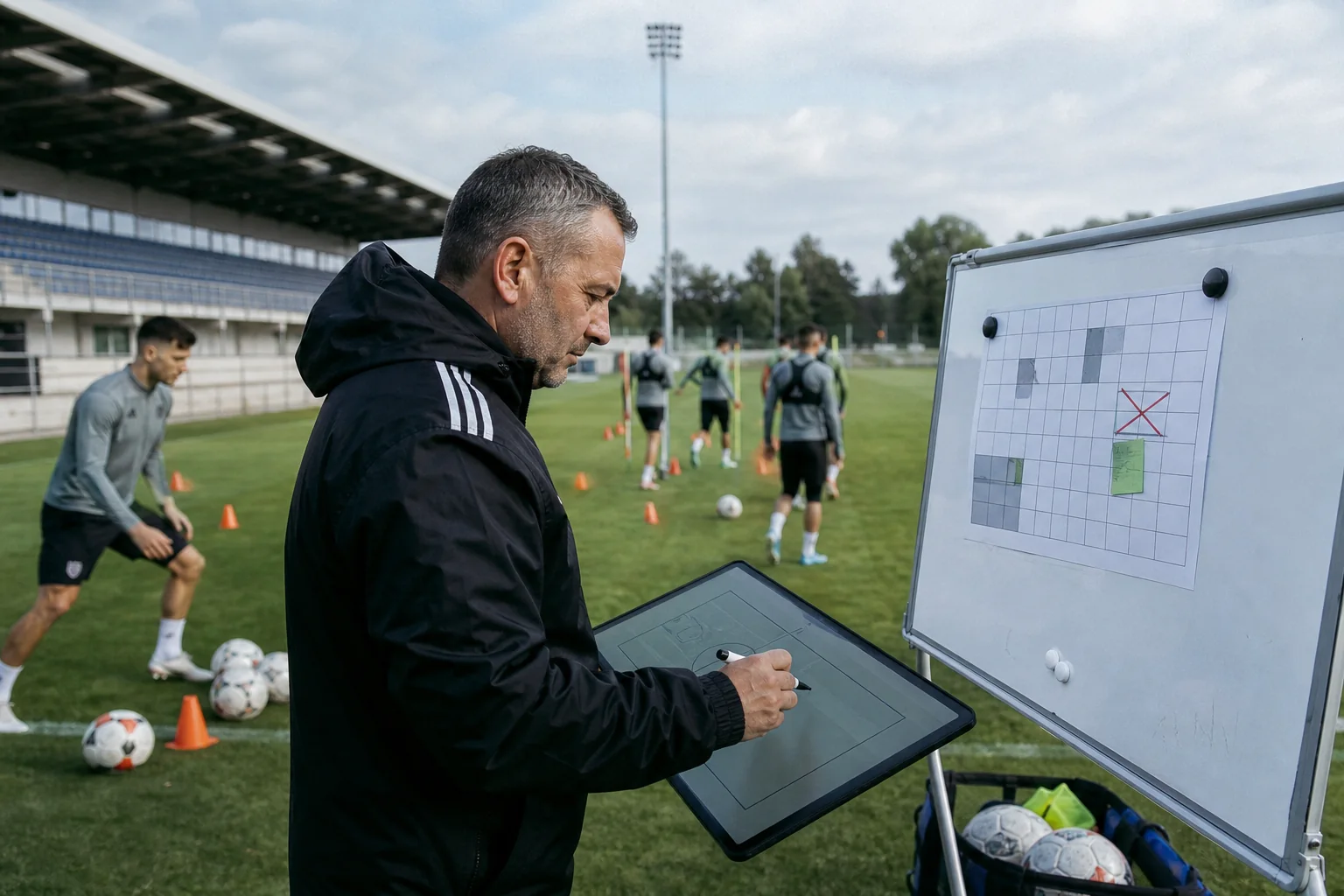
A fixed Monday-to-Sunday plan is fragile when match dates, travel windows, and training access move without warning. Start instead with a rolling seven-day board anchored to the next competitive exposure. Label each planned session by its job: restore, develop force, rehearse tactics, sharpen speed, or protect freshness. The label matters more than the calendar date because it tells staff what can move and what cannot. In leagues and tournaments with changing fixtures, including many Indian domestic environments, this keeps the programme coherent without pretending that uncertainty can be eliminated. Staff should record the adjustment, observe the next meaningful exposure, and revise the plan if the evidence changes.
Build three session versions before the week begins: full, compressed, and minimum effective dose. A full field session might include a tactical block, acceleration work, and unit practice; the compressed version retains the tactical problem and one physical stimulus; the minimum version is a short, high-quality rehearsal. Set clear triggers for choosing each version, such as an arrival after midnight, a field closure, or a fixture confirmed inside forty-eight hours. The head coach makes the final choice, but the performance lead should publish the tradeoff so no one quietly replaces lost preparation with extra volume.
Classify exposures by their recovery cost rather than by their duration. High-speed running, repeated jumps, heavy change of direction, contact, and long travel can all occupy the same recovery budget even when a session looks short. A simple board can show each athlete's recent exposures in these categories, plus the squad total. That view prevents a common error: treating a light technical session as harmless when it adds a large dose of deceleration or repeated bowling. Use the categories as prompts for coaching conversation, not as a score that automatically decides selection.
The key design question after disruption is which adaptation will be lost if the session is removed. If the team has already completed two intense running exposures, another conditioning block is usually less valuable than a controlled tactical rehearsal. If a winger has missed maximum-speed exposure for ten days, a few well-spaced fast runs may outrank another long possession drill. Make this decision in a short morning meeting using the schedule, training intent, and individual flags. Documenting the rationale helps staff learn whether their rules held up across a difficult season.
Use protected windows sparingly. The twenty-four to forty-eight hours before competition normally need low cognitive clutter and predictable routines, while the first day after a heavy match should leave room for player choice and clinical escalation where appropriate. Everything else is movable. Avoid treating the gym as an automatic make-up location for cancelled field work; the movement demands and tactical information may not transfer. When indoor space is the only option, redesign the objective around force, trunk control, video-based decision rehearsal, or small technical patterns rather than simulating the cancelled practice.
Measurement should be proportionate to the decision. A short post-session effort rating, attendance record, and coach note may be enough to judge whether a contingency session landed as intended. Wearable-derived distance or speed can add context, but it is not comparable across device settings, indoor sessions, or patchy satellite reception. Establish one owner for data quality, record missing data honestly, and never turn a faulty reading into an athlete problem. Aggregated reports should support planning; access to individual profiles should remain limited to staff with a defined performance responsibility. This creates a practical feedback loop: decision, delivery, observation, and a proportionate adjustment for the following session.
At the end of each block, review the gap between planned and delivered exposures, then revise the contingency library. Ask what was protected, what was repeatedly sacrificed, and whether the group arrived at matches prepared rather than merely busy. A good result is not perfect adherence to the original schedule; it is a credible sequence of decisions under constraints. Share a short version of that review with athletes so they understand why a session changed. Transparency improves buy-in and makes the next disruption feel like a managed adjustment rather than an improvised compromise.