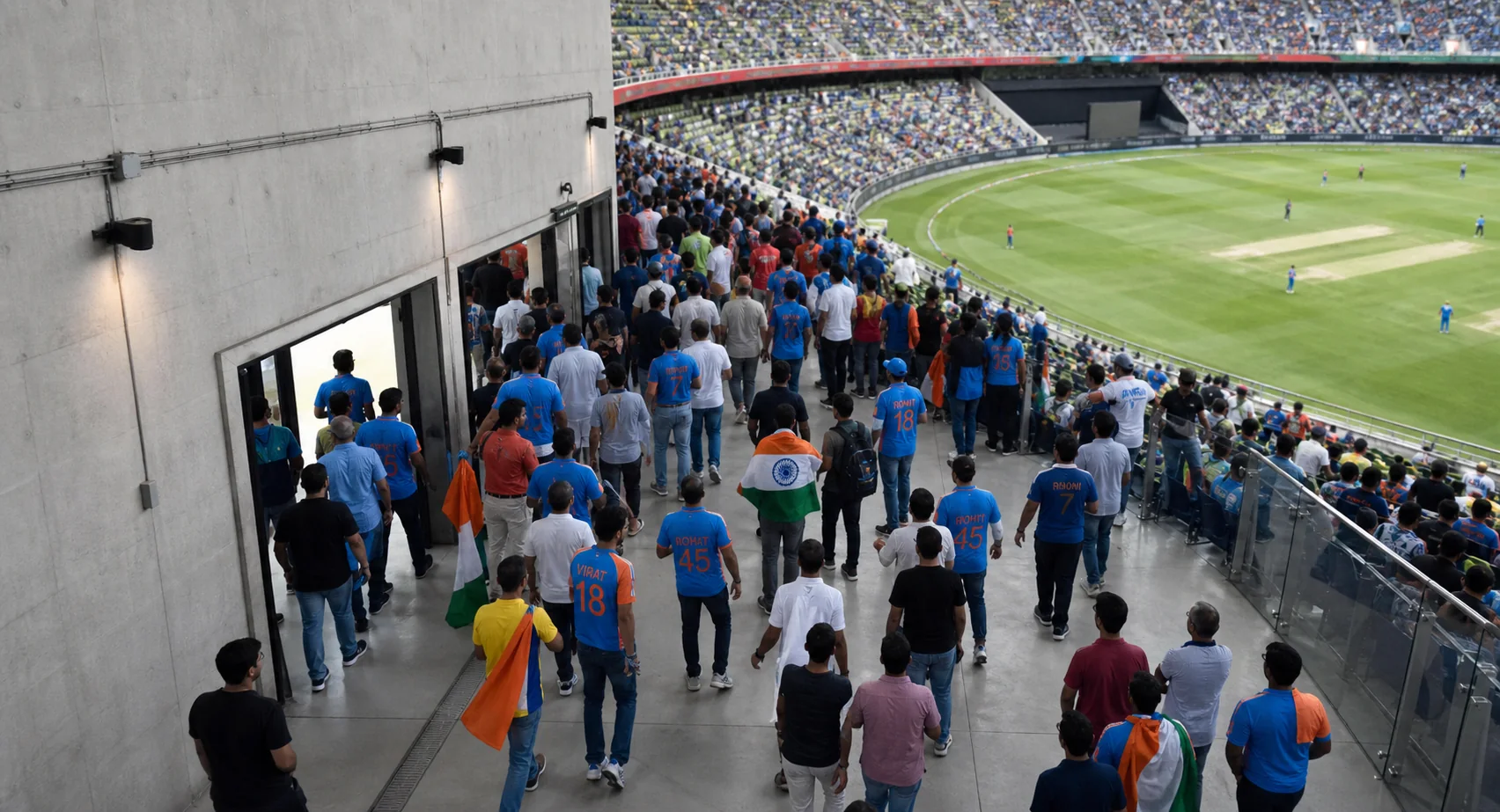
A crowd model is a hypothesis about how people will move through a specific built environment. It becomes useful only when its assumptions can be challenged by operations staff who understand arrivals, local transport, weather, fan habits, and event programming. Use it to ask where density could develop, then translate the answer into decisions that can be changed during an event. It is a decision about people, process, and physical space as much as a decision about equipment. The resulting plan should be simple enough for an event supervisor to apply without opening a technical manual.
Start with an accurate operational map rather than a polished three-dimensional rendering. Include effective widths after barriers, concessions, columns, merchandising, wheelchair routes, family areas, staff posts, door swing, and emergency clearances. A route that appears broad on an architectural plan may be unusable when temporary equipment and a queue occupy half its width. Document the normal workflow and the exception workflow; both need an owner. That discipline keeps investment choices connected to a credible event-day workflow. Name the owner, the handoff point, and the manual fallback before approving a design. Build the procedure with facilities, customer-facing teams, and technical staff in the same room.
Run several scenarios: early arrivals, late arrivals, one gate unavailable, a delayed curtain-up, a weather interruption, and an uneven release from nearby transport. For each, identify the first place that becomes constrained and the intervention with the least side effect. Models should make uncertainty visible, not present a single forecast as a certainty. Field checks should challenge the model whenever the live environment has changed. It also gives the team a practical basis for changing the approach after a debrief. The decision should be tested against the people who will use it under event pressure.
Convert outputs into a decision card for supervisors. State the observable trigger, such as a queue reaching a landmark or a movement stream slowing at a pinch point; name the authorised intervention; list the equipment and people required; and set a review interval. This structure avoids asking a control room analyst to improvise a field plan while conditions deteriorate. Protect the route for people who need more time, space, or assistance to act on the instruction. The point is a clear operational choice rather than a more elaborate technical description. Keep the public experience, staff workload, and safety consequence visible in the decision.
Live sensors can inform the picture, but they have limits. Camera analytics may struggle with occlusion, counting devices will miss people, and ticket data only describes those who scanned. Combine automated indications with steward radio reports and direct checks. Whenever a dashboard estimate conflicts with an experienced supervisor’s observation, investigate the reason rather than automatically trusting either source. Limit collection and visibility of personal information to what the task genuinely requires. This keeps the arrangement understandable to the people who must act on it. Use a documented review point so assumptions can be revised rather than defended.
Barrier changes require discipline. A diversion can relieve one space while overloading a stair, accessible route, or transport exit farther along. Keep temporary layouts pre-approved where possible, protect escape paths, and communicate changes through stewards, signage, and the public-address plan. The safest intervention is often an early, modest adjustment before people are compressed into a difficult choice. Rehearse the degraded mode before a crowded event makes experimentation unsafe. The same record can support a fair review when a decision is questioned later. Any partner involved should understand both its technical role and its authority boundary.
After the event, replay timelines with anonymous aggregate evidence and staff narratives. Identify which assumption held, which warning was late, and whether the action was executable. Do not score the model only by whether an incident occurred. Its value lies in helping a venue detect rising pressure, make proportionate changes, and learn from ordinary events before an exceptional one tests the system. Continual improvement depends on honest feedback from users, crews, and supervisors. That makes the next event safer to run and the system easier to maintain. Good practice preserves a workable service when the preferred digital path is unavailable.