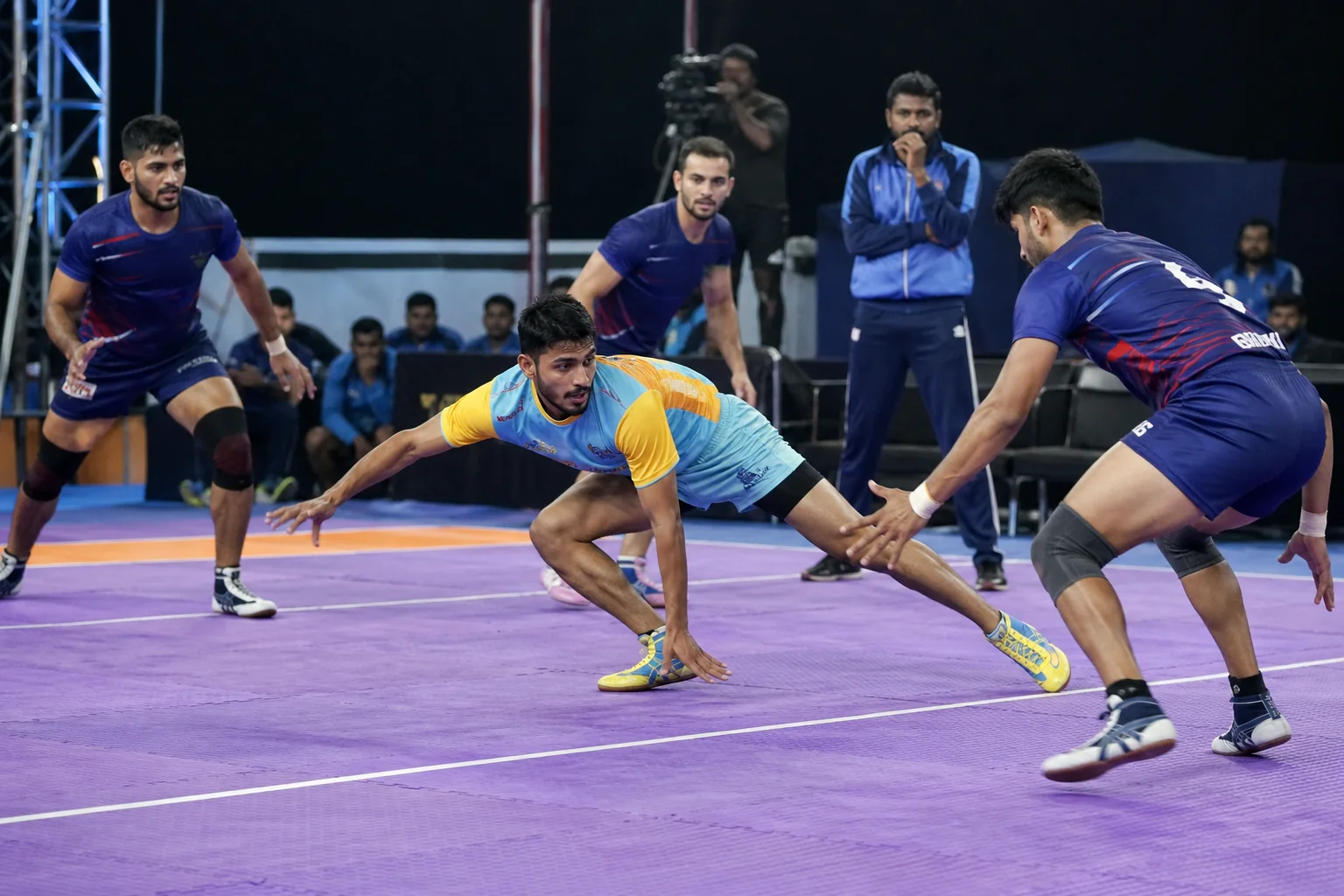
Kabaddi rewards athletes who can read spacing, body position, timing, and team support in seconds, so practice should not reduce raids and tackles to isolated choreography. Start with one decision problem: when to commit as a defender, how to draw a corner out of shape, or when a raider should convert pressure into a safe return. State the cue, options, and preferred team consequence in language players use. In Indian club and academy settings, this shared vocabulary can bridge different coaching backgrounds without claiming there is one correct style of play.
Build representative tasks from the game’s information. A raider needs live defenders with enough freedom to alter spacing; defenders need a real threat of a retreat or change of direction. Use constrained zones, limited support, or a scoring rule to bring the target decision forward, but retain uncertainty. A drill in which everyone knows the next move may polish timing without training recognition. Alternate short high-quality bouts with enough recovery for players to reset their attention, especially when contact and repeated acceleration are central to the design. A brief note on context and outcome makes the next coaching decision easier, more transparent, and less dependent on memory.
Plan contact exposure as deliberately as running exposure. Tag activities by their likely tackling, falling, gripping, and collision demand, then avoid stacking the most demanding forms without a reason. Begin technical contact work with clear rules, appropriate partners, adequate space, and staff able to observe. Progress from controlled engagements to live decisions when the group can preserve the task’s safety boundaries. If an athlete reports a health concern or looks unable to continue safely, use the club’s qualified support process. Coaches should never use contact drills as informal tests of toughness.
Video review can isolate the decision point without overloading players. Select a few raids or defensive sequences, show the picture just before commitment, and ask what was available. A floor diagram or magnet board can help reconstruct support and escape routes when the camera is limited. Tag context—score, player numbers, side of the mat, and opponent shape—because the same action can be sensible in one situation and poor in another. Store recordings within a defined access group, particularly for youth players, and avoid turning clips into public judgement sessions.
Use role-specific work within a shared tactical theme. Corners may need timing and angle practice, covers may need support and recovery decisions, while raiders work on reading the same defensive shape from the opposite perspective. Rotate some roles to improve collective understanding, but do not demand identical exposure from every athlete. The coaching staff should agree on when a role is developing versus when the team needs role clarity for competition. This tradeoff is easier to manage when session plans state both the individual learning purpose and the team outcome.
Measure progress through behaviour samples, not just raid points or tackle counts. Observe whether players identify the cue earlier, preserve support after the first action, and choose options that fit the match context. Competition outcomes are influenced by opposition style, officiating, and opportunity, so treat them as one source of evidence. Coach notes, athlete reflections, and a small coded video sample can reveal whether practice transferred. Keep definitions consistent and acknowledge uncertainty when a sequence is ambiguous. The aim is better feedback, not a false ranking of decision quality. Staff should record the adjustment, observe the next meaningful exposure, and revise the plan if the evidence changes.
Finish each block with a practice adjustment. If raiders are seeing a cue but not having a technical response, simplify the movement problem. If defenders know the rule but lose support under fatigue, change bout length or recovery. If the task creates little uncertainty, restore an attacking option. This iterative loop respects kabaddi’s creativity while giving staff a repeatable method for development. Players learn that analysis exists to sharpen their choices, not to constrain them, and operations staff gain a clear rationale for mat time, groupings, and recovery between demanding bouts.