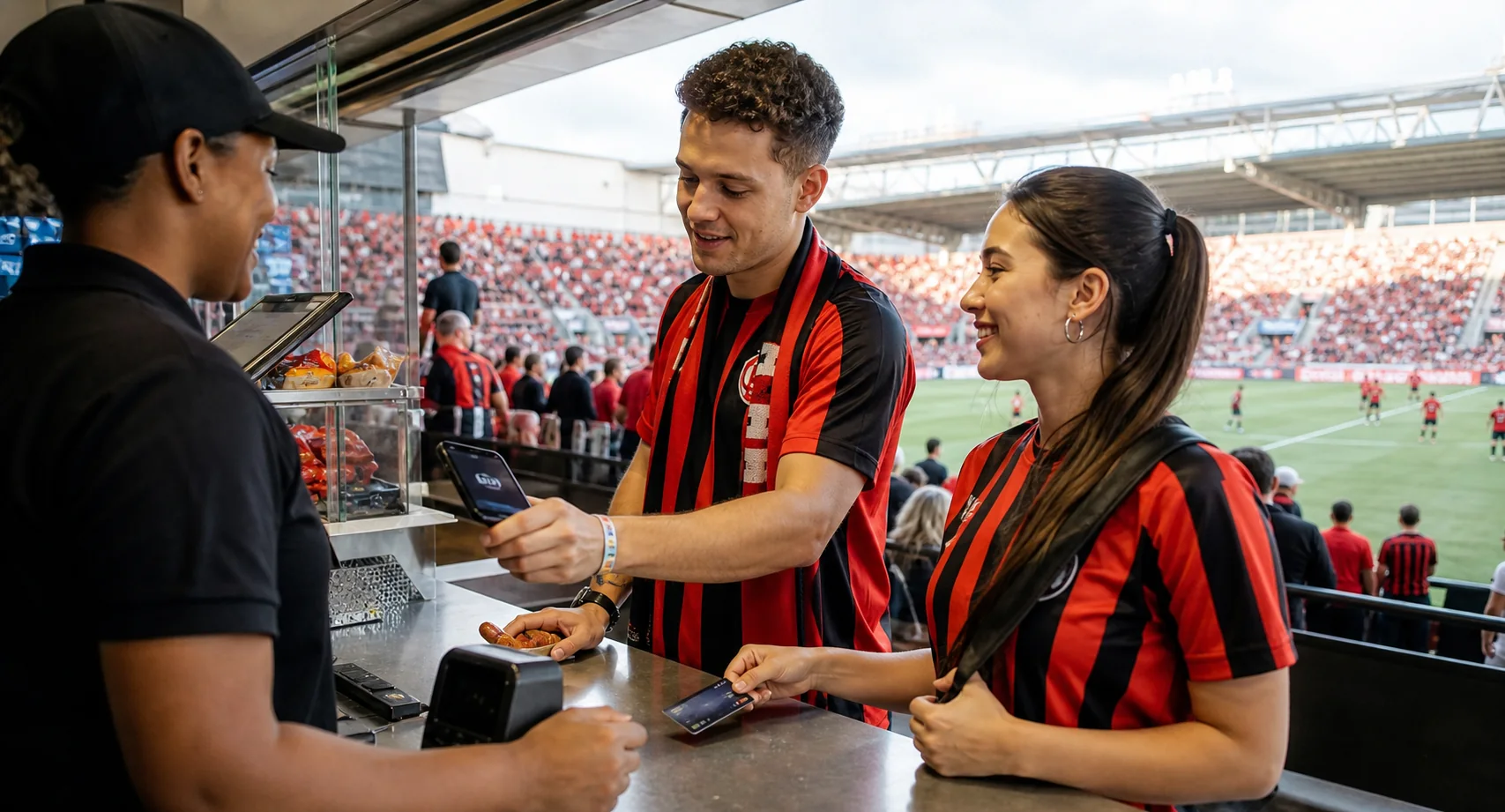
Concession payment design affects more than transaction speed. It changes who can buy food, how staff resolve disputes, what happens in a connectivity incident, and where queues form. Before reducing cash acceptance, map the customer groups, event types, local payment habits, and legal or contractual requirements that shape the venue’s actual duty of service. The intended result should be stated in plain operational language before specifications are written. The venue should make this choice deliberately rather than inheriting it from a default setting. It is a decision about people, process, and physical space as much as a decision about equipment.
Define the failure state before celebrating the normal flow. A terminal may lose signal, a device battery may fail, an acquirer response may be delayed, or a customer may see a charge that the till does not recognise. Each condition needs a simple staff instruction: pause, retry, issue a controlled alternative, record a token, or direct the guest to a support point. A clear readiness check exposes dependencies that procurement documents often miss. Frontline staff need a short instruction that remains usable when communication is imperfect. Document the normal workflow and the exception workflow; both need an owner.
Offline capability is not a magic answer. It can introduce risk around authorisation, reconciliation, limits, duplicate attempts, and later disputes. Decide which transactions can proceed in a constrained mode, who authorises it, and how stock and receipts are controlled. A clear temporary suspension can be more responsible than an improvised workaround that staff cannot explain. Observe the boundary between teams, where handoffs and unclear language commonly cause delay. Prefer a small intervention made early to a dramatic change made after options have narrowed. Field checks should challenge the model whenever the live environment has changed.
Customer choice should be explicit. If digital payment is preferred, provide a transparent route for people who need assistance, do not carry a compatible method, or encounter account trouble. That route should not be hidden at the back of a concourse or require a public explanation of personal circumstances. Train teams to offer options without making assumptions about a guest. Pair every speed or utilisation metric with an observation of fairness, access, or resilience. Use evidence with humility: sensors, records, and observations each describe only part of the scene. Protect the route for people who need more time, space, or assistance to act on the instruction.
Data handling deserves scrutiny. Payment systems may generate purchase histories, device identifiers, and location-linked transaction records. Retain only what supports operations, reconciliation, support, or lawful obligations; limit access; and avoid repurposing service data for unrelated targeting without a clear basis. Staff screens should reveal only the minimum needed to resolve a transaction. Privacy and safety rules need a named custodian and a route for frontline questions. Access should be proportionate to the task, with logs that support review without creating busywork. Limit collection and visibility of personal information to what the task genuinely requires.
Measure service quality beyond sales per minute. Examine declined payments, recovery time, duplicate-charge reports, assistance requests, abandoned queues, device outages, stock discrepancies, and the experience of guests using alternative routes. Segmenting operational data by stand and event phase can reveal a placement or training issue that a venue-wide total conceals. Temporary event changes should have a deadline, inspection, and rollback plan. An exercise should include at least one failed assumption, so recovery is genuinely practised. Rehearse the degraded mode before a crowded event makes experimentation unsafe. The same record can support a fair review when a decision is questioned later.
Run event-day drills for the likely failures. Simulate a lost network connection, a terminal replacement, a disputed charge, and a queue that reaches a main route. Give supervisors a short escalation card and reconcile the test afterwards. Cashless service is mature when it preserves customer dignity and financial control during disruption, not when it removes every human decision from the counter. Learning compounds when the team changes one variable at a time and records the outcome. The mature outcome is a service the venue can explain, operate, and improve with confidence. Continual improvement depends on honest feedback from users, crews, and supervisors.