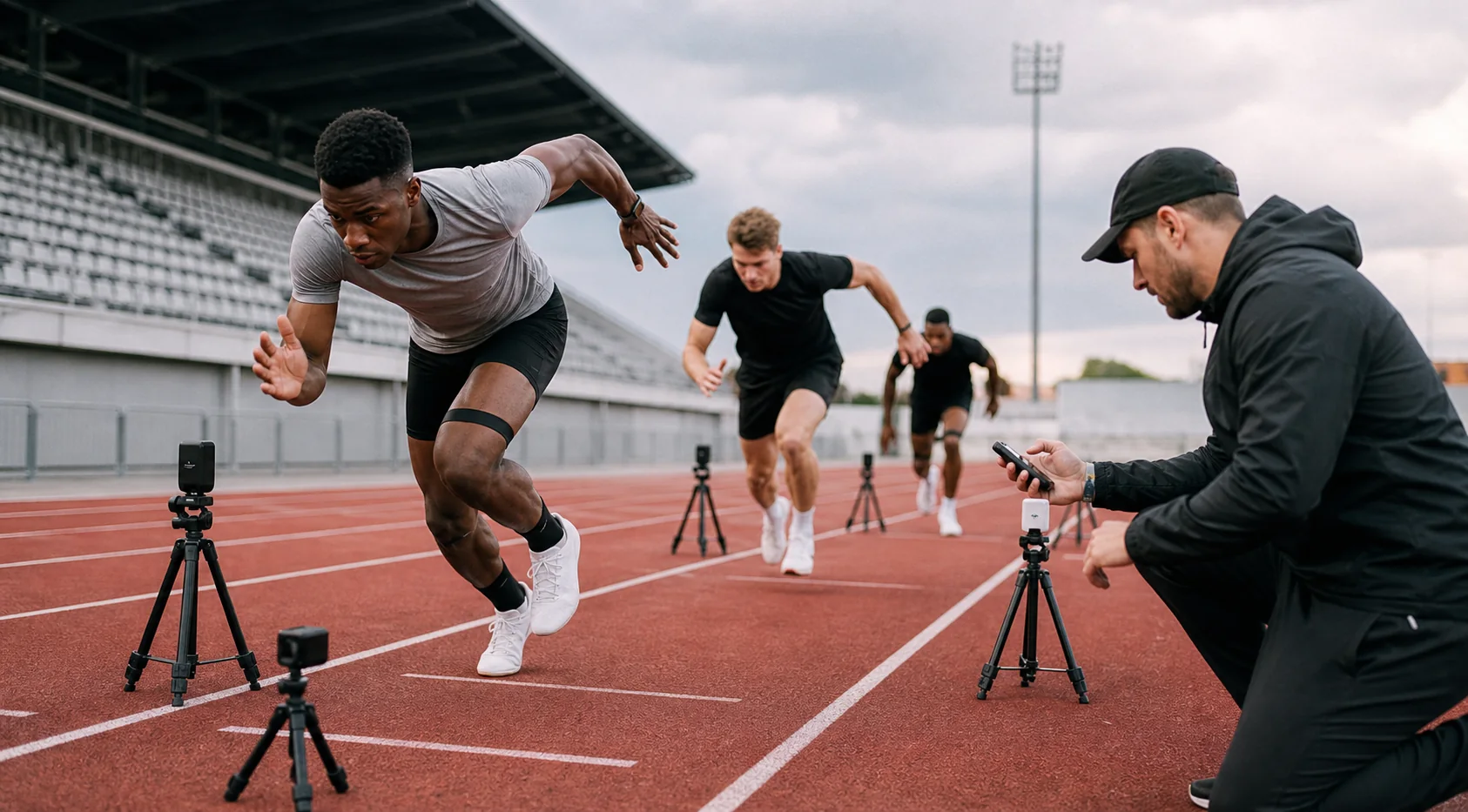
Maximum-speed exposure is not simply a line item on a running report. It involves an athlete reaching fast, coordinated movement in an environment that allows posture, rhythm, and enough space to develop. Begin by identifying who needs it, why, and where it fits relative to matches and demanding field sessions. A wide player may need regular open-field accelerations and fast runs; a central player may receive meaningful speed exposure through different patterns. The programme should reflect role and recent opportunity, not a squad-wide target detached from how each athlete actually competes.
Create a progression that distinguishes acceleration, build-up, and near-maximal running. Early exposures can use controlled build distances and generous recovery so athletes practise rhythm without chasing a number. Later, add reaction, a ball, an opponent, or directional constraint only if the fundamental running opportunity remains. Do not combine a novel surface, fatigue circuit, and competitive race on the same day merely to make the work exciting. One major variable at a time lets coaches see whether the athlete can express speed comfortably and lets the session retain a clear learning purpose.
Place sprint work where attention and field space are available. For many teams, that means after a progressive warm-up and before a long game block, with adequate recovery between efforts. If tactical practice already contains frequent high-speed actions, planned exposures may be smaller or unnecessary. Conversely, a dense possession day can leave an athlete without any true fast running despite a large total distance. The performance coach should preview the drill design with the sport coach, then decide whether a short speed microdose complements the plan or would simply duplicate its cost.
Observe quality with simple, shared criteria: smooth build-up, stable rhythm, ability to repeat, and no obvious disruption in the planned task. Timing gates or wearable estimates may add a useful reference, but they depend on setup, distance, device settings, and context. Never compare readings collected through different methods as if they were identical. A slower effort may reflect wind, footwear, field access, or a conservative instruction rather than loss of capability. Note the conditions and athlete’s own account before changing a plan based on one measurement. Revisit the choice after a comparable task so the programme learns from a pattern rather than from a single impression.
Design alternatives for limited space. A narrow or crowded field may support acceleration and short change-of-direction work but not genuine maximum-speed running. Rather than pretending otherwise, shift the objective, find a safe alternate space, or schedule the speed exposure on another day. Treadmill, indoor, or resisted options may serve particular coaching purposes but should not be presented as automatic substitutes for every outdoor running demand. The tradeoff should be explicit to staff and athlete: what was trained today, what was not, and when the missing exposure will be reconsidered. This creates a practical feedback loop: decision, delivery, observation, and a proportionate adjustment for the following session.
Make safety authority clear. Check surface, footwear, run-off, weather, congestion, and the athlete’s readiness to perform the task before starting. An athlete reporting a health concern should be directed through the appropriate support pathway, not encouraged to test it in a race. Staff should avoid public speed leaderboards that pressure people into reckless attempts or reduce complex movement to a status symbol. Individual data, video, and notes require restricted access and a stated purpose. A high-quality speed environment is one in which athletes can report uncertainty without social cost. The staff can then distinguish a useful adaptation from a temporary workaround and communicate the next step clearly.
Review exposures over blocks, not through a single heroic session. Did the athlete have repeated opportunities to run fast with adequate spacing? Did the chosen drills maintain quality and transfer into their role? Did fixtures, travel, or weather repeatedly block the plan? Use those answers to alter session design and venue use. The goal is not to manufacture peak readings in practice. It is to make fast, confident movement a normal and well-managed part of the weekly performance system, with evidence interpreted honestly and decisions documented clearly. Staff should record the adjustment, observe the next meaningful exposure, and revise the plan if the evidence changes.