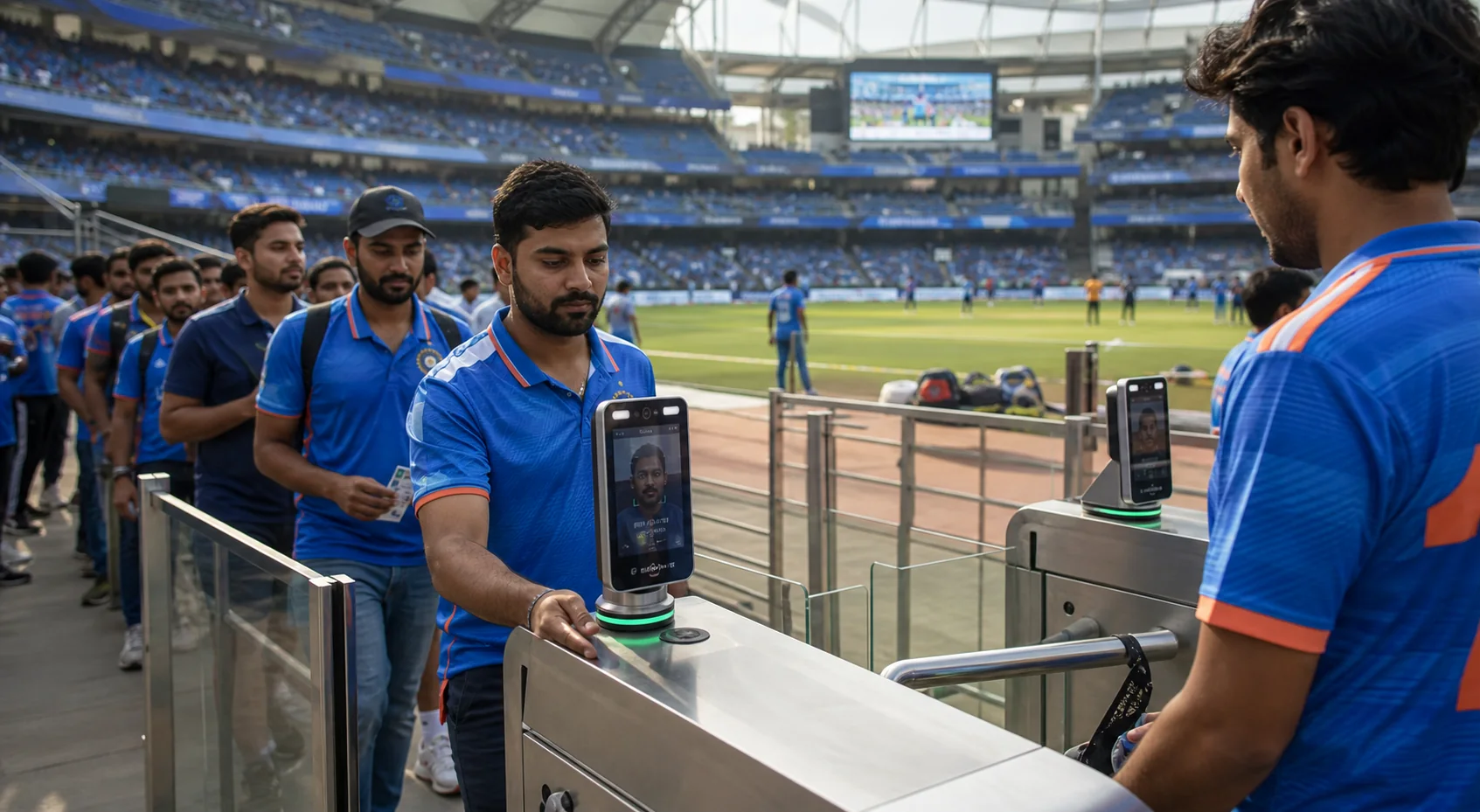
Biometric entry should never be framed as a shortcut around weak ticketing or understaffed gates. It creates a system for processing a sensitive characteristic, and its value depends on a defined problem that simpler controls cannot solve. In an Indian sports-venue setting, begin with the event purpose, the venue policy, applicable legal advice, and a written decision on whether the use is optional or essential. The venue should make this choice deliberately rather than inheriting it from a default setting. It is a decision about people, process, and physical space as much as a decision about equipment.
The least intrusive workable method is the correct baseline. For general spectator admission, a dynamic ticket plus trained exception handling may meet the need without identity matching. If a restricted workforce zone has a stronger verification requirement, compare a biometric check with photo badges, supervised access, and temporary credentials. The comparison should include failure modes, not merely convenience in ideal conditions. Frontline staff need a short instruction that remains usable when communication is imperfect. Document the normal workflow and the exception workflow; both need an owner. That discipline keeps investment choices connected to a credible event-day workflow.
Consent language alone does not cure a poor design, especially where entry to an event may feel conditional. Provide a genuinely usable alternative route that does not shame, delay, or financially disadvantage a person who declines. Staff must be able to explain the choice plainly, complete the alternative check quickly, and avoid making speculative claims about security or accuracy. Prefer a small intervention made early to a dramatic change made after options have narrowed. Field checks should challenge the model whenever the live environment has changed. It also gives the team a practical basis for changing the approach after a debrief.
Document the data lifecycle as an event operation. Specify where enrolment occurs, whether a template or image is stored, who can retrieve it, how matching is performed, how long records remain, and how deletion is confirmed. Restrict access by role, retain an audit trail of administrative actions, and obtain independent privacy and security review before a public deployment. Use evidence with humility: sensors, records, and observations each describe only part of the scene. Protect the route for people who need more time, space, or assistance to act on the instruction. The point is a clear operational choice rather than a more elaborate technical description.
Accuracy testing requires local operating conditions. Lighting, queues, headwear, camera height, weather exposure, and a person carrying a child or luggage can change the experience. Test only with appropriate permissions and voluntary participation. Record false matches, failed matches, time to resolve an exception, and the distribution of failures, while avoiding the creation of an unnecessary surveillance dataset. Access should be proportionate to the task, with logs that support review without creating busywork. Limit collection and visibility of personal information to what the task genuinely requires. This keeps the arrangement understandable to the people who must act on it.
The command chain needs a human boundary. A failed match must not automatically become a safety accusation, and a successful match should not override a steward’s direct observation of a problem. Define which decisions the system may support, who can override it, what is recorded, and how a person can obtain assistance or raise a complaint after the event. An exercise should include at least one failed assumption, so recovery is genuinely practised. Rehearse the degraded mode before a crowded event makes experimentation unsafe. The same record can support a fair review when a decision is questioned later.
If the venue proceeds, launch as a tightly scoped trial with a public description, independent oversight, an alternative pathway, and a fixed review date. Measure whether it improves the stated objective after accounting for extra staffing, dispute handling, and accessibility effects. Ending a trial is a valid result. A responsible venue does not preserve a sensitive system merely because it has been installed. The mature outcome is a service the venue can explain, operate, and improve with confidence. Continual improvement depends on honest feedback from users, crews, and supervisors. That makes the next event safer to run and the system easier to maintain.