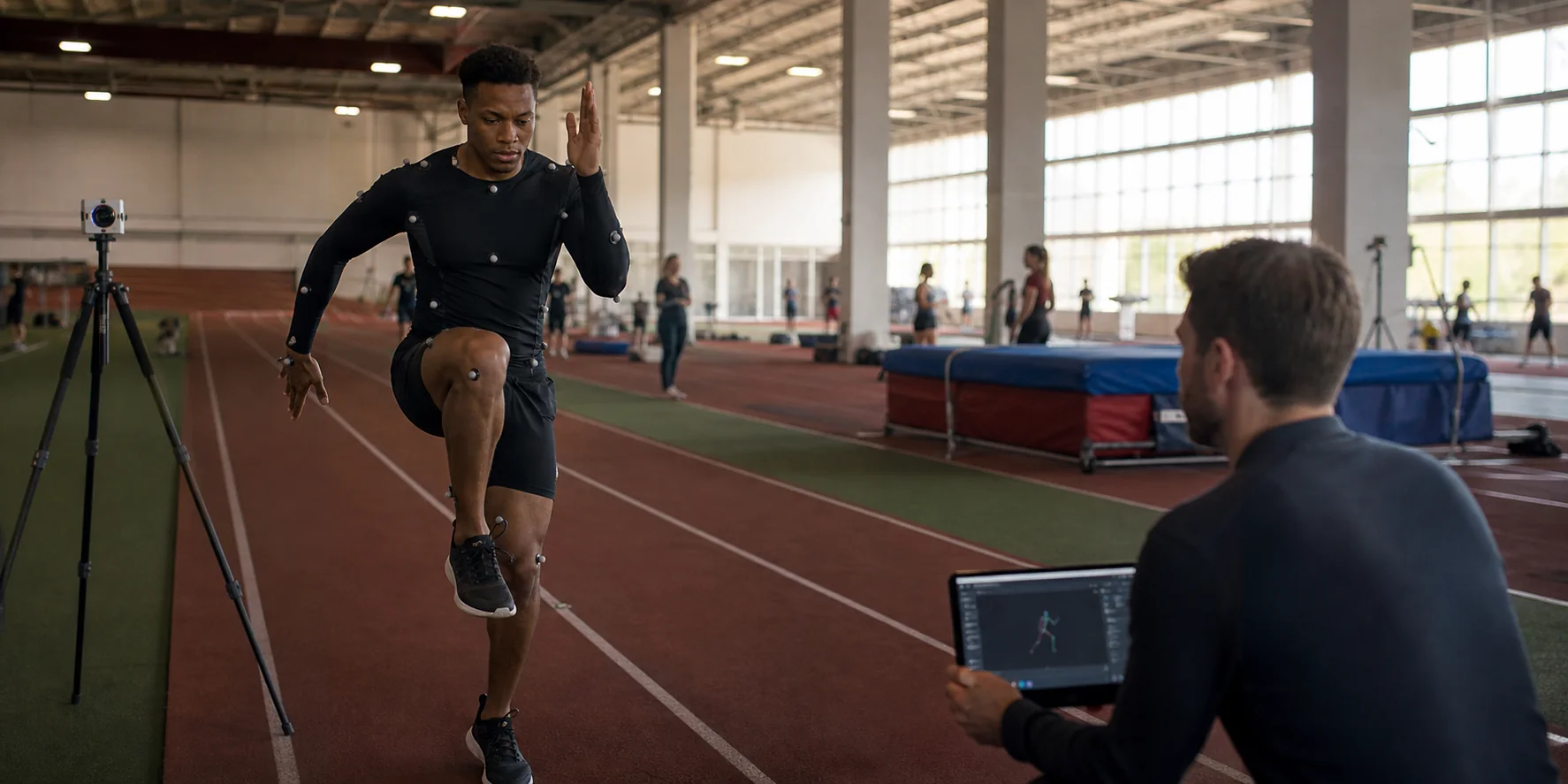
A movement screen should answer a practical question: what change in warm-up, coaching cue, or training exposure could make today’s work safer or more productive? It should not search for a universal ideal posture. Begin with sport-relevant tasks that athletes already perform, such as a submaximal landing, squat, sprint build-up, or deceleration. Film from consistent angles, use the same instructions, and observe the task across several repetitions. Variability is normal; a single unusual repetition is a reason to look again, not a diagnosis or a reason to remove someone from training.
Choose a small set of observable features that the staff can reliably discuss. For a landing, that might include trunk control, foot placement, knee travel, sound, and ability to repeat the effort; for sprinting, rhythm, posture transition, and visible asymmetry may be more useful than a long checklist. Give each observer definitions and examples before collecting data. If two coaches cannot agree on what they see, the category is too vague for a decision. Simple consistency usually beats a detailed scoring system that only one specialist understands. A brief note on context and outcome makes the next coaching decision easier, more transparent, and less dependent on memory.
Connect the observation to the athlete’s task and recent exposure. A player showing a noisy, stiff landing late in a congested week may need a different decision than the same player in a fresh technical session. Ask about confidence, effort, equipment, surface, and whether the movement felt typical. The interpretation should combine video, coach observation, and athlete voice. Do not infer pain, tissue damage, or medical status from a screen. Where a concern warrants clinical input, follow the organisation’s established referral pathway rather than expanding a coaching assessment beyond its remit.
Use an intervention ladder with the least disruptive option first. A cue, a small change in approach distance, a reduced repetition count, or a different drill constraint can test whether the observed pattern is responsive. If the pattern improves without reducing task quality, retain the adjustment and observe it again later. If it does not, the answer may be more skill practice, a changed load, or a specialist conversation—not simply more corrective exercises. Record the chosen action, the context, and the athlete’s response so decisions can be reviewed rather than remembered selectively.
Technology can improve observation but does not erase measurement error. Camera angle, frame rate, footwear, clothing, lighting, and marker placement all affect what appears on screen. Force and motion systems estimate particular variables under particular conditions; they do not deliver an all-purpose readiness verdict. Calibrate equipment, keep protocols stable, and avoid comparing results collected under different setups as though they were directly interchangeable. A field test is especially valuable when it is repeatable enough to influence coaching, not when it produces the most elaborate dashboard. The staff can then distinguish a useful adaptation from a temporary workaround and communicate the next step clearly.
Screening data deserves the same privacy discipline as other athlete information. Explain the purpose, access group, storage location, and review period before recording. Avoid sharing individual movement clips in informal group chats or using them as entertainment in team meetings. For younger athletes, obtain the appropriate consent and keep a clear separation between development feedback and selection pressure. Staff should have a route to correct mislabeled files and delete material that no longer serves a legitimate performance purpose. Good governance makes honest participation more likely. Staff should record the adjustment, observe the next meaningful exposure, and revise the plan if the evidence changes.
The final output should be a one-page coaching note, not a verdict. State the task observed, the feature worth monitoring, the immediate practice adjustment, and the next review point. A strength coach might use the note to select a low-volume landing progression; a sport coach might alter an approach pattern; the athlete receives a clear cue rather than a technical lecture. Reassess after meaningful exposure, not every day in search of a perfect score. The value of the system lies in better choices over time, with uncertainty made visible rather than hidden.