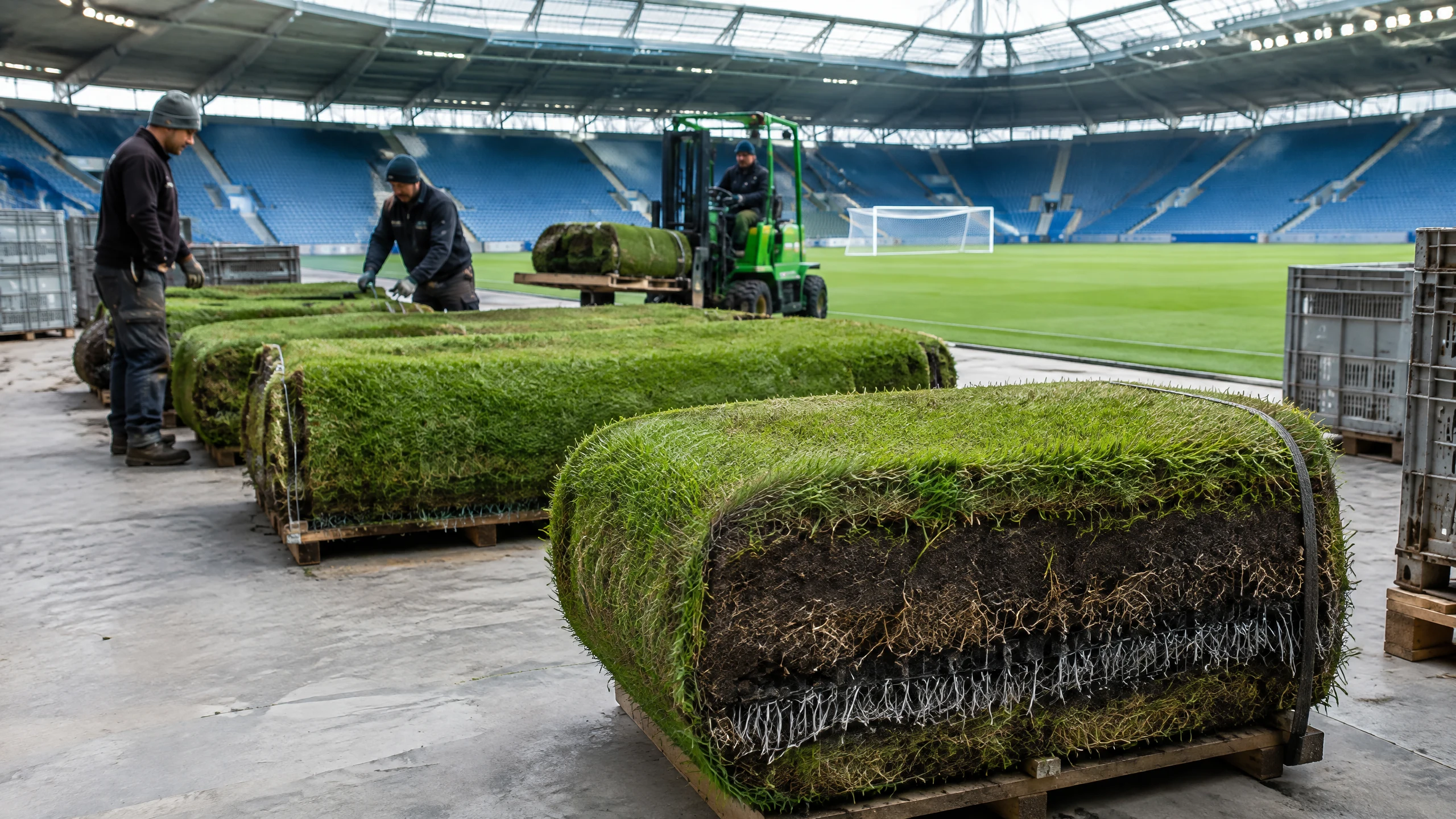
FIFA has reported that the temporary hybrid pitch installed at BC Place for the 2026 World Cup was cut into rolls after the venue’s July final and returned to Bos Sod Farm. The stated next step is separation: FIFA says a process of about 12 months is intended to recover the synthetic fibre for recycling and repurpose the natural material into new pitches and sod. That makes the development less a claim about a completed recycling result than a case in how a temporary sports surface is handled once its event role ends. The timely development is FIFA’s 11 September disclosure of that recovery plan; the removal itself happened in July.
The material stack explains why the pitch cannot simply be transferred whole. FIFA says the surface used 38 mm of Western Canadian sand from Vancouver Island, with a grass component grown from a 50–50 mix of Kentucky bluegrass and perennial ryegrass seed. It also describes an Australian-made compostable base with synthetic fibres sewn into the material. These components formed a hybrid system for the event, but they also create an end-of-life sorting task. The fibres are embedded in material that FIFA says is intended for natural-material reuse, so separation rather than intact donation is central to the route the organiser has outlined.
FIFA says the turf could not be donated intact because the synthetic fibres need to be separated from the natural material. Its reported plan identifies several intended destinations: recycling for the fibre, repurposing of the natural material into new pitches and sod, and reuse of crates as well as irrigation and drainage elements. Bos Sod Farm is the named return point for the removed rolls, but FIFA’s account does not describe a completed processing outcome. The distinction is important. Return for separation is a documented step in a recovery workflow; it is not evidence that each material stream has already reached its stated destination.
For stadium and event operators, the operational consequence is that a temporary surface requires an end-of-life specification before it is installed. The contract and operating plan need to account for removal, the separation route, traceability of materials, identified recovery destinations and the funding behind each stage. FIFA’s BC Place report brings those questions to the surface because the surface contains both natural material and synthetic reinforcement. A plan that starts only when the pitch is lifted leaves basic responsibilities unresolved: who holds the material, where it goes, what can be recovered and how the route will be recorded. The reported reuse of crates, irrigation and drainage elements also shows that the recovery question extends beyond the turf rolls alone.
The evidence limits are substantial. FIFA does not provide component masses, the fibre polymer or backing chemistry, the separation method, a recovery yield, a contamination rate, the identity of a recycler, final recipients, transport impacts or funding details. It also provides no independent comparative lifecycle assessment. On the available evidence, the project cannot be described as circular as a demonstrated outcome, as environmentally beneficial, or as a successful recycling programme. FIFA reports an intended recovery process and intended reuse routes, not verified results. Neither a projected 12-month separation period nor the existence of a plan establishes the proportion of material that will be recovered or the consequences of the processing and transport required.
That limitation sets a practical test for any later update. FIFA, BC Place and Bos Sod Farm would need to document a mass balance from removed pitch to each destination, the method used to separate the materials, recovery and contamination rates, the recycler and recipients, and the transport and lifecycle basis for any environmental claim. Those details would turn an end-of-life intention into an assessable materials record. Until then, the useful procurement lesson is narrower: hybrid and temporary sports surfaces should have removal, disassembly, tracking and destination arrangements defined in advance, rather than treating recovery as an afterthought once an event has finished.
BC Place’s case therefore puts design for disassembly, rather than a claimed sustainability result, at the centre of the discussion. FIFA’s report confirms that the rolls were returned for planned separation and that fibre recycling, natural-material repurposing and reuse of supporting elements are intended. It does not establish the yields, destinations or lifecycle effects that would show whether those aims were met. For organisations specifying temporary playing surfaces, the durable question is not simply whether a material can be called recoverable. It is whether the event plan names the route, the responsible parties, the evidence to be collected and the point at which a recovery claim can be verified.