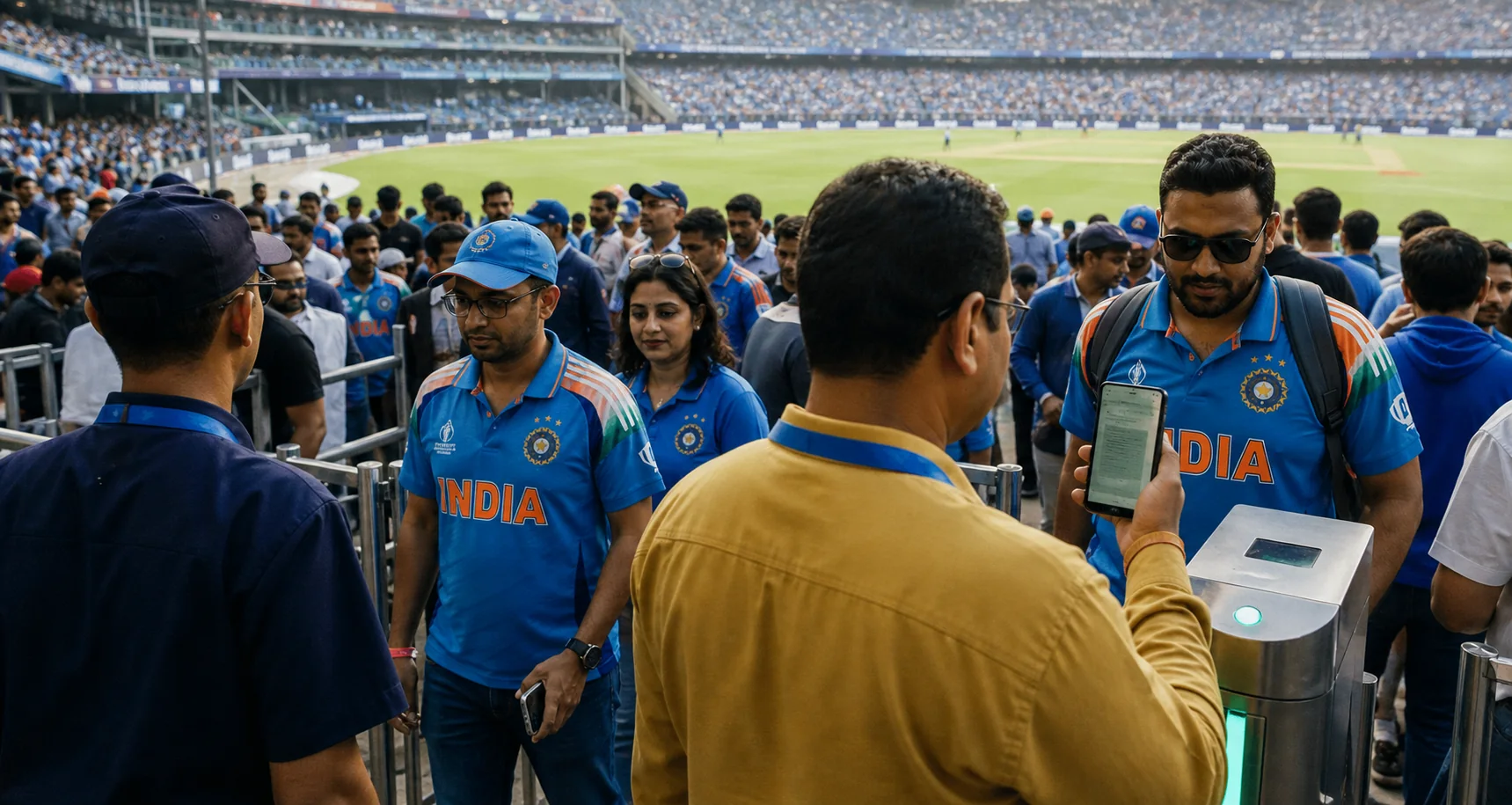
Privacy-aware crowd-flow analytics at Indian sporting venues should be commissioned as a decision system rather than a technical novelty. In a busy event day with uneven gate arrivals, variable weather, family groups, and operational teams working across several concourses, the first question is where congestion develops early enough for staff to change signage, gate allocation, or steward placement. Establish the intended user, the moment when they act, and the consequence of a wrong answer before selecting tools. This makes the initial scope manageable: identify one review decision, its deadline, and the evidence that must be visible. Pair every dashboard alert with an operational playbook card so analytics does not substitute for trained crowd-management judgement. The goal is not a richer screen; it is a repeatable way to decide when the information is fit for use.
Implementation should begin with a site and role map, not a procurement checklist. List the physical positions, handoffs, permissions, and failure points that will exist on an ordinary day. Assign one person to approve setup and another to judge analytical fitness, so the same operator is not validating their own work. Use a short readiness checklist, a reversible configuration change, and a documented fallback. This approach exposes tradeoffs early: more coverage may mean more complexity, while simpler capture may leave an important question unanswered. In practice, record this step in the shared operational log so that the next reviewer can see the context, owner, and unresolved question without reconstructing it from memory.
Measurement should be reported in language connected to the decision. Use queue duration samples, occupancy by zone, time from threshold to intervention, and the recurrence of pinch points across comparable fixtures. Break results down by setting, source condition, and confidence level, rather than publishing one flattering average. Keep a held-out reviewed sample and examine the cases near the action threshold; they often matter more than routine examples. Do not treat a measure as a promise of accuracy outside its tested context. A dashboard that foregrounds coverage and uncertainty is more useful than one that hides them behind a single score.
The mechanism rests on aggregate counts, queue-length samples, gate timestamps, anonymous zone occupancy, staff observations, and weather or programme timing notes. The team should document how those signals are created, what can disturb them, and which are merely helpful rather than essential. The working method is to measure zones and flows at group level, compare them against safe operating thresholds, and reserve identifiable video for narrowly defined security procedures rather than routine analytics. That separation matters because a polished output can conceal weak input conditions. Run a controlled test with known reference cases, preserve the raw source material, and compare the derived view against it. Only then can staff understand what the system observes, what it estimates, and what it cannot know.
The venue team maps decision points before the event: open a lane, redirect arrivals, dispatch water, or slow a gate. During ingress, an operations lead checks a simple zone board every few minutes and calls actions over radio with a timestamp. Afterward, supervisors compare interventions with observed queue changes and update the event plan. The important design choice is that exception handling is part of the routine rather than an embarrassing afterthought. A small, named queue prevents unresolved cases from leaking into summaries. At the end of each cycle, review the reasons items entered that queue and decide whether the issue was capture, definition, process, or model behaviour. That feedback turns daily operations into a controlled improvement loop instead of an untracked collection of fixes.
The limits are operational facts: density estimates do not reveal why people stopped, cameras have blind areas, and apparent improvements may reflect schedule changes or different arrival patterns rather than the intervention. Use prominent notices, minimise retention, restrict viewing permissions, and complete a local legal and privacy review before activation. Avoid face recognition for routine crowd management and provide a contact channel for questions. Build these controls into access design, training, and escalation rather than attaching them after deployment. Staff need permission to say “not reliable enough today” without being treated as obstructive. Periodically invite a user who did not build the process to try to reproduce a result from the documented materials. If they cannot, the process is not yet sufficiently accountable.
The practical decision is straightforward: Prioritize a few actionable zones over a venue-wide surveillance picture. If staff cannot name the response attached to a threshold, do not instrument that threshold. Set a review date and define the evidence needed to expand the scope. A successful pilot leaves behind trained people, usable documentation, and a record of uncertainty—not just a demonstration. That is how an analytics capability can grow while preserving the trust of coaches, officials, athletes, and operations staff. In practice, record this step in the shared operational log so that the next reviewer can see the context, owner, and unresolved question without reconstructing it from memory.